-large.jpg)
Video Content
Written Content
Pull up social media on any given day, and you're likely to find at least one video of a pack of kids on electric dirt bikes doing wheelies through an intersection, running a red light, or fleeing police. The comments section splits instantly: half the people are furious, the other half think it looks like a blast. Jimmy has been watching this debate build for years amidst rising popularity of PEVs, and after eight years of reviewing electric rideables and raising four kids, he has a take that will hopefully resonate with people on both sides.

Both Sides Are Partially Right
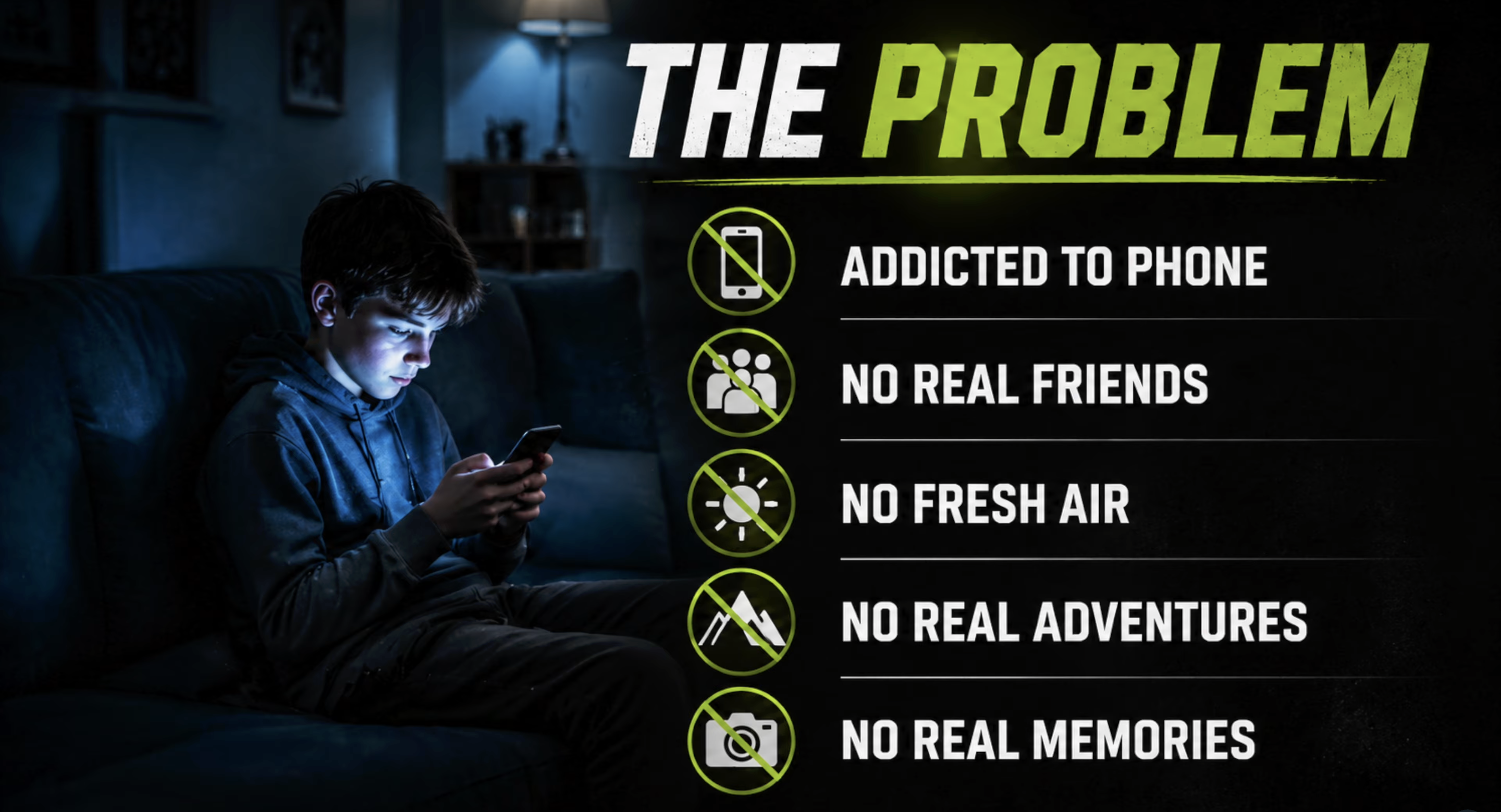
The case for electric dirt bikes among younger riders is not hard to make. Kids are outside, moving, exploring, building friendships, taking risks, and creating the kind of memories that do not come from a phone screen. Jimmy grew up disappearing with friends all day on a bicycle with no parental GPS and no helmet; building ramps, crashing, getting stitches, learning, and having a blast. That kind of unstructured outdoor freedom has been quietly disappearing for a generation, and electric dirt bikes and electric bikes in general are some of the few things pulling kids back toward it in the era of screens.
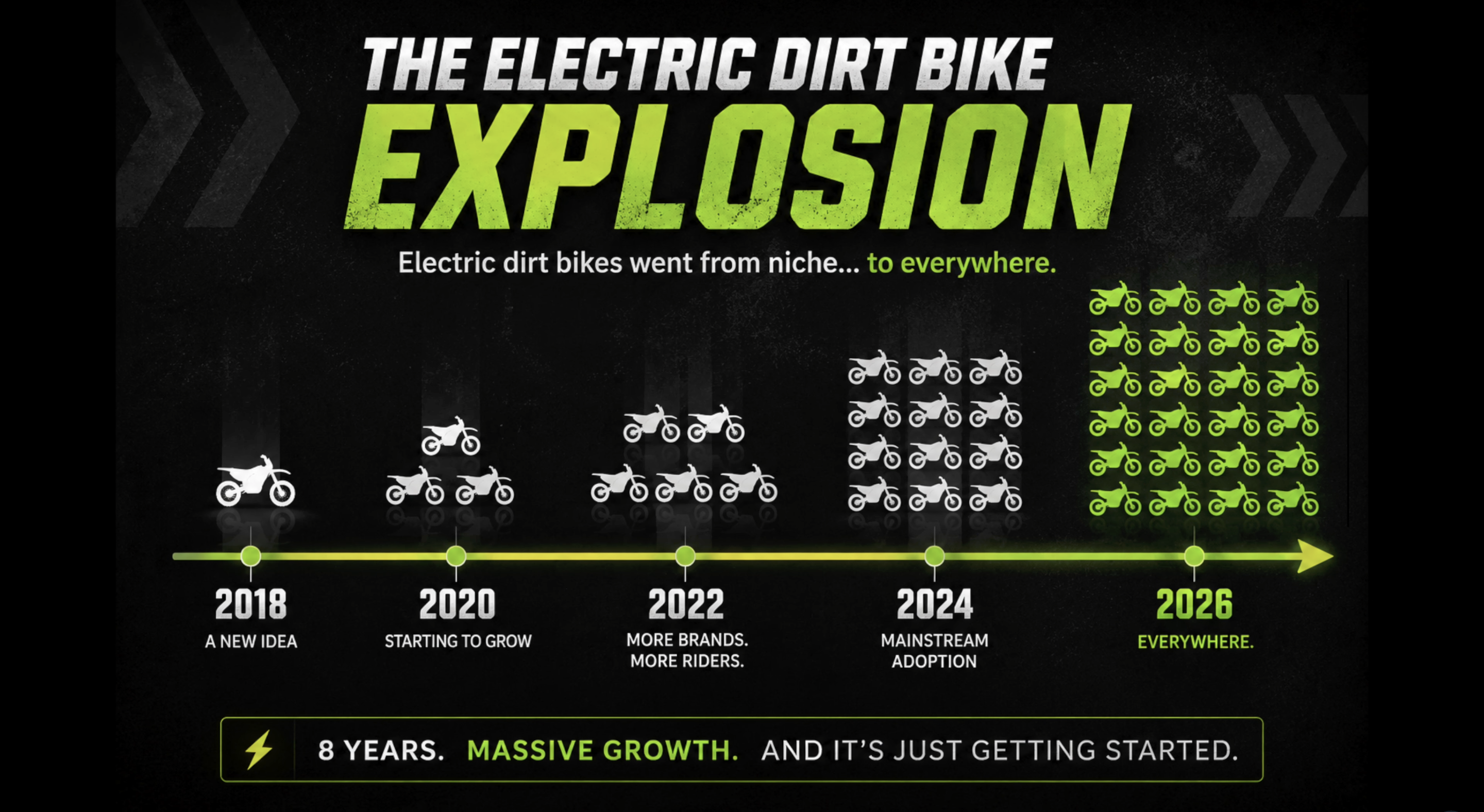
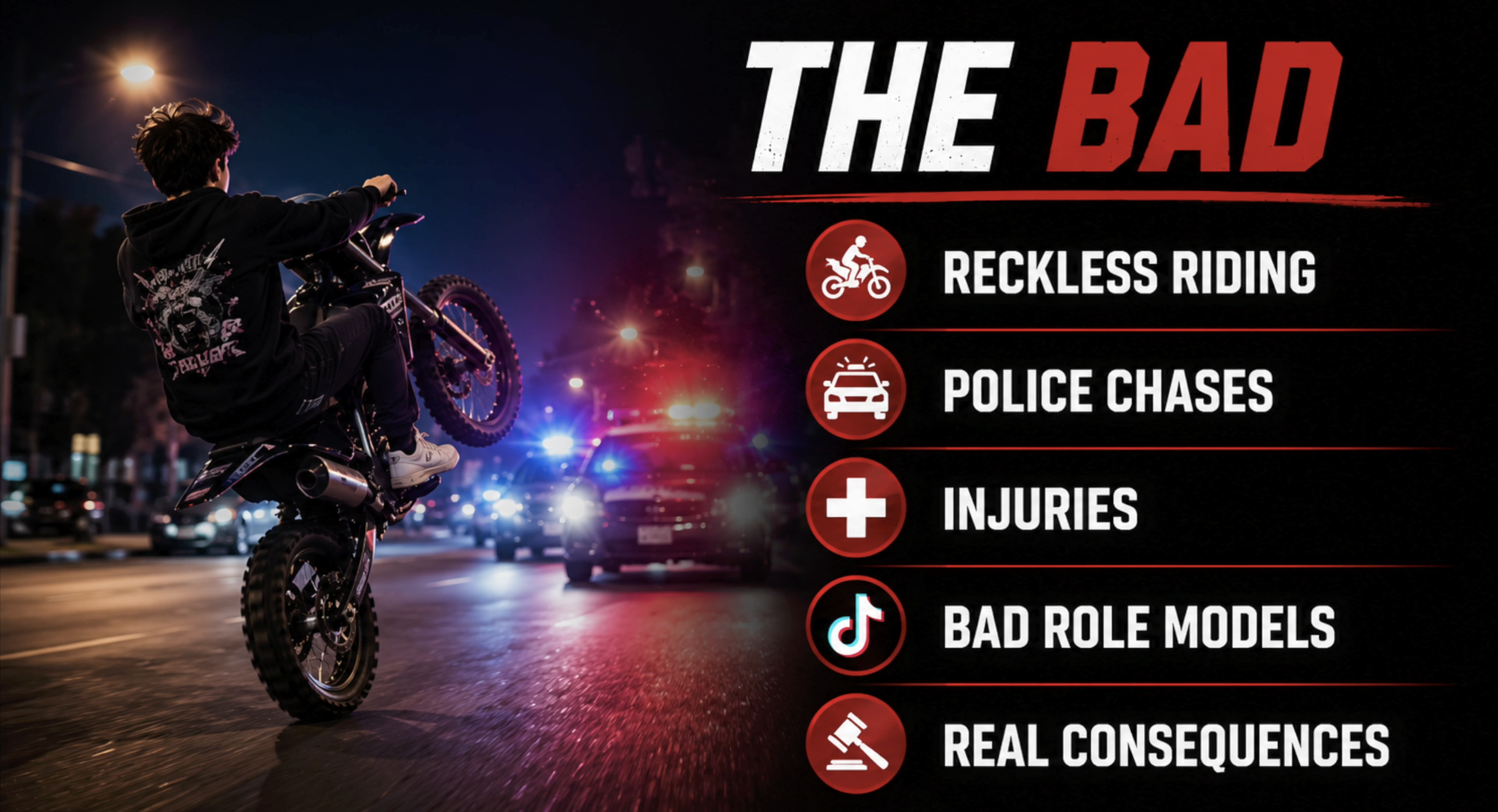
The case against is also not hard to make. Emergency rooms are seeing more injuries. Police departments are fielding complaints about packs of riders terrorizing neighborhoods. And the social media record is not flattering: flying down public trails, doing wheelies through traffic, running from police, and posting all of it for views in an era where attention is currency more than it ever has been. The people who want these bikes off the roads and trails are not imagining things. Jimmy's position is that both sides are responding to something real, but both are also missing the larger point.
These Are Not Bicycles
The most important thing to understand about the current generation of electric dirt bikes is what they actually are. A capable electric dirt bike can hit 60 mph. It has instant torque, no clutch, no gears, and a learning curve low enough that a beginner can be at speed within hours of getting on one for the first time. That combination of accessibility and raw capability is what makes them extraordinary, but also makes unsupervised use genuinely dangerous.
As the years go on and the popularity rises, tragic illustration of this is not hypothetical. Jimmy references a real incident: Ed Ashman, an 81-year-old Vietnam veteran and substitute teacher, who was struck and killed while crossing the street. Prosecutors allege the rider was a 14-year-old on a Surron style electric dirt bike who had allegedly been performing wheelies before the crash and fled the scene afterward. More striking still, prosecutors charged the teenager's mother with involuntary manslaughter, alleging she had previously been warned by law enforcement that her son was riding illegally and continued allowing it. The charges are prosecutorial allegations, but the incident itself is a clear signal that the stakes here are not minor.
The Social Media Multiplier
The reckless riding problem and the social media problem are not separate issues. Algorithms are more likely to reward chaos and attention-grabbing clips, rather than responsible riding. A clean trail run at appropriate speed generates modest engagement. A wheelie through a crowded intersection with a police chase attached generates millions of views, which generates dopamine, which generates imitation. Jimmy is direct about this: middle school boys are not riding recklessly because they want to become criminals, instead chasing attention because attention is the currency social media taught them to value. The behavior follows the incentive, and there is a large gap of parents either unaware of this shift or unwilling to remedy it.
That does not excuse the behavior, but it does explain why blanket bans on the bikes miss the point entirely. Banning the device does not touch the algorithm. It does not change the incentive structure. It just removes one outlet while leaving the underlying dynamic completely intact.
Punishing the Device Instead of the Behavior
Jimmy has been riding various electric PEVs for eight years. In the first seven of those years, he can count on one hand the number of encounters the Freshly Charged team had with law enforcement, and every one of them was positive. In these earlier interactions, officers were curious about the technology, asking how fast the machines went. In the last year alone, the team has been stopped or approached multiple times and has received tickets for the category of device being ridden. The pressure on police departments to do something visible about electric rideable behavior is producing enforcement that targets the machine, rather than the conduct.
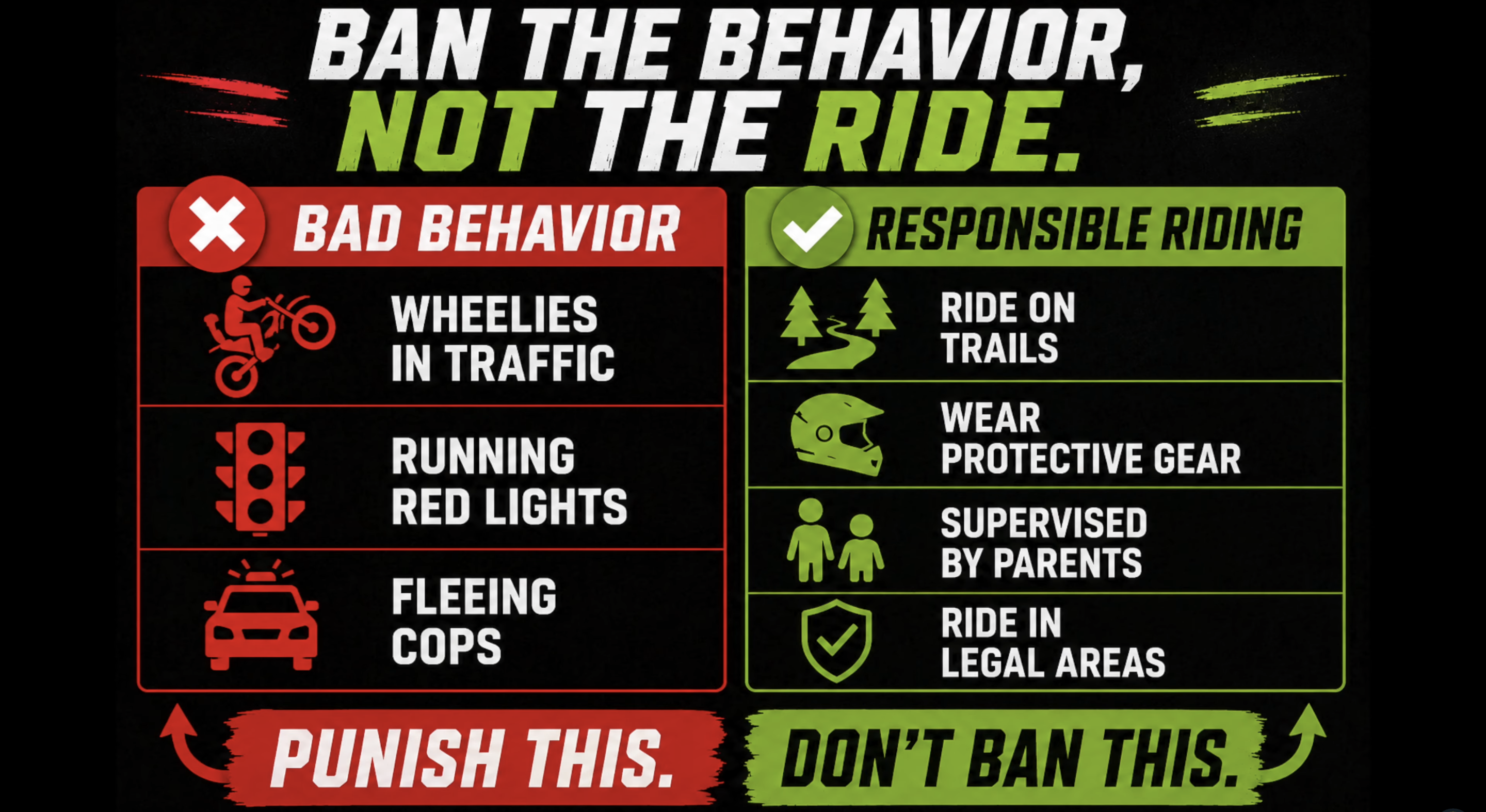
Jimmy's objection to this is principled and specific. We do not ban sports cars because someone drove one at 120 mph — we hold the driver accountable. The same logic should apply here. Reckless riding should have real consequences, with parental accountability for minors. Responsible riders should not be treated as presumptively guilty because of what they chose to ride.
The Freshly Charged Verdict
The answer Jimmy lands on is relatively simple, but demanding of parents. Take kids to motocross tracks. Ride with them. Teach trail etiquette before they earn trail access. Require full protective gear. Make them earn power incrementally rather than handing them a 60 mph machine and hoping for the best, because freedom without responsibility is recklessness. Responsible participants in every discipline — motocross, hunting, tractor operation — were taught by someone who supervised them and held them to a standard. Electric dirt bikes are not an exception to that principle just because they are new.
Electric dirt bikes did not create the parenting gap, the social media incentive problem, or the cultural pressure on kids to perform recklessness for an audience. They exposed all three at once. The technology is not going away, and the case for more kids riding outside is genuinely strong. The question is whether parents, communities, and platforms are willing to address the actual problems rather than the worst, most visible symptoms of them.
No comments yet…