-large.jpg)
Video Content
Written Content
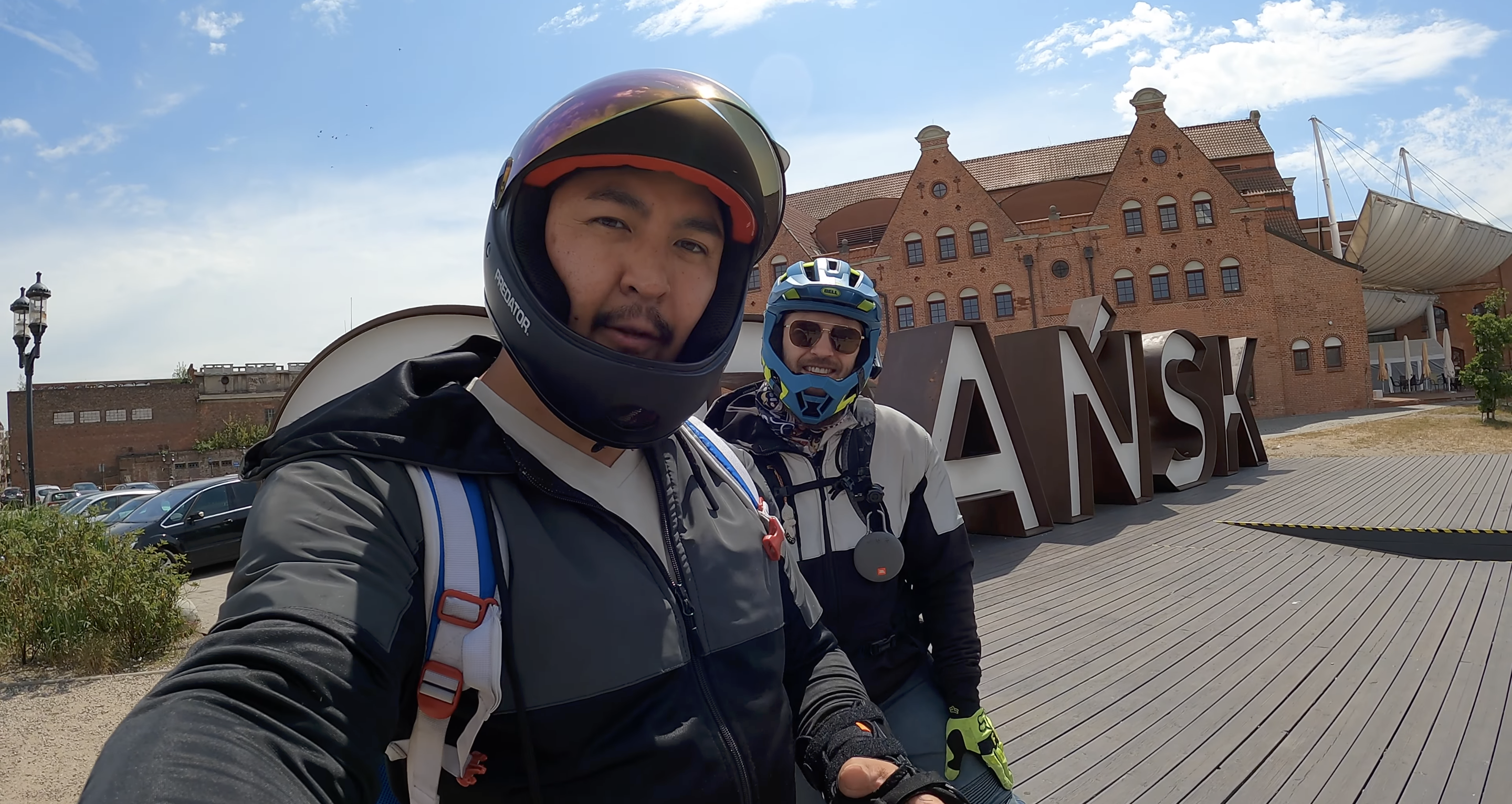
Andrew does not travel to Poland for just anyone. But Adam Malicki — known on YouTube as @mr_wrongway and widely regarded as one of the most knowledgeable EUC riders on the platform — earned the trip. The two spent a full session together through the streets of Gdańsk, and the result is some very practically useful EUC guidance for newbies. What follows is the full breakdown from the video: five tips for becoming a better rider, five mistakes to stop making, and two bonus tips Adam held back for the end.
- Current price of the Kingsong S22 Pro: https://bit.ly/3KeG4GJ
- The helmet Andrew is wearing: https://bit.ly/3MVvchn
- The helmet Adam is wearing: https://amzn.to/451xKlq
- Safety gear we wear: https://bit.ly/2UMQmr6
The Five Tips
Tip 1: Calibrate Your Wheel
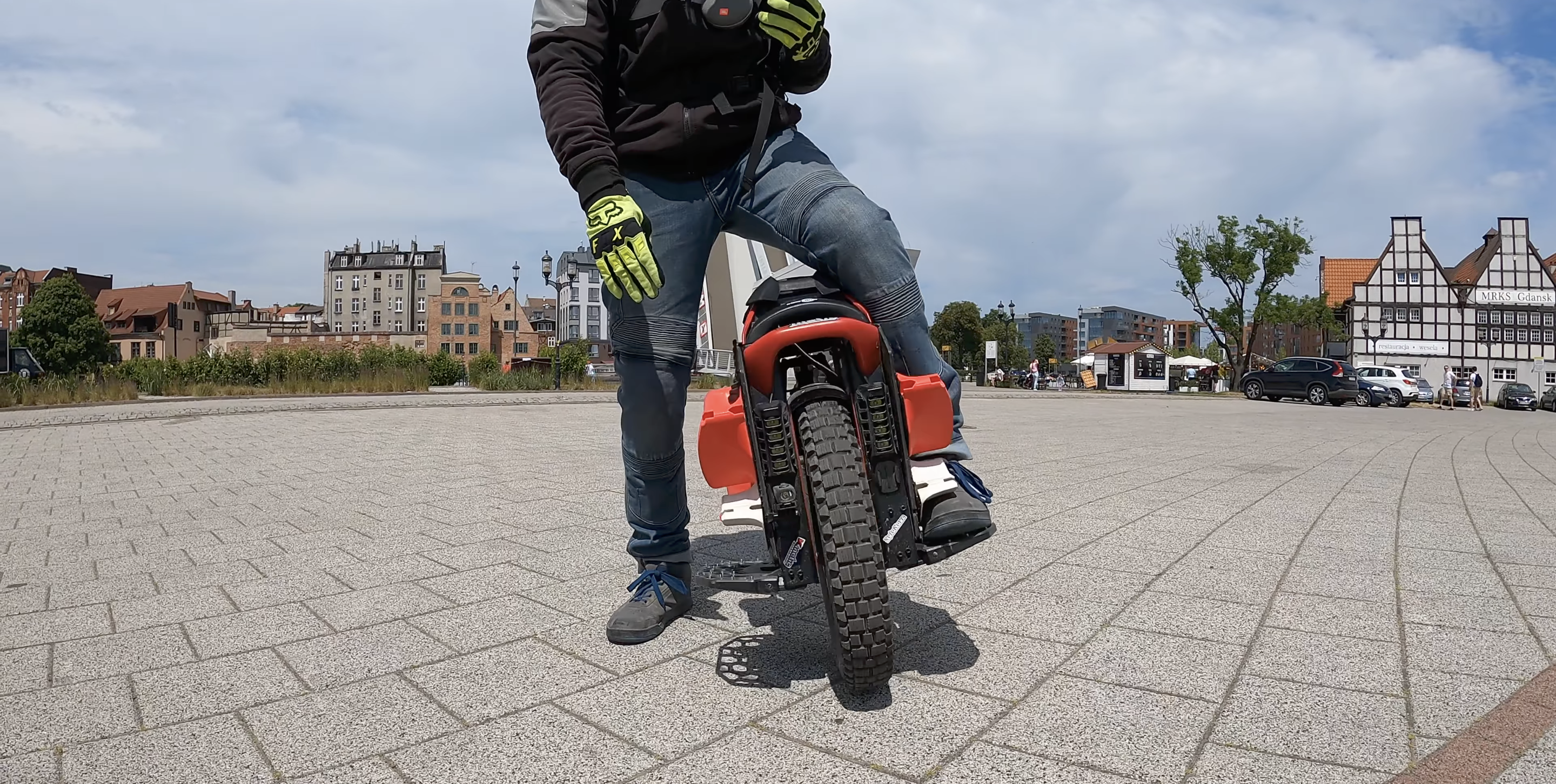
Wheel calibration is something most riders either overlook entirely or only discover after something has gone wrong. Adam demonstrated the problem on a KingSong S22 Pro: when a wheel is miscalibrated, the pedals will dip and tilt as it spins: one side drops in a left turn, the other rises. It looks subtle but translates directly into a wobbly, unreliable ride.
The fix requires holding the wheel firmly between the legs, standing as straight as possible, looking forward, and applying calibration through the app while keeping everything level. Adam recommends doing it more than once rather than assuming the first attempt took. Some wheels come mis-calibrated from the factory, so it is worth checking even on a new unit. The process varies by brand but the goal is the same everywhere: both pedals should stay level through left and right turns.
Tip 2: Adjust Your Pedal Angle
Nearly every modern EUC — Adam estimates all of them except Begode — allows riders to adjust pedal tilt through the app or display. Most people never touch this setting.
For new riders, tilting the pedals forward so the toes sit lower than the heels makes it easier to accelerate and reach the 10 to 15 km/h threshold where the wheel finds its balance. For long-distance riding, a forward tilt puts more body weight onto the front of the wheel and reduces fatigue. For off-road use — particularly on wheels with a low front body like the Veteran Sherman Max — tilting back raises front clearance and reduces pedal clip risk on rough terrain. Both Adam and Andrew treat this as a variable to adjust per ride type rather than a one-time setup decision.
Tip 3: Look Where You Want to Go
Simple but indefinitely important. Looking down at the wheel makes riding harder; looking forward at the target makes it easier. Adam has four years on an EUC and still notes that head direction dictates body direction without any conscious input, the same mechanic as skiing or snowboarding. Working hard to break the instinct to look down early is one of the fastest ways to accelerate the learning curve for new riders.
Tip 4: Learn to Ride While Actually Moving
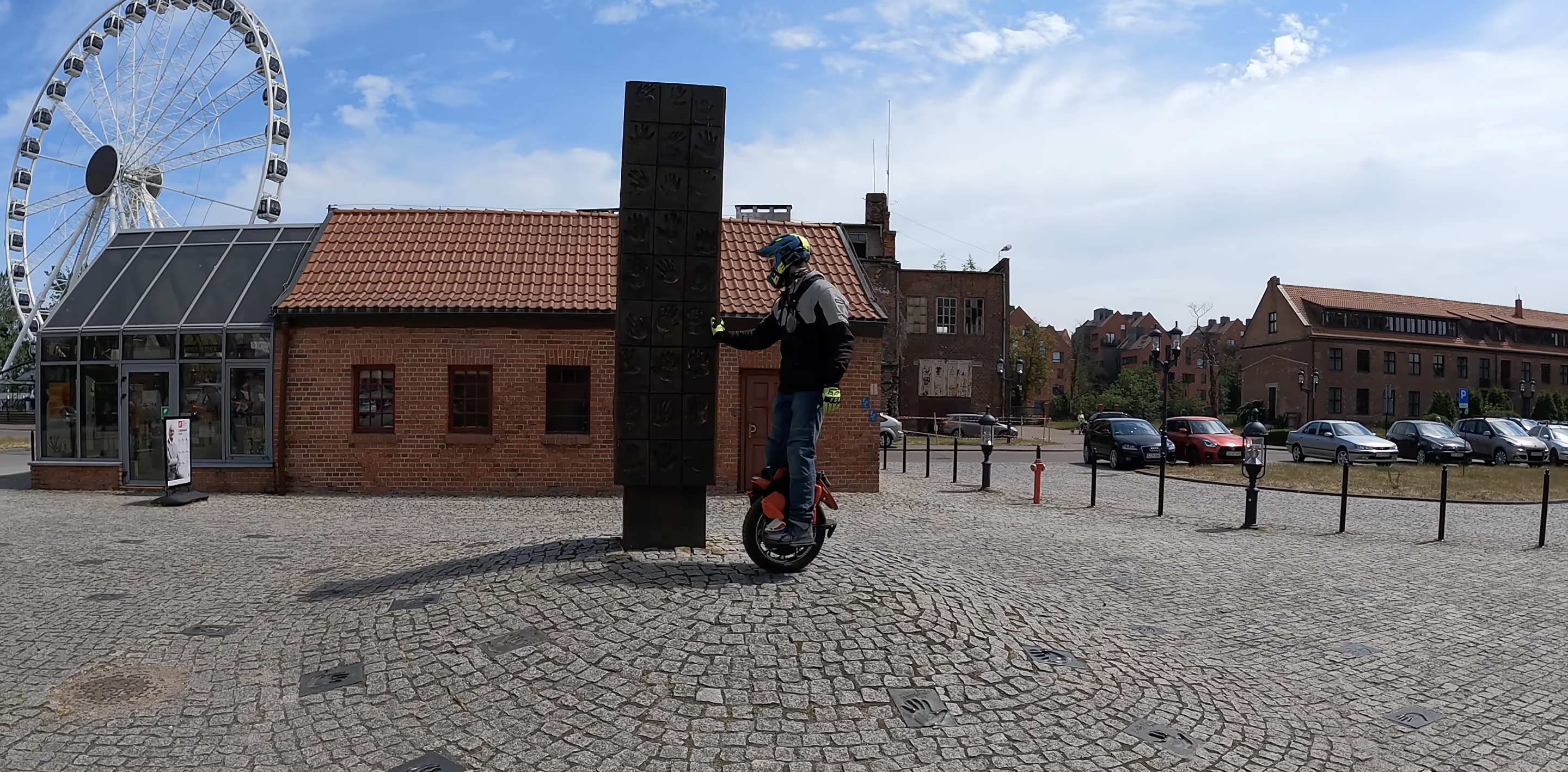
A common beginner approach is to master the stationary mount before committing to movement, but Adam describes this as the hard way after trying it himself. The more effective path is to grab a pole, start moving, keep moving, then find a wall or post to stop when needed rather than attempting a freestanding dismount early on. This gets new riders into the real experience of EUC balance, which only exists in motion.
Tip 5: Stay Honest About Your Speed
EUCs do not give riders the same intuitive speed feedback that throttle-based vehicles do. There is no physical position to reference, and unless you are actively looking down to check the display, you are estimating. Adam identifies three situations where that estimate tends to go wrong: moving from a narrow path to a wider road (things appear further away and speed feels lower than it is), riding with a tailwind (reduced resistance creates the sensation of going slower while you are actually accelerating), and transitioning from rough to smooth concrete (the temptation to push harder is strong and the surface feedback changes). Both Adam and Andrew have eaten pavement from underestimating speed in exactly these conditions. Respect the beeps, respect the tilt back, and match your riding to what the wheel is telling you.
The Five Mistakes
Mistake 1: Not Wearing a Helmet
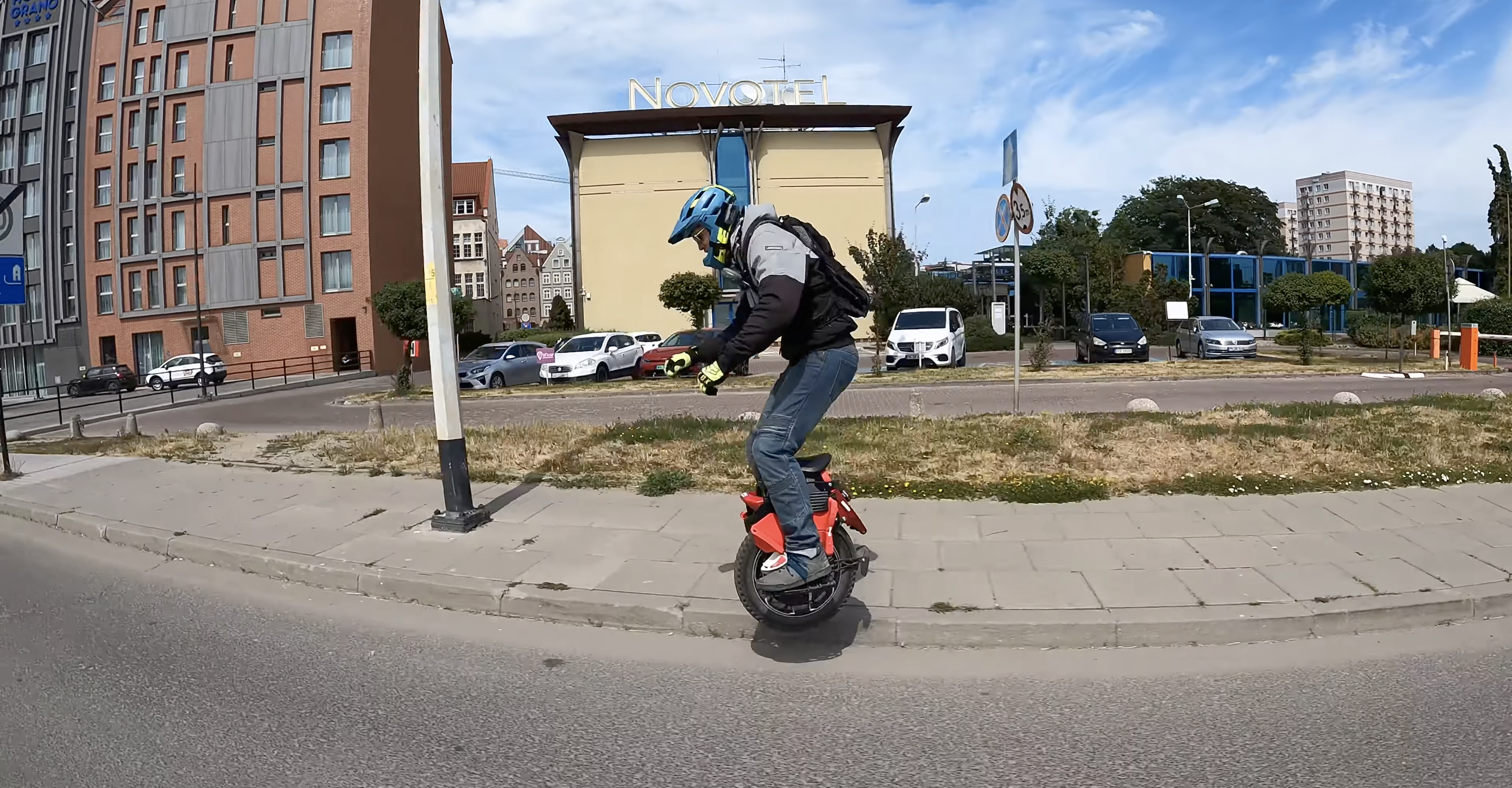
Adam crashed at low speed on a day he decided not to wear his helmet because it was too hot. And if you've ever crashed at low speed, you know they are not in any way safer than high speed crashes. The pavement still feels the same. His current setup is a helmet with a detachable chin piece, which allows some flexibility on slow urban riding while keeping protection in place. Andrew's position on this has never changed: wear the gear, every time.
Mistake 2: Overconfidence on Group Rides
Group rides are where a disproportionate number of cutouts and crashes happen, and the cause is psychological. The energy of a group pushes riders past speeds they would not attempt alone and reduces attention to surface hazards like potholes and speed bumps. The combination of social momentum and excited riding is exactly where mistakes compound. Go in knowing the dynamic exists and actively counteract it.
Mistake 3: Not Managing Battery State
On performance EUCs, available top speed drops noticeably once the battery falls below 70 to 80%. By the time a battery reads 20 to 30%, the wheel has dramatically less headroom than it did when fully charged, and a rider maintaining the same pace from earlier in the ride is at genuine risk of overpowering it. The inverse applies too: a fully charged battery on Begode, Veteran, and to a lesser degree KingSong and InMotion wheels can overcharge under aggressive braking or long descents. Battery state is not a background detail, and it needs to actively inform how hard you are pushing at every point in the ride.
Mistake 4: Ignoring Tire Pressure
Adam's warning sign: if the wheel suddenly feels exceptionally planted and comfortable in a way it did not before, the tire pressure has probably dropped, not improved. Low pressure can feel plush until it causes a problem.
For 20-inch wheels, Adam keeps pressure between 35 and 40 PSI for general riding, and runs up to 45 PSI for off-road, tricks, and stairs, particularly on non-suspension wheels like the Veteran Sherman Max, where a low-pressure impact can bend the rim. Andrew runs slightly higher based on his weight. Cold weather is a variable that catches riders off guard: an overnight temperature drop can bleed as much as 20 PSI from a tire. Aftermarket tires with thicker sidewalls and compounds add rim protection margin but do not replace the discipline of regular pressure checks.
Mistake 5: Neglecting Maintenance
Nobody tells riders to maintain their EUC, and most owner's manual won't cover it. Adam's practical checklist: inspect tire tread at around 3,000 to 5,000 km and replace before it goes bald in the center, because riding a bald tire at EUC speeds is a real safety hazard worth avoiding. On suspension wheels, check that all suspension screws are still tight every two or three rides after off-road use, and use Loctite to keep them from walking loose over time. At 500 to 1,000 km intervals, open the wheel and inspect the internals to confirm everything inside is secured and intact.
The Two Bonus Tips
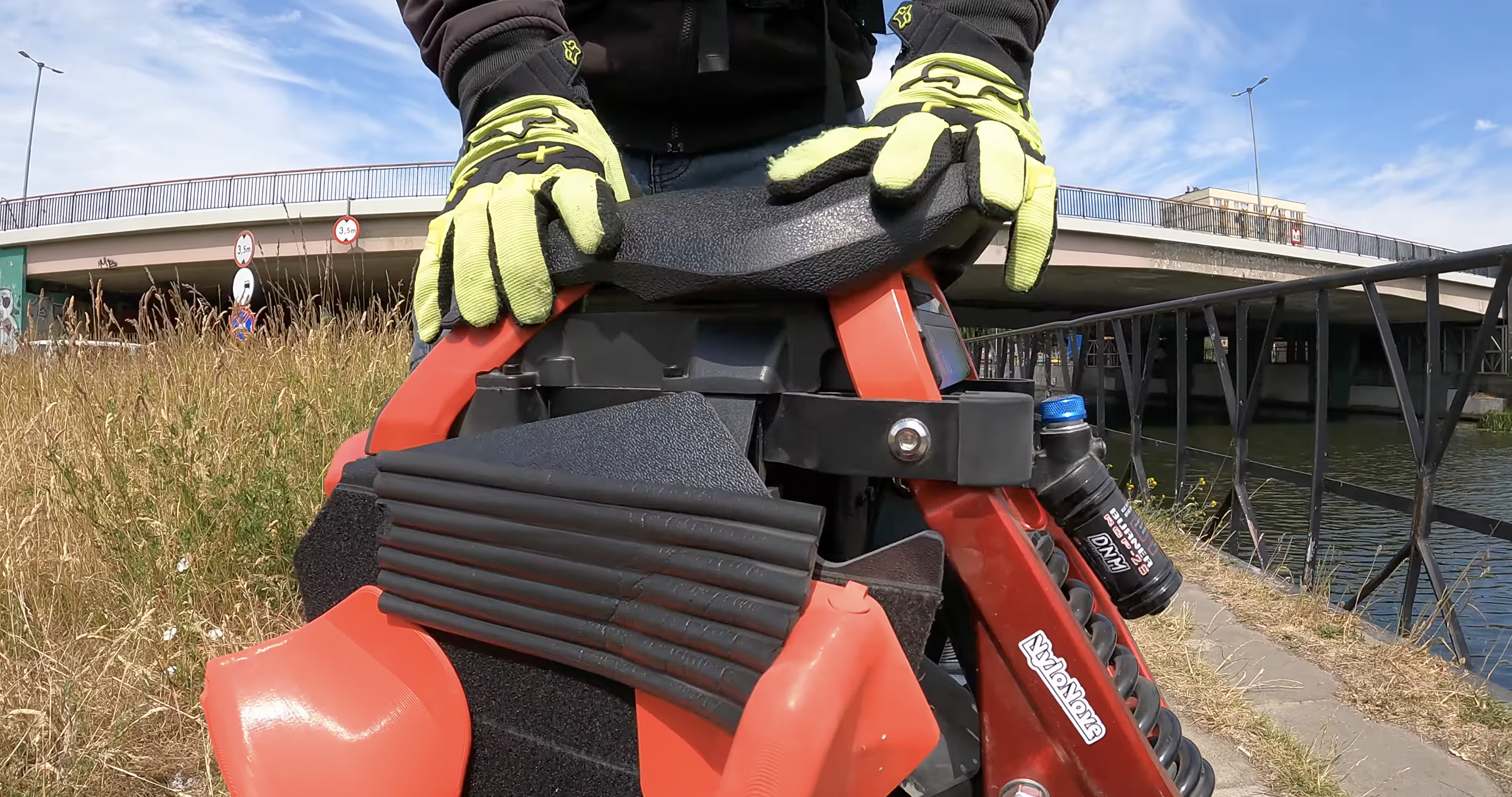
Intercoms with mesh networking are Adam's first must, especially on group rides. Rather than needing to ride alongside a partner to communicate, a mesh system lets riders talk freely across variable distances, which is both practical and safe. The second is a bell, and Adam's example is a completely ordinary bicycle bell attached to his backpack strap. He calls it a very useful tool in both urban and trail riding: when pedestrians hear a bell, they understand immediately that something is approaching and to move accordingly.
EUC Comparison Tool
Use our Freshly Charged Electric Unicycle Comparison Tool to evaluate various products alongside other options. Compare and organize EUCs by factors such as price, top speed, battery capacity, and more.
No comments yet…