-large.jpg)
Video Content

Written Content
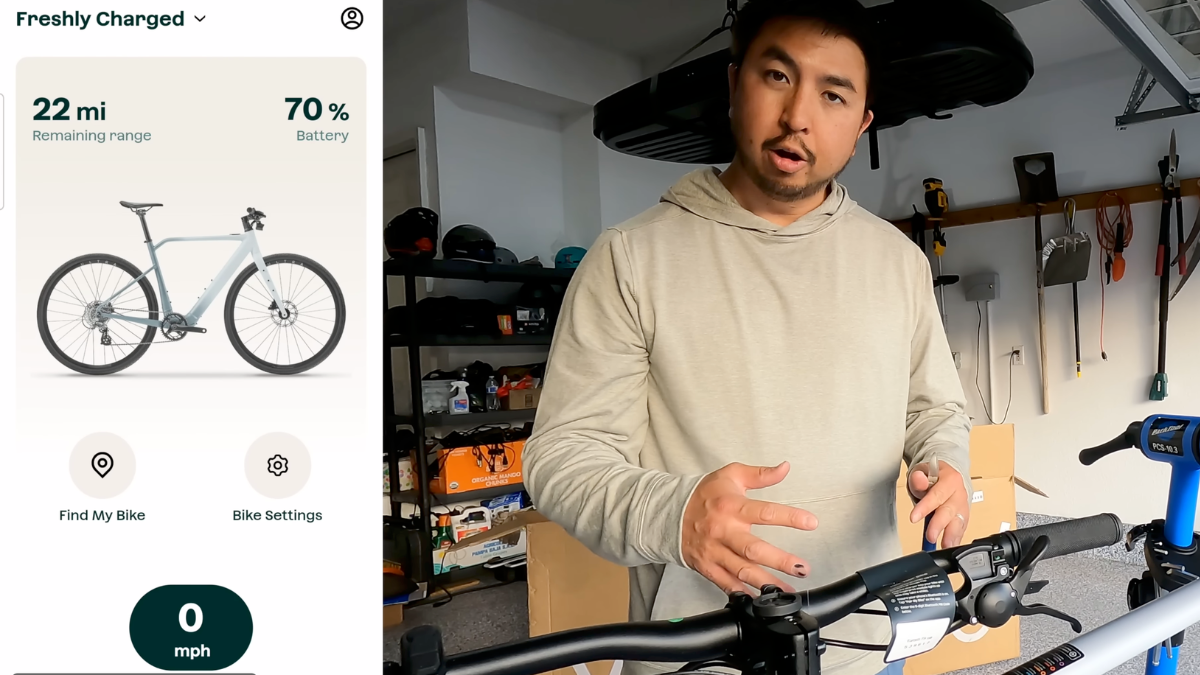
Jimmy Chang and Andrew from Freshly Charged put the Velotric Thunder 1 and Thunder 1 ST through their full review process: unboxing, setup, and subsequent ride test to see whether these two lightweight Class 1 e-bikes could live up to their claims of being standouts in their category. The pitch for either is simple on paper: road styled bikes with stealthy batteries, minimal wiring, and true pedal assist. The two are separated mainly by how each handles security and a handful of minor component choices. Continue reading to see where the twins are similar, where they diverge, and which one deserves a spot in your garage.
- Current pricing on the Velotric Thunder 1: https://tinyurl.com/49hxjpzu
First Look: What's In the Box
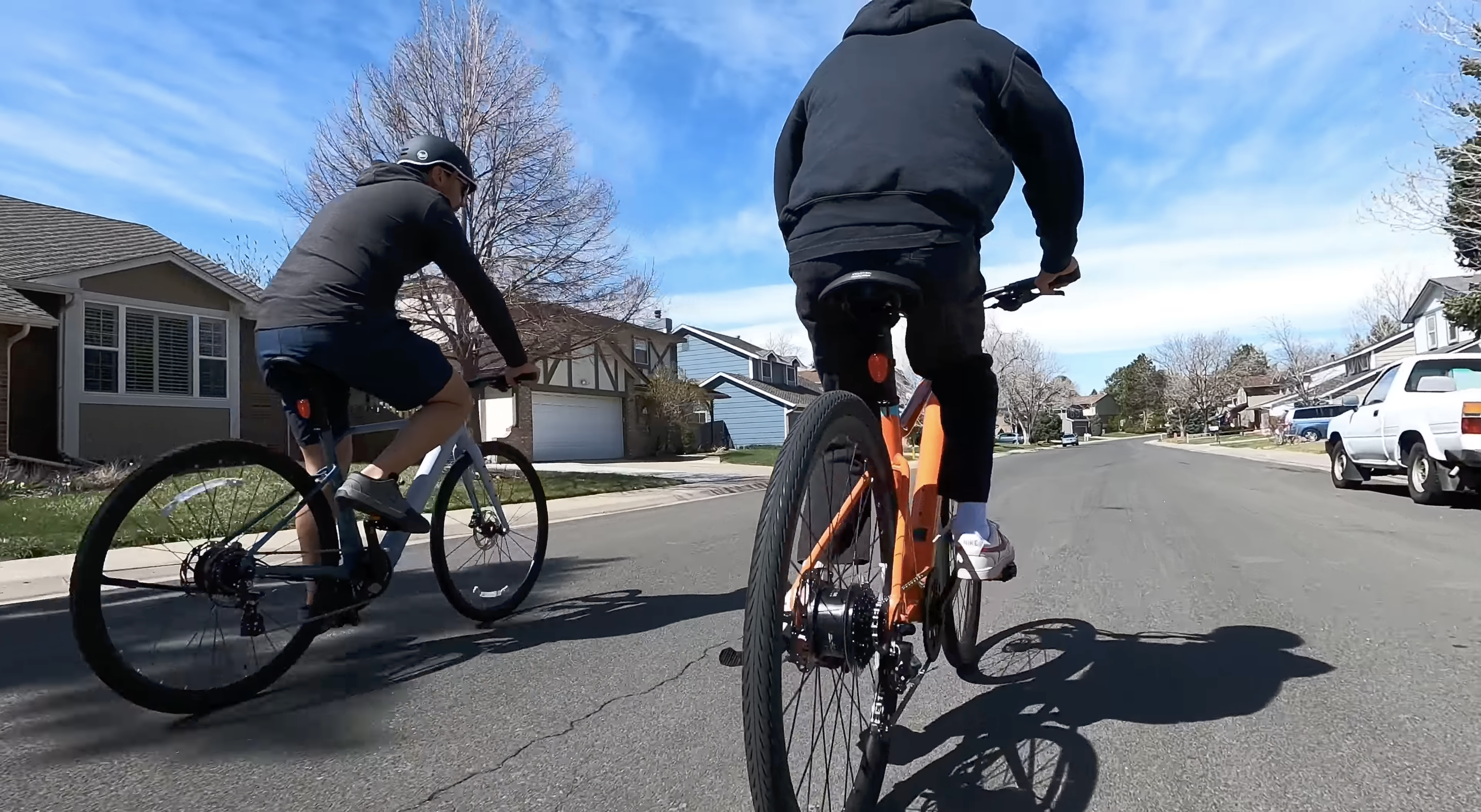
Both bikes arrive with a nearly identical accessory set: a small tool bag with Allen keys, a crescent wrench, and a screwdriver; a bell, a kickstand, pedals, reflectors, a battery powered rear tail light, a phone mount for the handlebar, a front headlight, and the charger, which outputs 42 volts. Since the hardware is shared, riders who end up with one of each can keep a single charger at home and another at the office and swap freely between them. The team used a Park Tool kit from REI to handle setup and found the process relatively easy, even though neither bike uses a quick release seatpost, meaning height adjustments require actual tools rather than a lever.
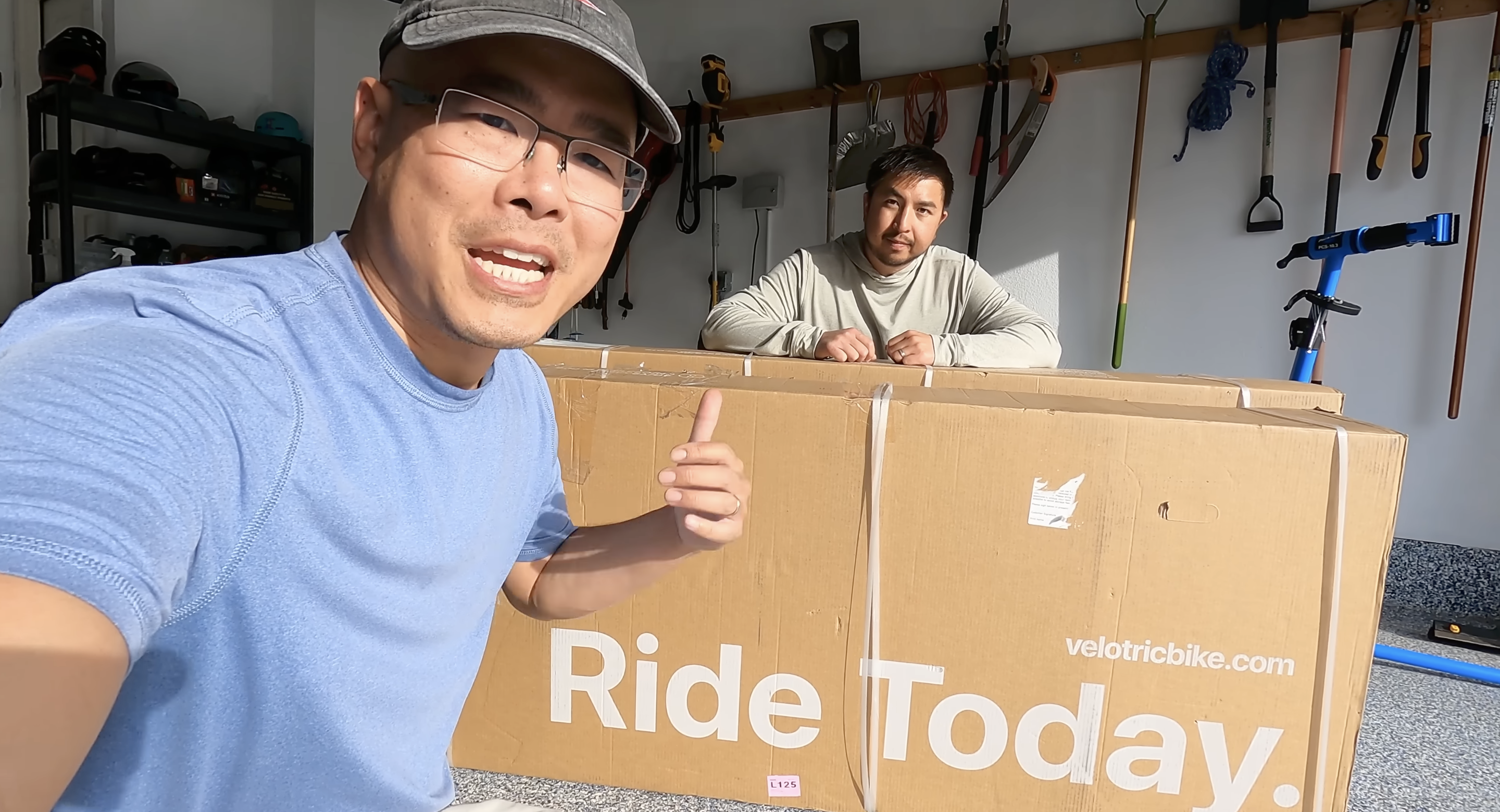
The real headline of the unboxing is what's missing: exterior wiring. Pair that with a battery powered tail light instead of a wired one, and there's nothing dangling off the frame to give the game away. During the unboxing process, Jimmy's family that walked by didn't even clock it as an e-bike when they saw it parked in the yard, which matters in neighborhoods or trail systems where ebikes are becoming increasingly restricted.
Spotting the Differences
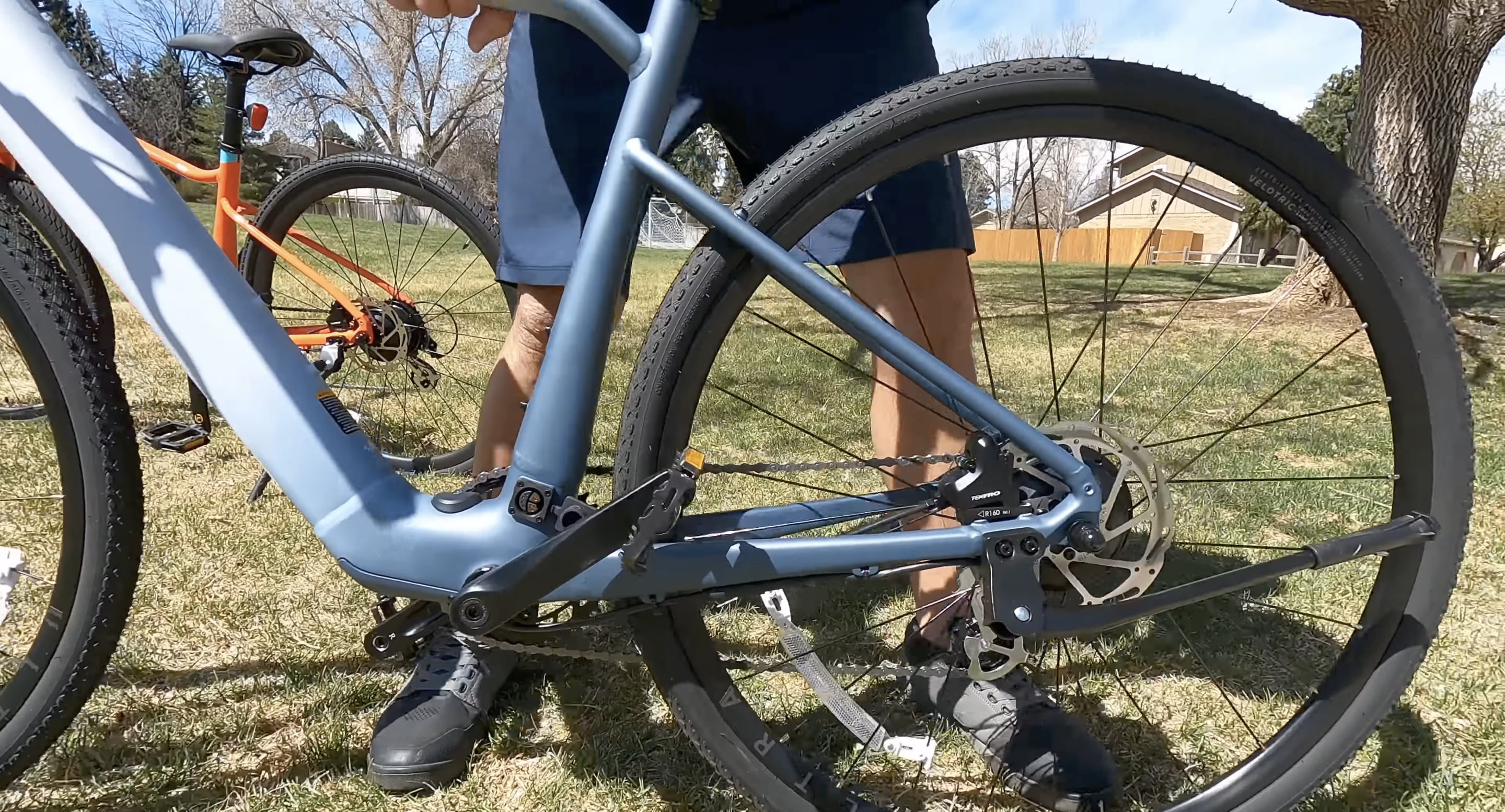
Side by side, the Thunder 1 and Thunder 1 ST share the same bones: Tektro hydraulic brake levers, a Shimano eight speed shifter, a center mounted phone cradle, and a Bluetooth module near the bottom of the frame. The Thunder 1 unit tested came in a Frozen Blue colorway, with a paint job that fades from a light, almost white tone into a deeper blue gradient, which was a design detail the team called a standout.
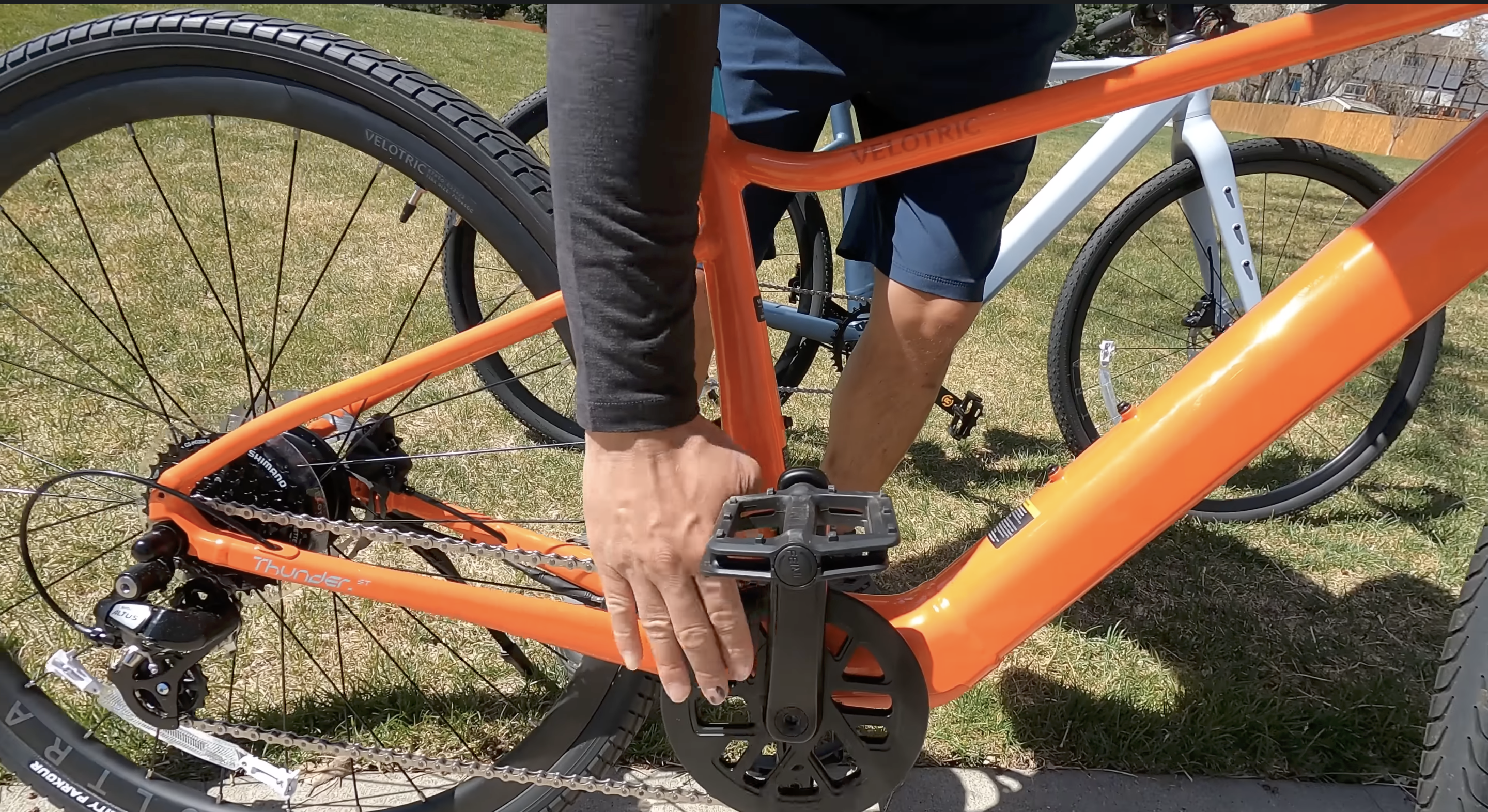
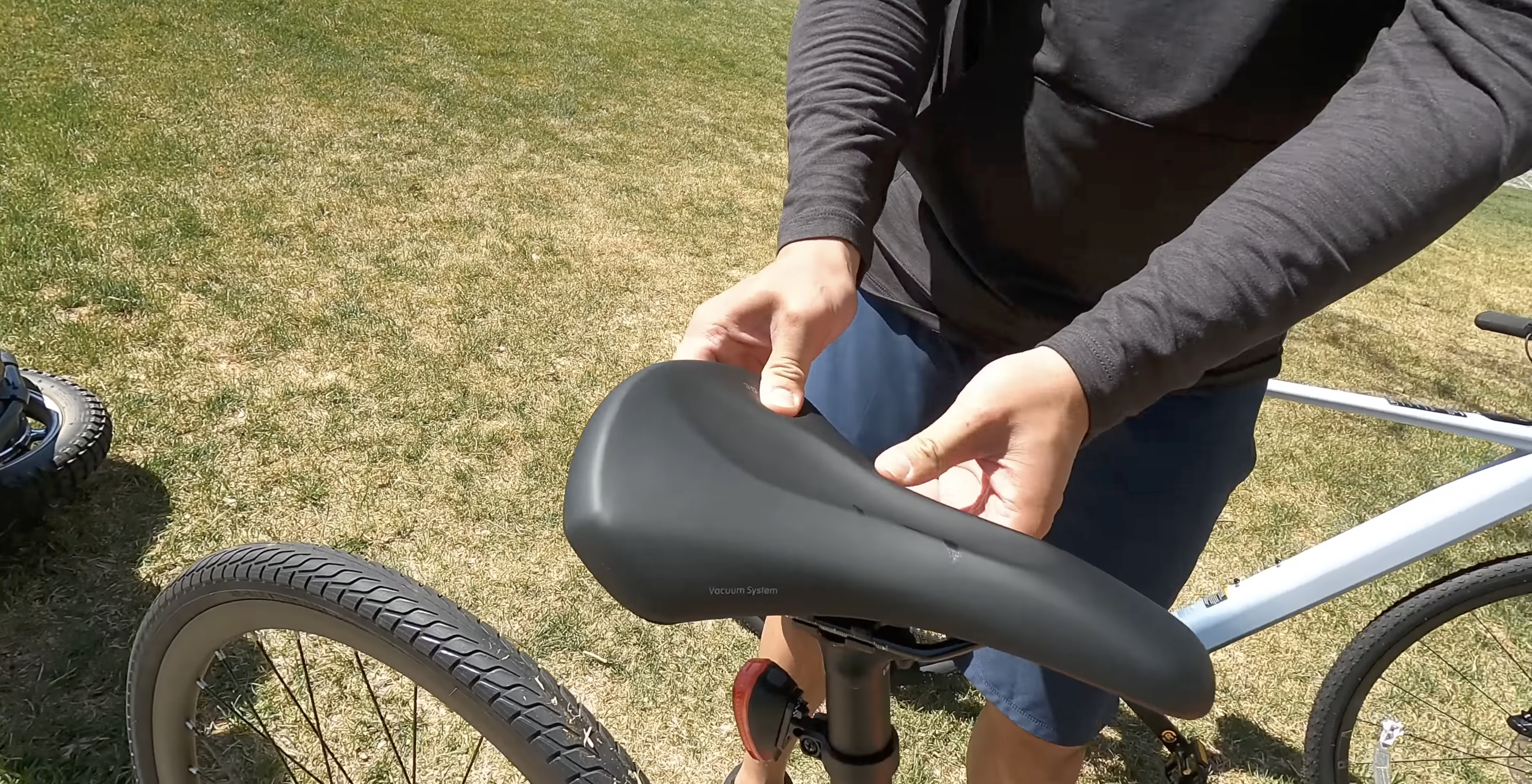
From there, the components split. The Thunder 1 has a straight handlebar, a firmer road style saddle, aluminum pedals, a 40 tooth chainring, and a fingerprint reader built into the top tube for unlocking. The Thunder 1 ST swaps in a curved handlebar with winged grips, a plusher seat, plastic pedals, a 42 tooth chainring, and a simple push button instead of the fingerprint sensor. The ST name comes from the frame, which slopes downward through the top tube in a shape the team described as step through in spirit, though it stops short of a true step through design. Tire tread differs too: the Thunder 1 rolls on a smooth road tire, while the ST wears a tread pattern that echoes the Velotric logo. Both bikes weigh exactly 36 pounds and share a 350 watt brushless hub motor, a torque sensor, and 160mm hydraulic discs.
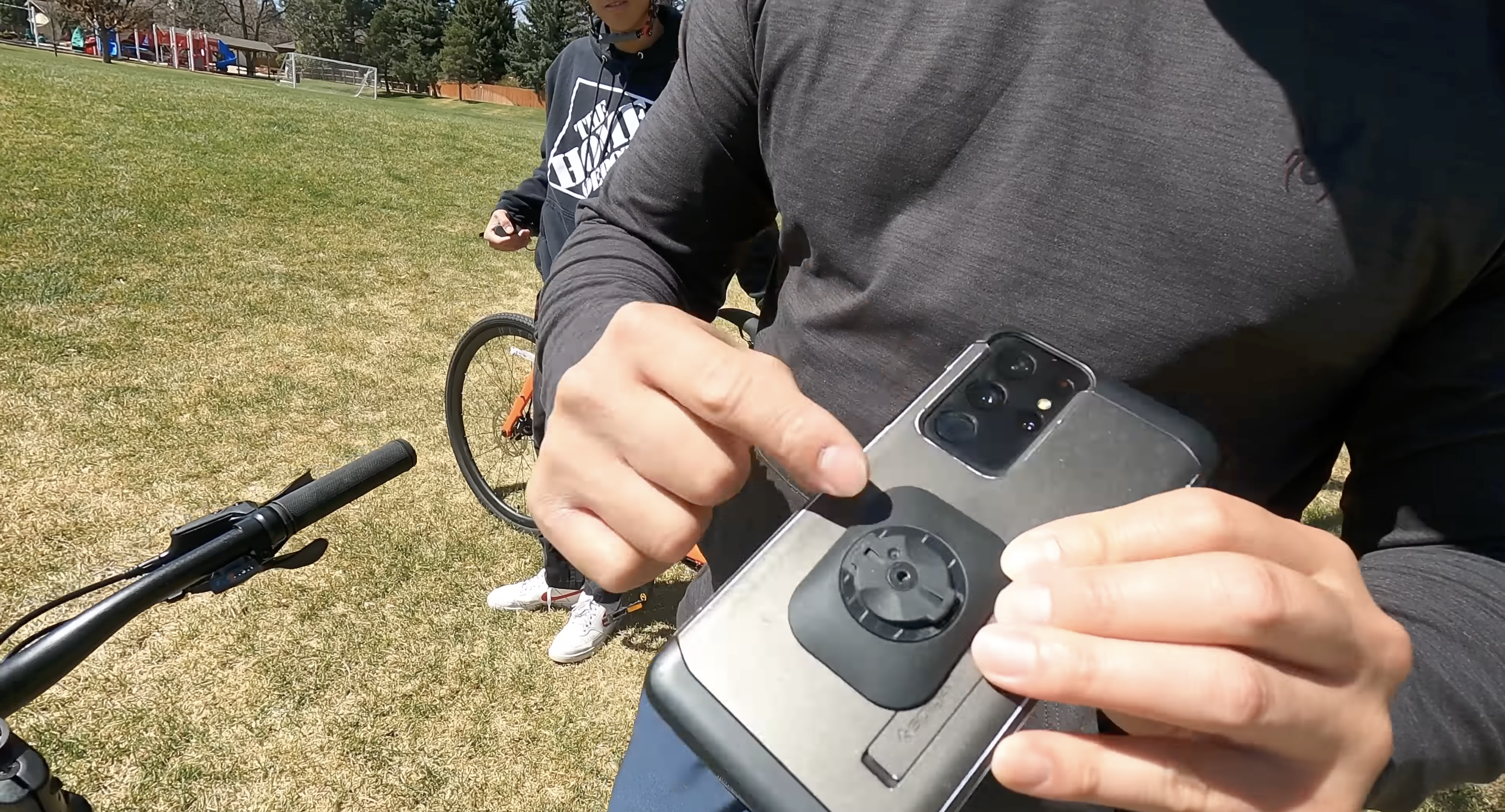
The bigger split is security. The Thunder 1 pairs with Velotric's own Bluetooth app, which tracks rides, sends a theft alert if the bike is moved without permission, and uses satellite based GPS to report an exact location if it's ever stolen. The Thunder 1 ST drops the proprietary app for Apple Find My, which paired with a tester's iPhone in under ten seconds and slots the bike in alongside other Apple devices like AirPods and a MacBook. It's convenient for anyone already living in Apple's ecosystem, but it leans on Bluetooth proximity to nearby Apple hardware rather than true GPS, and offers no tracking at all for Android owners.
On the Road
Once moving, the two bikes ride almost identically, and that's a compliment. Both motors are close to silent, even in the top assist mode, which the team pushed specifically to see if it would give up the stealth cover — it didn't. The torque sensor is the bigger story for how the ride feels: because it reacts to pedal pressure instead of cadence, power shows up the instant a pedal is pushed, with none of the lag riders sometimes notice on cadence driven systems. Andrew pointed to that immediacy as the reason the bikes feel less like an e-bike and more like an extra efficient regular bike.
That distinction matters because there's no throttle on either model. Riders have to pedal the whole time, which the team framed as a selling point for anyone who has avoided ebikes because it felt like cheating. Assist can be dialed all the way down, and at 36 pounds, both bikes ride convincingly like an unassisted bicycle when it's off, then step in the moment a hill shows up. Andrew demonstrated just how light that is by having team member Ethan lift the Thunder 1 with one hand.
Component quality backs up the ride too. Tektro hydraulic brakes functioned with ease during the team's brake test and were rated well above the cheaper Zoom brakes found on other bikes the team has ridden. In addition, the Shimano Altus derailleur on both bikes is a clear step up from the bargain bin Shimano Tourney hardware common on budget options.
What Could Be Better
The missing quick release seatpost was the team's most repeated complaint, especially once riders of different heights needed the saddle adjusted between rides. A quick release front wheel would have made sense too, given the road bike styling, but neither bike includes one. The kickstand stays out of the way when backing up but isn't especially sturdy, and the rear tail light's battery power is easy to leave switched on by accident and find drained next time it's needed. Buyers should also know what these bikes don't have: no throttle, no suspension, no fenders, and no removable battery, all tradeoffs for keeping the frame slim.
Thunder 1 vs Thunder 1 ST By The Numbers
Per Velotric's spec sheet at the time of testing:
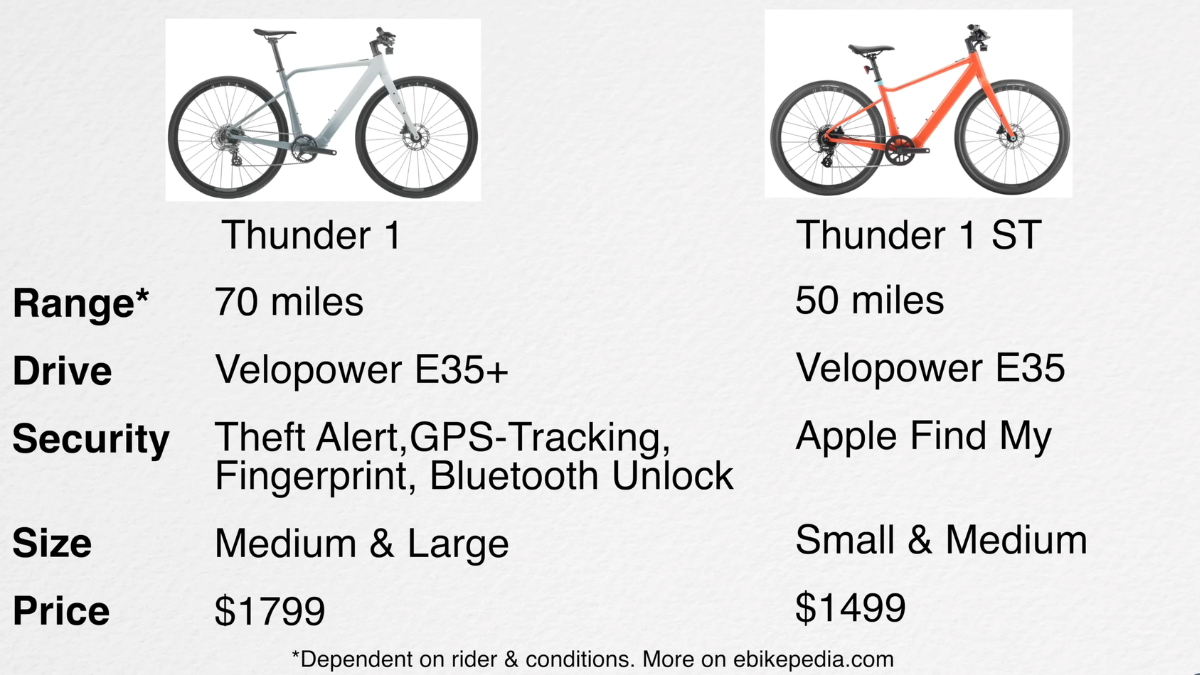
Thunder 1: up to 70 miles of range, a Velopower E35+ drive system, theft alert, GPS tracking, fingerprint unlock, and Bluetooth unlock, available in Medium and Large frame sizes, priced at $1,799.
Thunder 1 ST: up to 50 miles of range, a Velopower E35 drive system, Apple Find My security, available in Small and Medium frame sizes, priced at $1,499.
This review isn't new, so treat those prices as a snapshot from testing rather than current numbers. Anyone shopping seriously should confirm today's pricing directly with Velotric.
The Freshly Charged Verdict
The Thunder 1 makes the most sense for riders who want the longer range, real GPS tracking regardless of phone, and don't mind that it only comes in Medium and Large. The Thunder 1 ST fits smaller riders better thanks to its Small and Medium sizing and lower, more approachable frame, and suits anyone willing to trade some range and app sophistication for a lower price and Apple's Find My network, so long as they're carrying an iPhone. Either way, the team's testing points to the same conclusion: these are two of the lightest, quietest e-bikes Freshly Charged has ridden.
- Current pricing on the Velotric Thunder 1: https://tinyurl.com/49hxjpzu
Electric Bike Comparison Tool
Use our Freshly Charged Electric Bike Comparison Tool to evaluate these products alongside other options or Velotric lineups. Compare and organize bikes by factors such as price, cargo capacity, motor watts, and more.
No comments yet…