-large.jpg)
Written Content
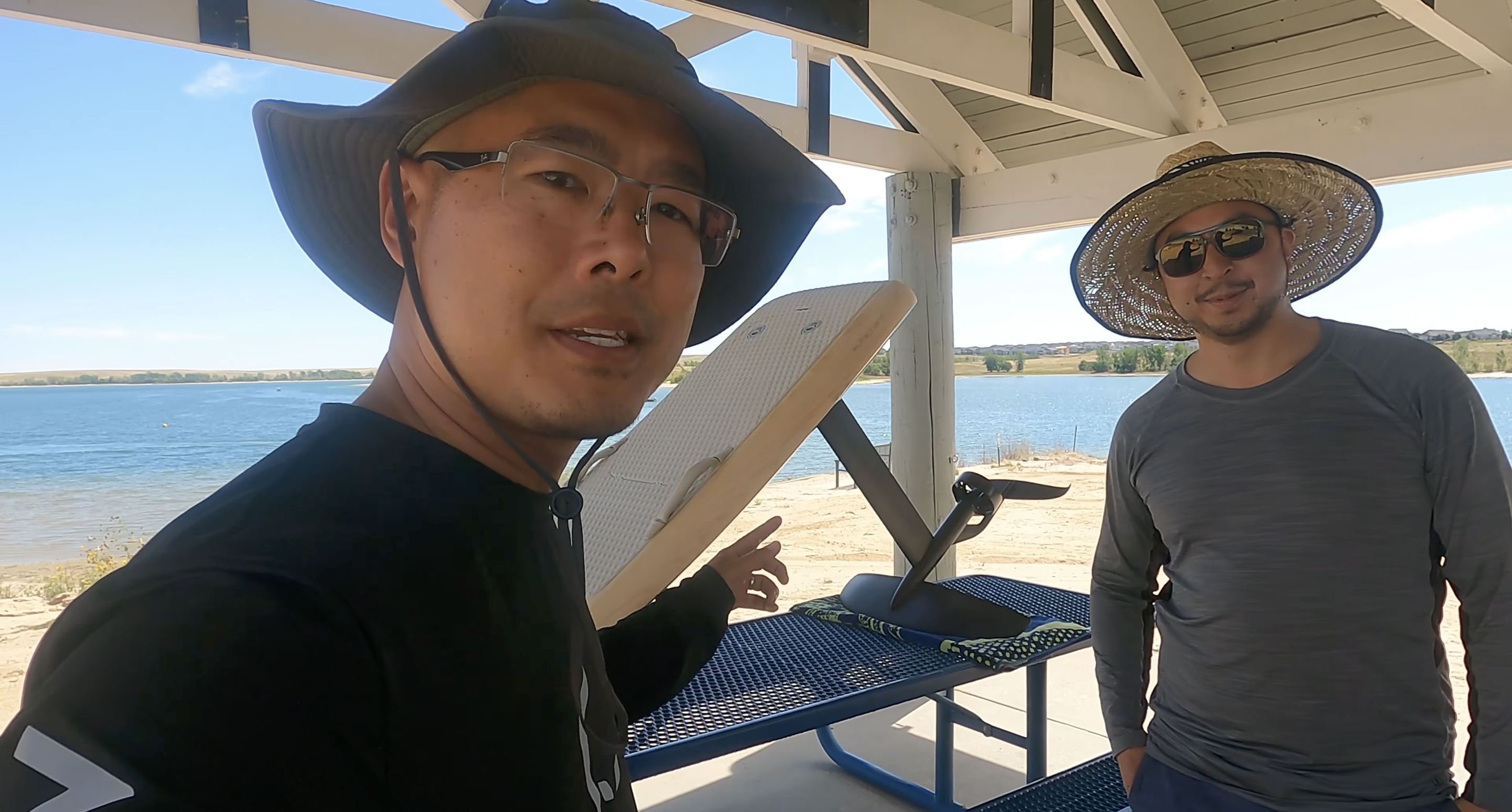
Thirteen thousand dollars is a lot to spend on anything, let alone a personal electric vehicle that requires a body of water for use. Jimmy and Andrew had been riding their Fliteboard for several weeks when they sat down to talk through the obvious question: is it actually worth it? With Andrew riding nearly every day, and Jimmy taking the Fliteboard out with his family consistently, the verdict from both is the same; but getting there took some honest accounting of what the experience costs and what it delivers.
The Learning Curve
Neither Jimmy nor Andrew came in as experienced eFoilers, and the first day showed it. Andrew's board sport background is solid, with years of snowboarding and Onewheel riding, but he described day one as rough: the nose kept coming up, his falls were awkward, and the bruises were visible enough that his wife assumed something had happened to him. Jimmy's board sport background is more modest, mediocre snowboarding and average Onewheel riding by his own description, and his first session with instructor Brian was similarly humbling. Both riders got up and experienced the flight, but neither had a clean first day.
The turnaround came fast. By day two, both riders reported a significant click. Andrew's advice for anyone starting out: keep hold of the trigger and make only small, deliberate movements. The Fliteboard rewards subtlety. Aggressive inputs cause falls. Once that clicks, the progression accelerates quickly, and Jimmy noted his kids picked it up even faster due to their lighter weight and lower hesitation around falling.
What Makes It Worth Riding
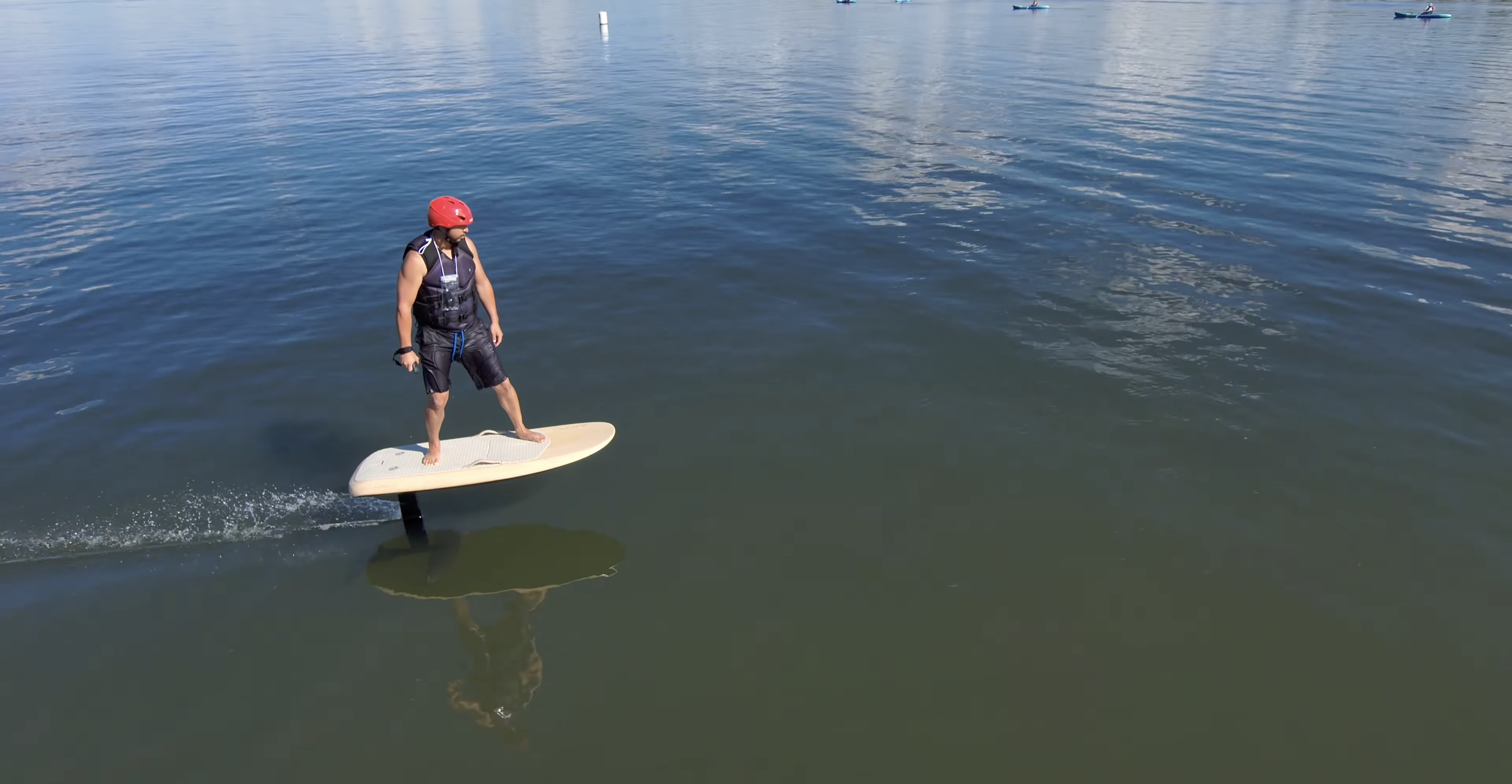
Andrew's framing is the most useful one: the Fliteboard is his favorite PEV across everything he has ridden, and that is not a casual statement for someone who has ridden a lot of things. Floating two feet above the water, near silent, with nothing between you and the experience, it sits in a category of its own. Jimmy compared it to flying on a magic carpet. Both riders independently described the same flow state that shows up with the best PEV experiences, except here you are also hovering above water.
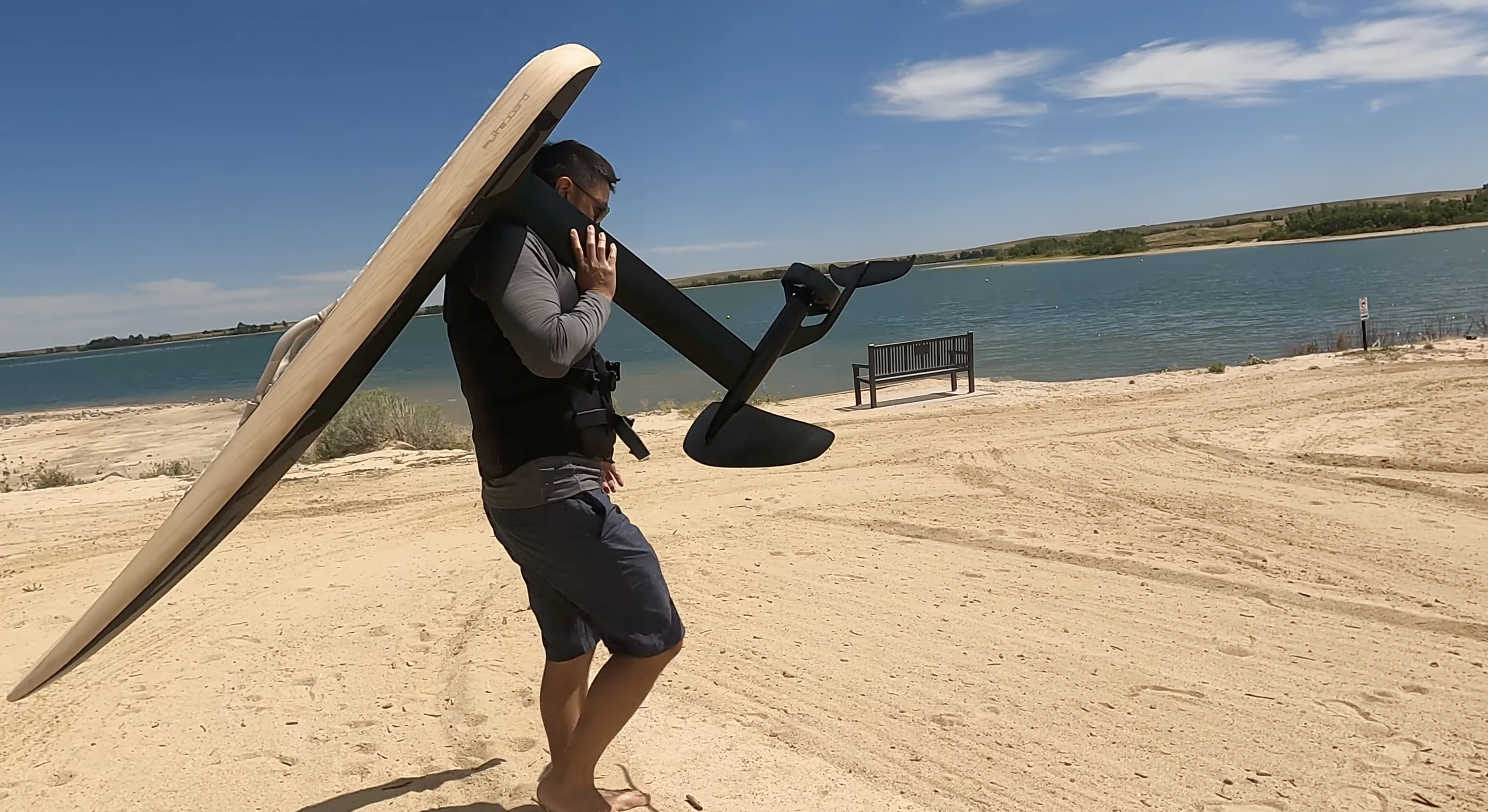
The practical case is stronger than it might look from the outside. Transportation is straightforward: the board, battery, life jacket, and helmet fit in the back of a truck without disassembly. If needed, the board breaks down and fits in a small SUV. For travel, the battery can be shipped ahead or picked up at a Fliteschool location near a body of water. Critically, you do not need ocean access. Jimmy and Andrew are based in Colorado and found no shortage of suitable water. No waves required, no surf conditions to chase.
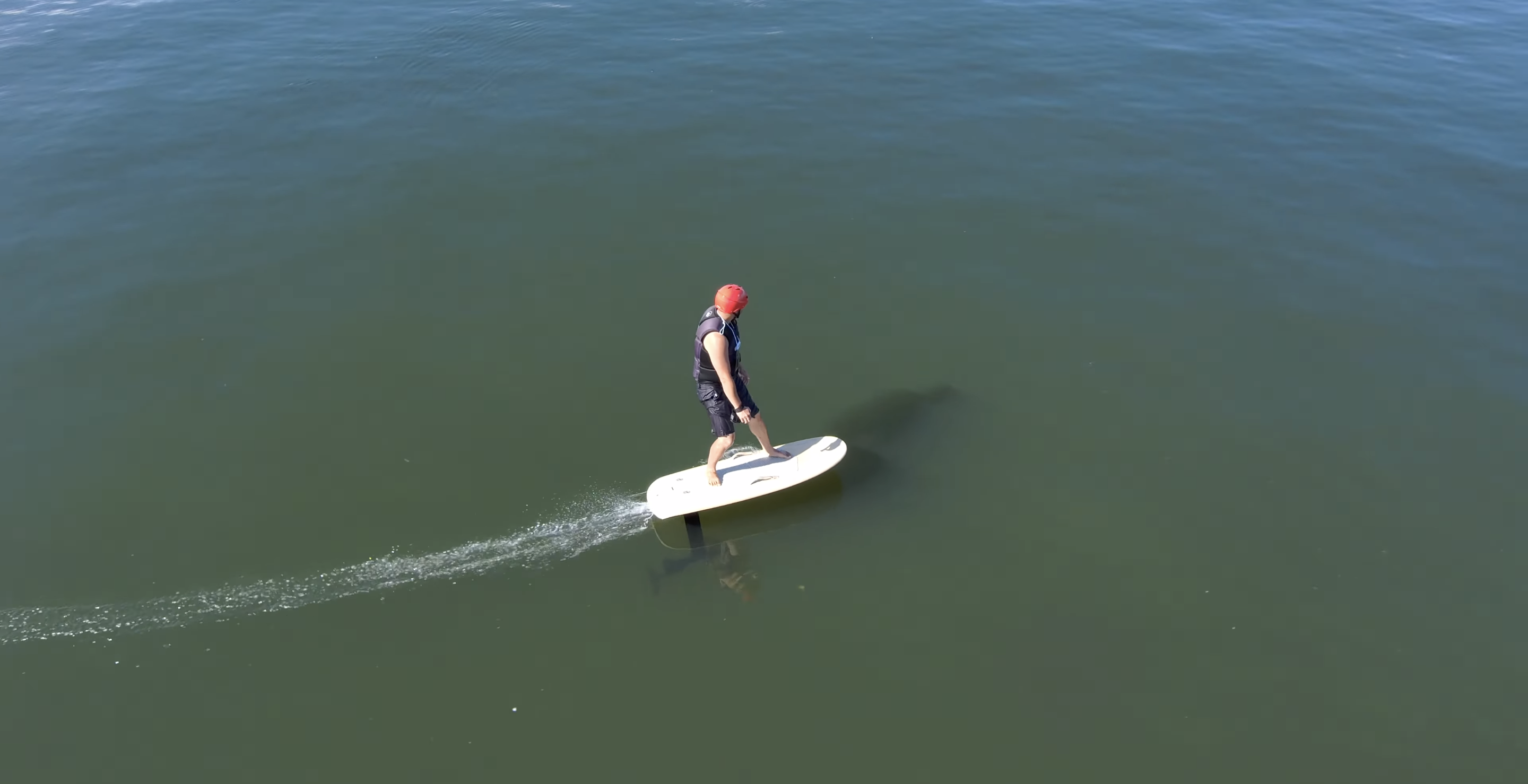
The companion app connects to the board via phone and pulls session data including speed, battery usage, and a route map. For anyone who likes tracking progression, it adds a useful layer on top of an already engaging experience.
The Honest Downsides
The price is the only real criticism either rider could find, and it is a legitimate one. At $13,000, the Fliteboard sits at the premium end of the electric hydrofoil market. Jimmy framed it as the BMW or Mercedes of the category: carbon fiber construction, refined design, and a proprietary integrated prop and hydrofoil system that contributes directly to the quality of the riding feel. Less expensive alternatives exist, but the Fliteboard's build quality is part of what the experience delivers.
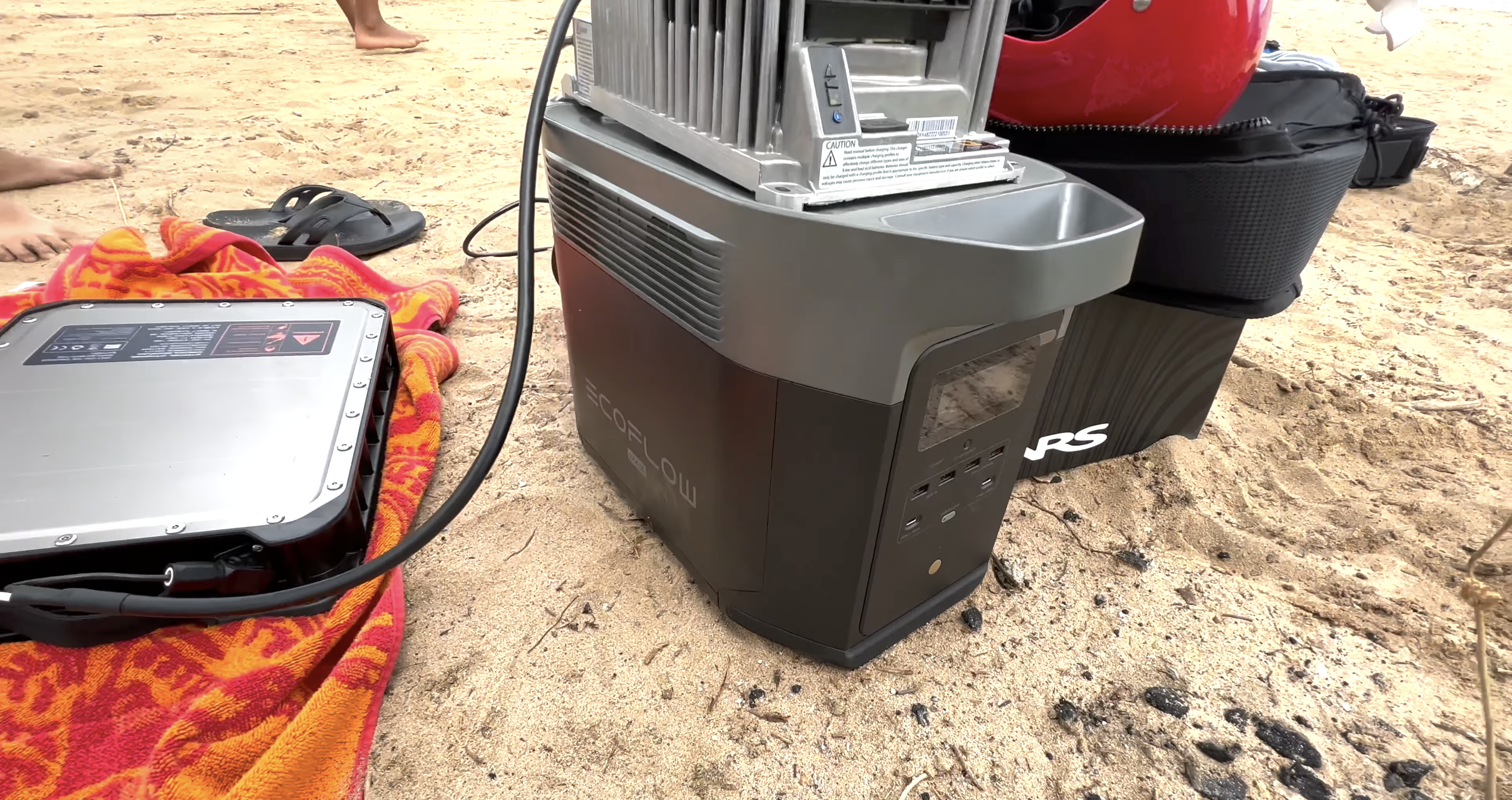
Battery management is worth planning for. The larger battery pack delivers close to two hours of ride time, which sounds like plenty until a family of six rotates through. Charging back to nearly full takes about an hour, and Jimmy's household bridges the gap with an EcoFlow external battery pack and truck charging. A second Fliteboard battery is available but adds $3,500 to the total investment.
The Freshly Charged Verdict
Andrew's answer after nine consecutive days on the water: completely. Jimmy's answer: yes, with the caveat that the price will reasonably put it out of reach for many people, and that is the foremost objection either rider had. Against a boat or jet ski on the dimensions of maintenance, transport, and experience quality, Jimmy would choose the electric hydrofoil every time. Worth noting: Fliteboard lent the team this unit for testing, but the conclusions here are consistent with the enthusiasm both riders brought after weeks of daily use. For anyone with access to a body of water and the means to make the investment, the Fliteboard delivers an experience that has no direct comparison in the PEV world. The price is real, but so is everything else about it.
No comments yet…