-large.jpg "Is This Premium 28 MPH Featherweight E-Bike Worth It? Cannondale Flying V Review")
After more than 100 ebikes tested, Andrew on the Freshly Charged team calls the Cannondale Flying V the most refined and agile ebike he has ridden. The full carbon fiber build, Gates carbon belt drive, Bosch mid-drive motor, and adaptive auto pedal assist combine into something that feels less like a powered commuter and more like a genuinely exceptional bicycle that happens to hit 28 mph. The criticisms are minor: a front light that needs more output, a rear light that does not double as a brake light, and no throttle option. At a premium price, the Flying V earns it.
Video Review

Written Review
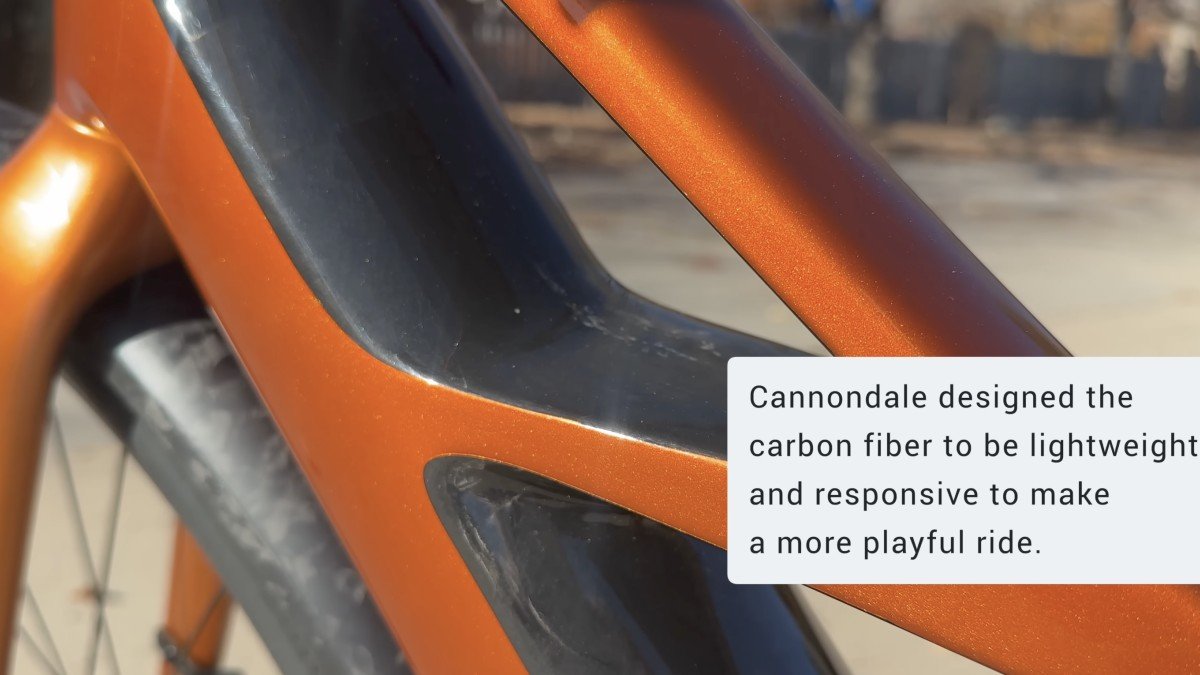
Cannondale has been building bicycles since before most of the people reviewing ebikes today were born, and the Flying V is their answer to the question of what happens when a brand with that kind of pedigree decides to build a premium urban ebike without compromise. Carbon fiber frame, carbon fiber fork, carbon fiber fenders, a Gates carbon belt drive, a Bosch mid-drive motor, and a design that pays homage to their iconic Delta V geometry. The Freshly Charged team tested it thoroughly, and Andrew's verdict was unambiguous: this is the most refined, smooth, and agile ebike he has ridden in over 100 bikes tested. That is not a claim made lightly around here.
- Learn more about the Cannondale Flying V: https://bit.ly/47Q1wN7
Build and Component Walkthrough
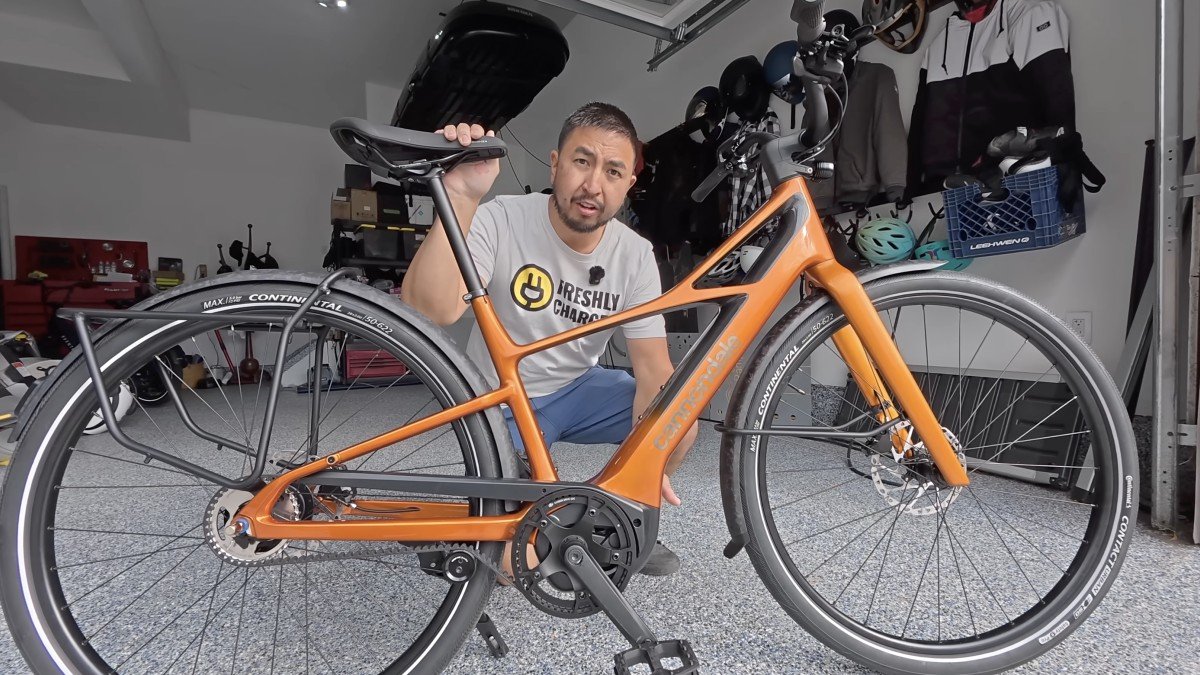
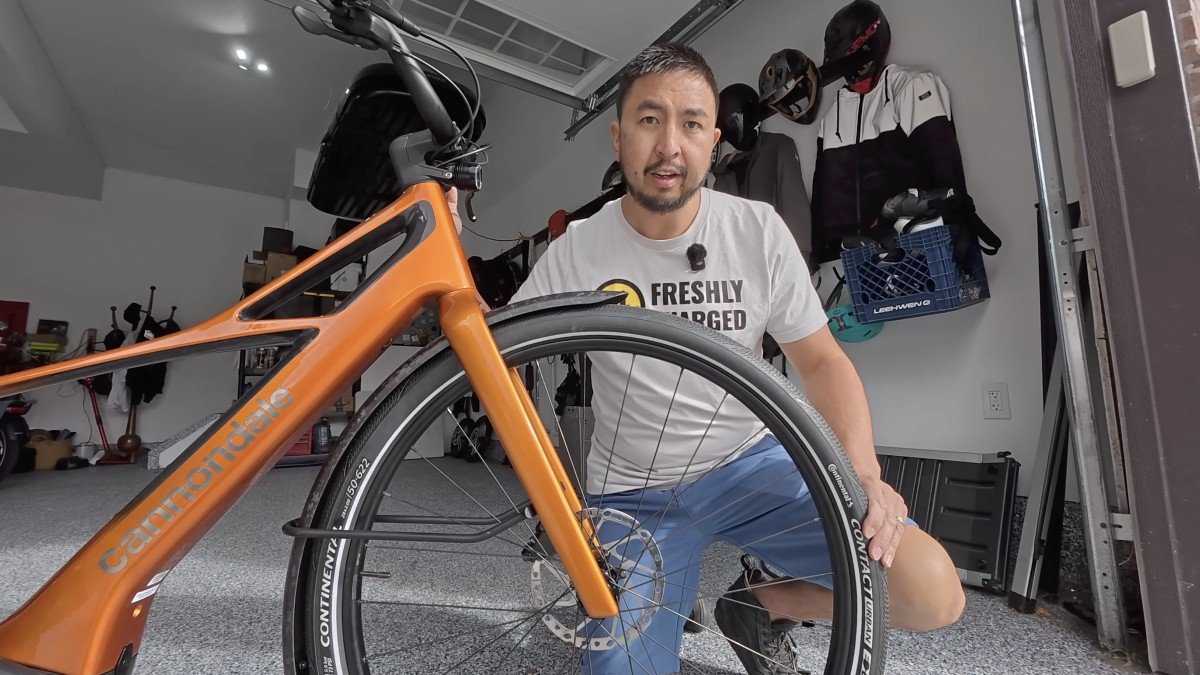
The Flying V presents itself as a traditional bicycle first and an ebike second, which is entirely intentional. There is no motor badging, no center display, no cutout in the frame hinting at a battery. It looks like a high-end road bike, and the stealthy aesthetic is one of its most deliberate design choices.
The left side of the bar carries Shimano hydraulic brake levers, Ergon handlebar grips, and the Bosch control unit for navigating pedal assist levels from eco through auto and up to turbo, plus a quality bell. The right side mirrors the brake lever and grip setup, adding a MicroShift 5-speed thumb and trigger shifter. Both sides mount to Cannondale's urban backsweep handlebars with a 93mm rise and 24-degree sweep on a C1 concealed stem. The Supernova Mini2 front light sits at the bar with adjustable angle.
The drivetrain is built around a Bosch mid-drive motor producing 250W continuous with a 600W peak output and 60Nm of torque, paired with a Bosch 400Wh compact tube battery hidden inside the frame. Power transfers through a Gates carbon belt drive running a 52-tooth front sprocket to a 36-tooth rear cog, shifted through five gears mechanically. This is notable: most Gates belt drive ebikes in this category offer either a single gear or electric shifting. Mechanical five-speed shifting on a belt drive is the right call, and it means the bike rides perfectly well with zero pedal assist engaged.
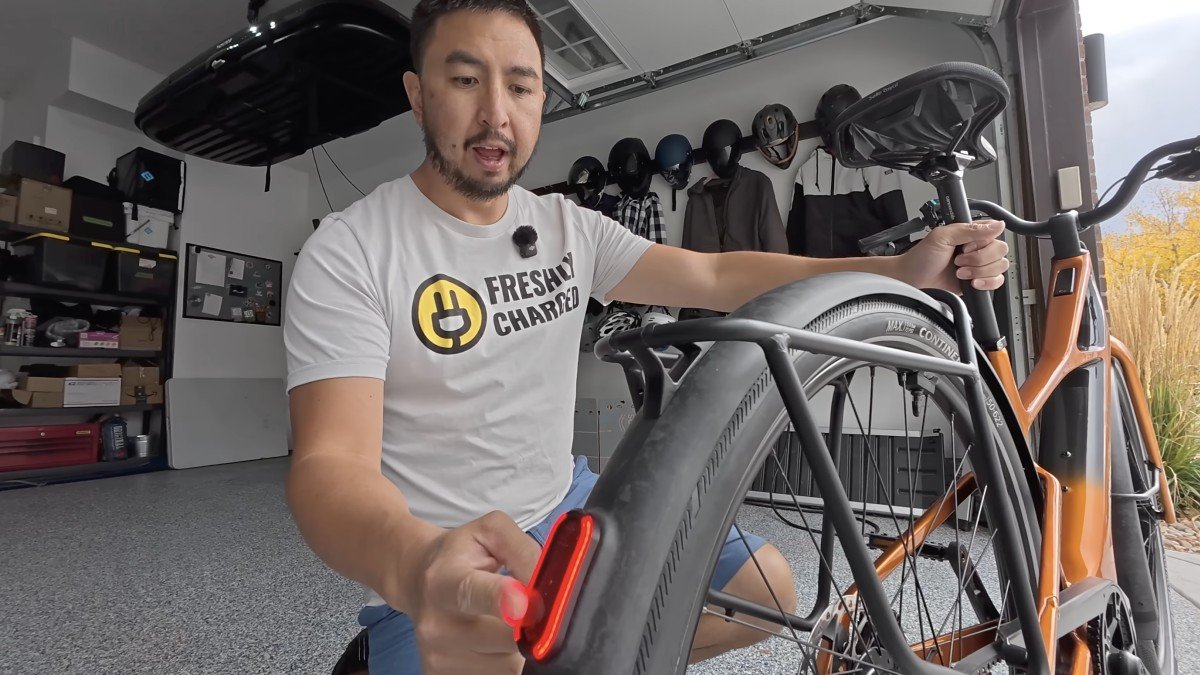
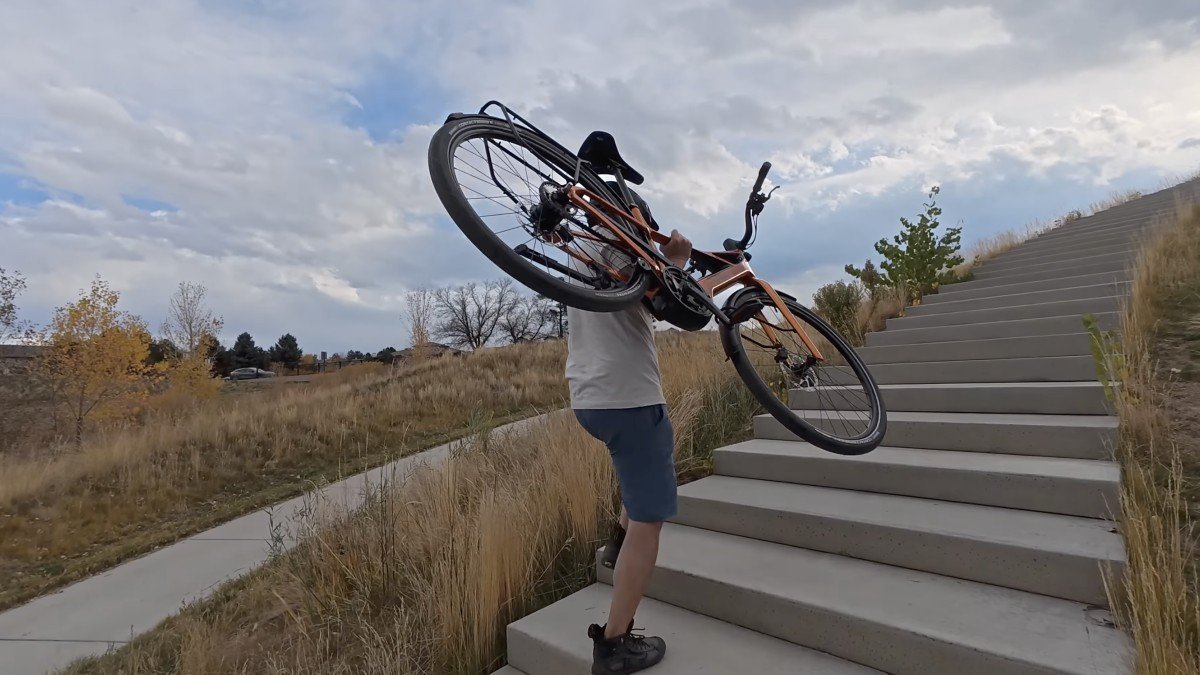
Wheels run 28 x 2-inch Continental Contact Urban E50 tires, an ebike-specific tire rated to 50 km/h, front and rear. Braking is handled by Shimano UR300 two-piston hydraulic discs with 180mm rotors at both ends. The rear rack carries an 18 kg capacity with a built-in tail light. At 40.8 pounds, the Flying V is light enough that Andrew described being able to carry it with one arm, which in practical terms means stairs, transit, and tight storage are all genuinely manageable.
How It Rides
The ride quality is the conversation. After more than 100 ebikes tested by the Freshly Charged team, Andrew called this the best cycling experience he has had on any of them. That distinction comes down to a combination of factors that individually are not unique to the Flying V but in combination produce something noticeably different.
The geometry positions the rider in what Andrew described as an attack stance: engaged and alert without the aggressive lean of a road bike. The Continental tires maintain rolling momentum after the rider stops pedaling, which sounds like a small thing until you are riding a bike that does not do it. The Gates belt drive and Bosch motor together produce one of the quietest ebike powertrains the team has tested. There is no chain slap, no mechanical noise at the drivetrain, and the motor contributes almost nothing to the sound profile.
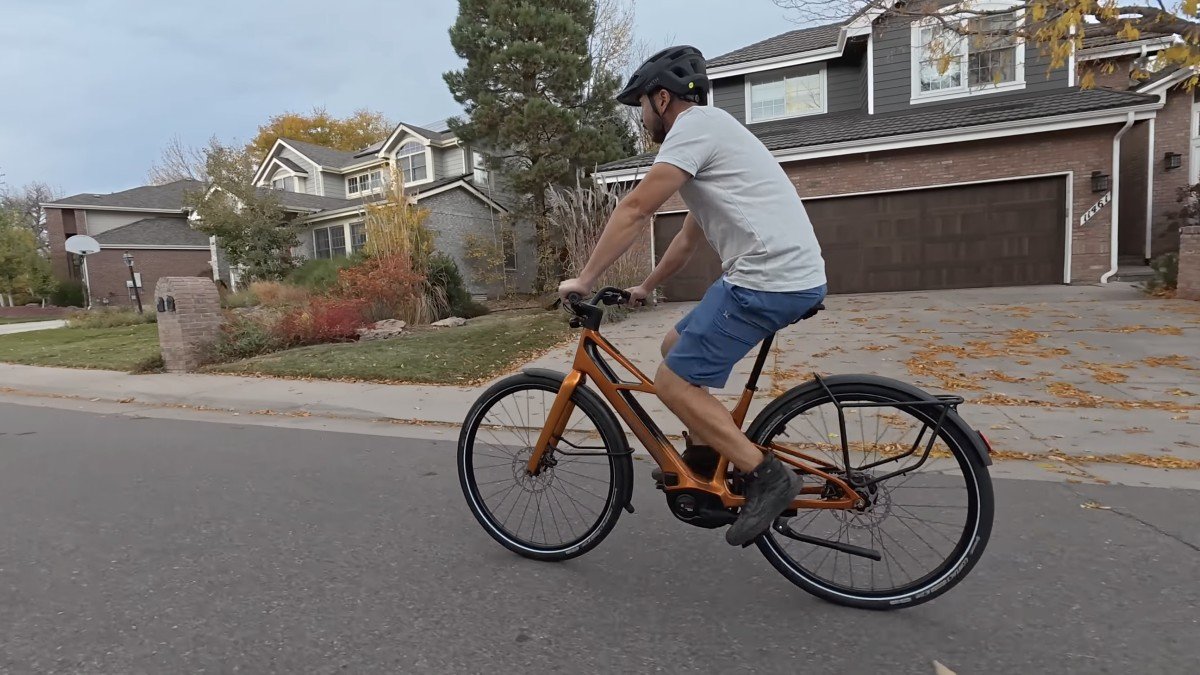
The auto pedal assist mode reads the rider's pedal force input and adjusts motor assistance automatically. Light pedaling keeps it in a low-assist state. Hard pedaling ramps the motor up. Descending, it recognizes the lack of need and backs off entirely. The rider does not have to think about modes or gearing. It is one of the more seamless implementations of adaptive pedal assist the team has seen.
The brake test produced 14 feet of stopping distance from 20 mph to zero, among the best the team has recorded on an ebike, attributable to both the two-piston Shimano hydraulics and the relatively light overall weight. Andrew noted some surprise that Cannondale did not fit four-piston brakes at this price point, but acknowledged the two-piston units perform beyond what their spec suggests.
The App Experience
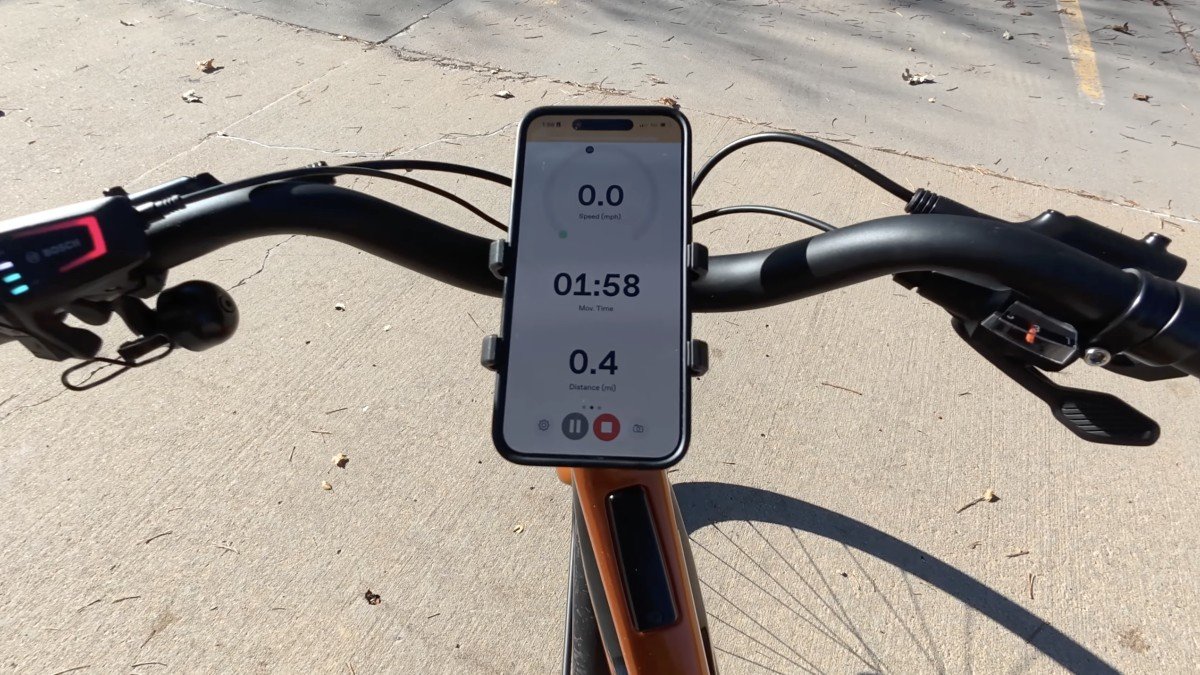
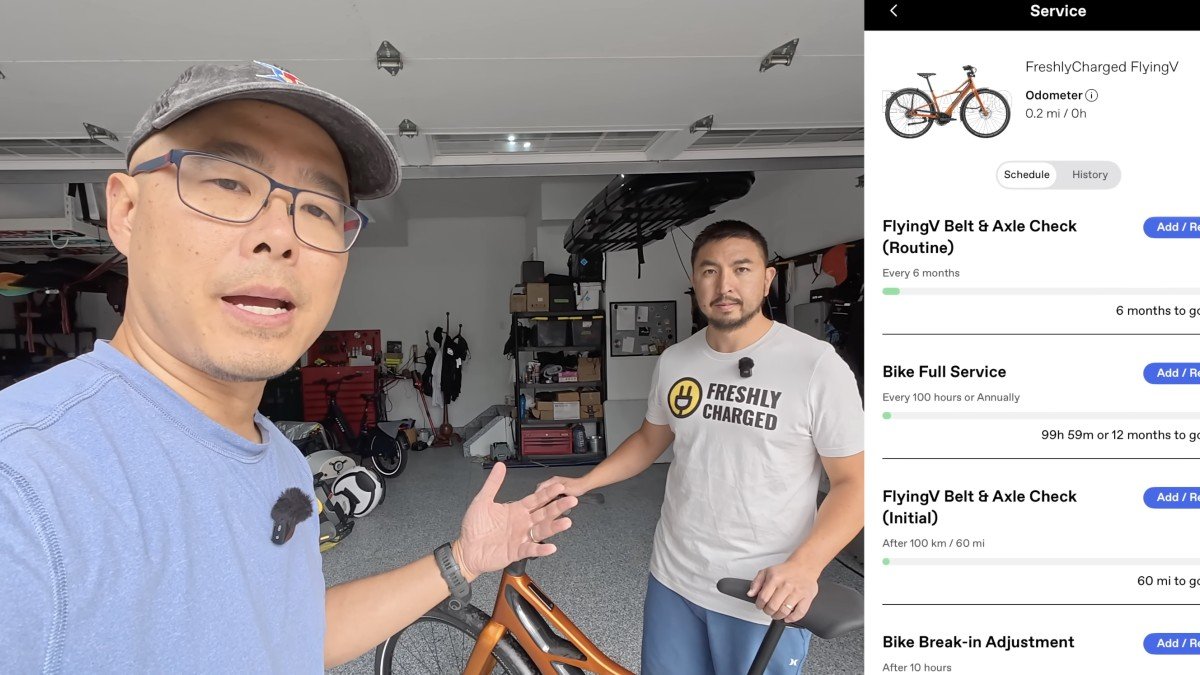
With no dedicated display unit on the bike, the Bosch app running on a phone mount is the rider's primary interface for speed, ride tracking, and settings. The app adds two features the team had not seen elsewhere: a service reminder tab that prompts maintenance intervals for brake adjustment, cleaning, lubrication, and break-in procedures, and a complete parts list for the bike that allows riders to identify every component by name before contacting a shop or ordering a replacement. Both are practical additions that treat the Flying V more like a maintained vehicle than a disposable product.
What Needs Improvement
Lighting: The front light is functional but not bright enough for a bike at this price. The adjustable angle is useful; the output level is not up to the standard of the rest of the build. The rear light is ultra bright but does not function as a brake light. The transcript attributes this to the Shimano brake levers lacking the electrical output to trigger it; but this is a genuine safety gap on a bike marketed for urban riding.
Throttle: There is no throttle. Andrew acknowledged this is unlikely to bother most buyers in this category, but at 28 mph Class 3 capability, there is a meaningful subset of riders who would want the option.
Charge Port: The Bosch charge port cover opens with a snap but requires deliberate force to close and has a tendency to catch on fingernails. This is a Bosch design issue rather than a Cannondale one, but the rider experiences it as part of the bike regardless.
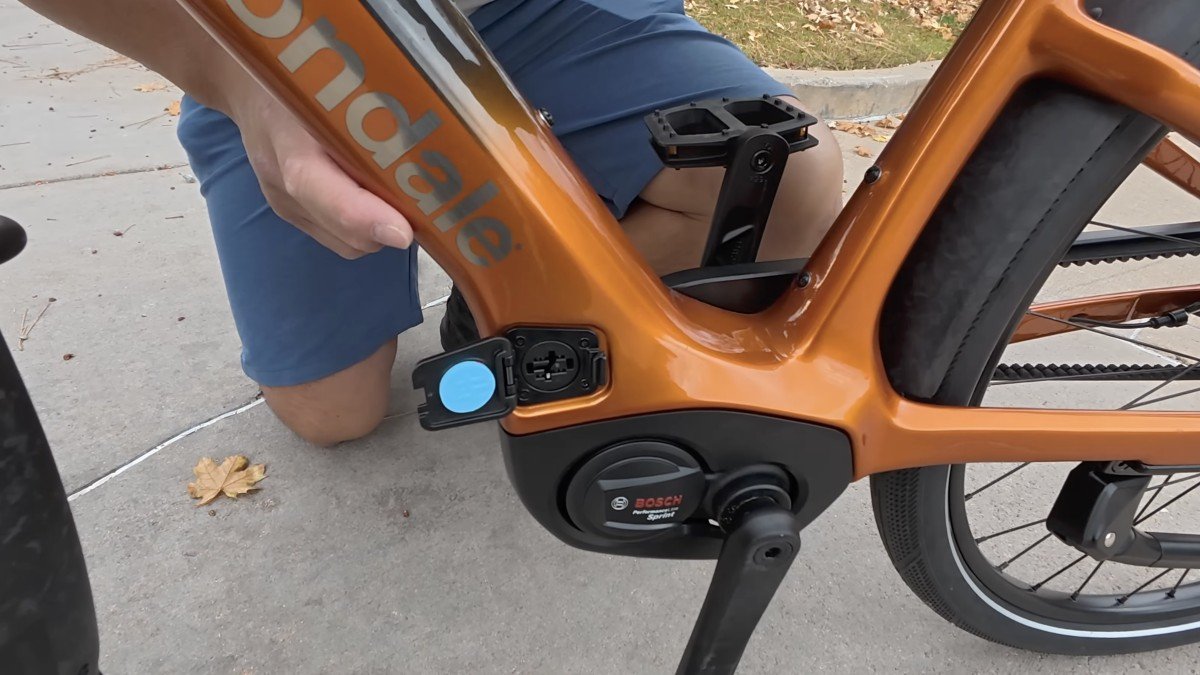
Minor Design Flaw: The frame includes a small window opening where a control module appears on other models in the line. It serves no function on the Flying V and stands out conspicuously against an otherwise clean carbon fiber surface. Minor, but noticeable on a bike at this price.
The Freshly Charged Verdict
The Cannondale Flying V is not trying to be the fastest or most powerful ebike, but the best riding ebike. Measured up against the team's wealth of experience in ebike testing, it succeeds. The criticisms are real but proportionally small: a front light that could be brighter, a rear light that should double as a brake light, no throttle option, and a charge port cover that needs rethinking. Notably, none of those things change what happens when you are on it. For riders who want a premium urban ebike that rides like a bicycle and happens to have a motor, the Flying V is a well-built contender.
- Learn more about the Cannondale Flying V: https://bit.ly/47Q1wN7
No comments yet…