-large.jpg "Lumos Sonorus: The Smartest Ebike Helmet Lets You Talk to 15 Riders at Once")
Lumos made their name on smart helmet lighting, and the Sonorus is the fullest expression of that expertise yet: a gyro-activated brake light system, front and rear turn signals, and near-360-degree LED visibility that holds up in real-world riding conditions. To round it out, there is a MIPS-certified shell and replaceable electronics module, as well as a mesh intercom system that keeps up to 15 riders connected. The intercom works well in line-of-sight conditions but falls short of the advertised one-mile range claim, which is the main drawback of this tech-packed product.
Video Review
Written Review
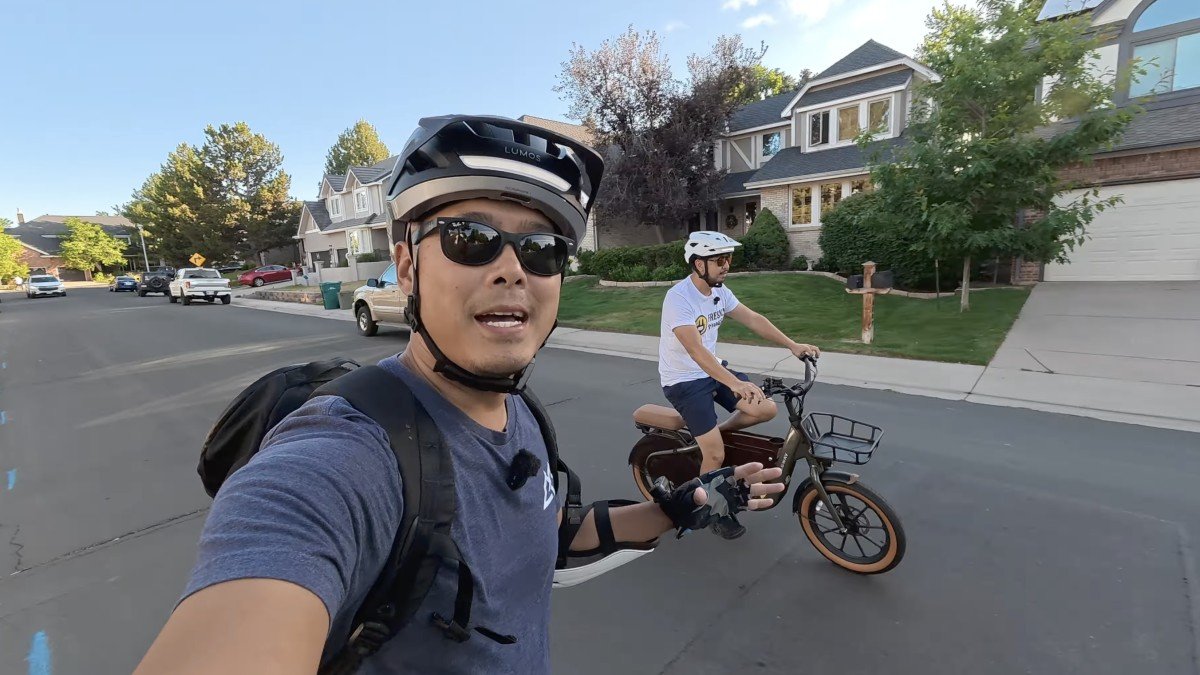
Lumos built its reputation on lighting. The brand itself is a literal nod to illumination, and they spent years carving out a serious niche in smart cycling helmets before anyone else. The Sonorus is the logical next step of that trajectory: a helmet with integrated front and rear LEDs, automatic brake lights, turn signals, a mesh intercom connecting up to 15 riders, open-ear speakers, a microphone, USB-C charging, MIPS protection, and NTA 8776 certification for Class 3 e-bike speeds up to 28 mph. Jimmy and Andrew from the Freshly Charged team spent a full session testing these product claims with pre-productions samples, and the result is a helmet that earns most of its ambition.
- Learn more about the Lumos Sonorus: https://www.kickstarter.com/projects/lumoshelmet/lumos-sonorus-mesh-intercom-helmet-with-360-visibility
The Lighting System: Where Lumos Knows Its Business
The brake light system is the feature that grabs attention first, and for good reason. The Sonorus uses a gyro built into the rear control module to detect deceleration and trigger the brake lights automatically. No button press or manual activation needed. In field testing, the output was genuinely bright, almost to the point where direct eye contact becomes uncomfortable. On roads with increasingly distracted drivers, that intensity is a standout.
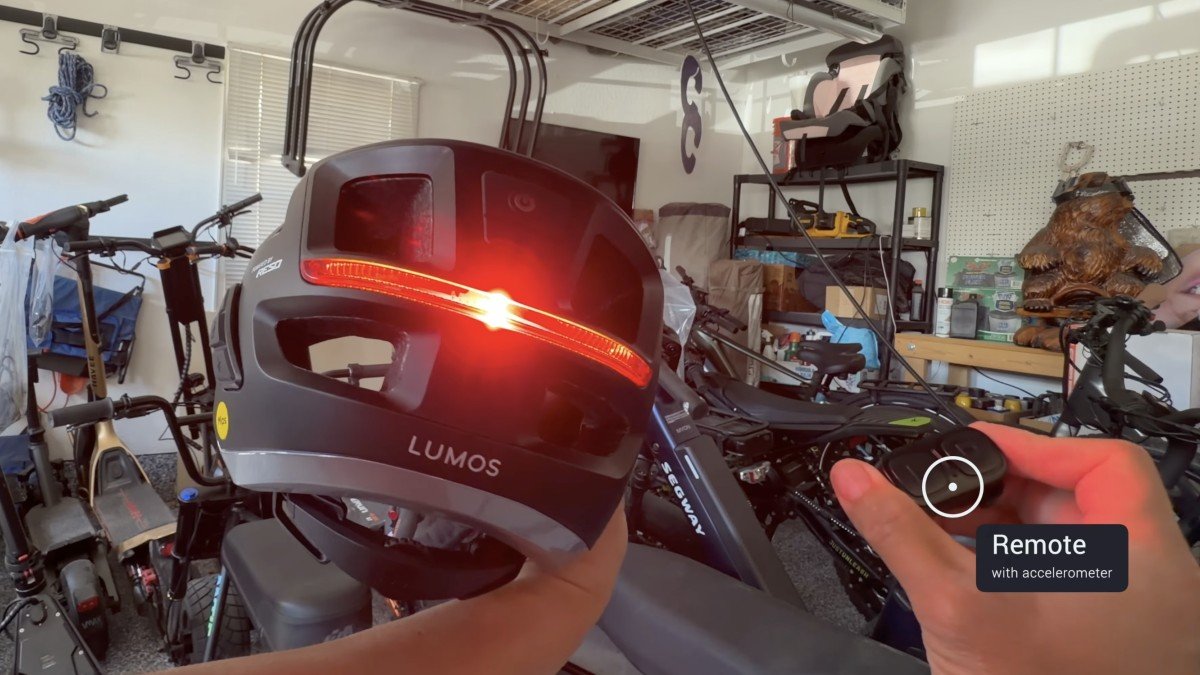
The turn signals operate from a small wireless handlebar remote included in the box. What sets this system apart from the turn signal integrations appearing on more e-bikes is front and side visibility: most bikes with turn signals only signal at the rear. The Sonorus signals front and back, and the front LEDs tested brighter than expected. If you've ridden any kind of PEV with manual turn signals, you are likely guilty of accidentally riding a mile with your indicator still blinking. To solve this, the system gives audible feedback through the helmet speakers to remind the rider the signal is still active.

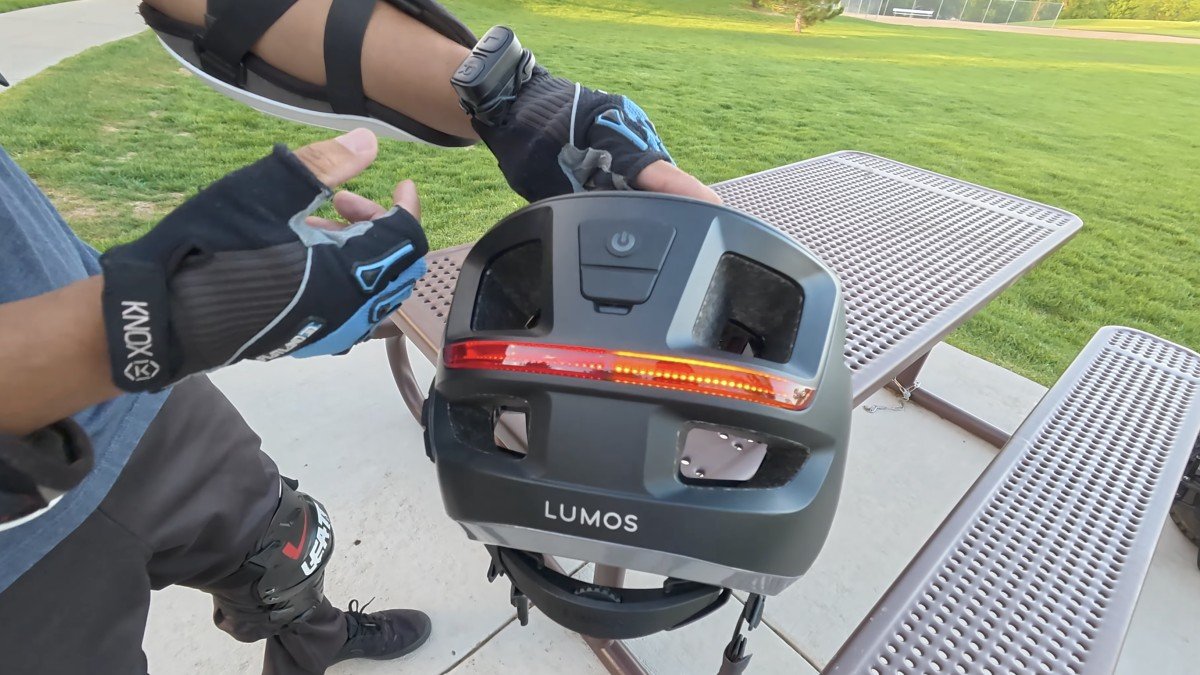
The lighting architecture provides close to 360 degrees of visibility. From the front, from the rear, and when the helmet is held directly sideways, you still catch partial light output from both sides. That coverage matters in intersections and during lane changes when a motorist's angle is constantly shifting. Brightness cycling is controlled by triple-pressing the rear power button rather than requiring the app, which keeps safety quickly accessible.
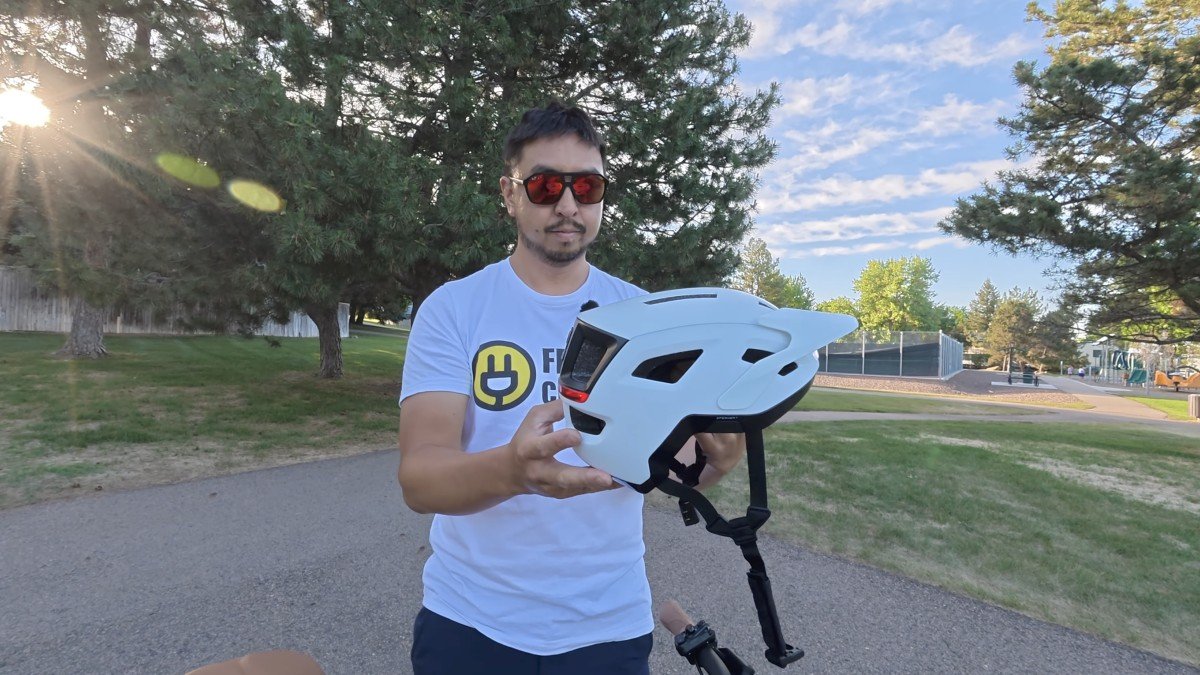
Through the Lumos app, the Sonorus also pairs with the brand's Firefly accessory lights, which are additional units made mountable to the rear or handlebars of the bike. The app allows all connected lights to be synchronized to a single pattern; and for group rides, setting 15 helmets and their paired bike lights to the same flash pattern simultaneously is a compelling visibility proposition, not just an aesthetic one.
The Helmet Itself: Light, Thoughtful, and Modular
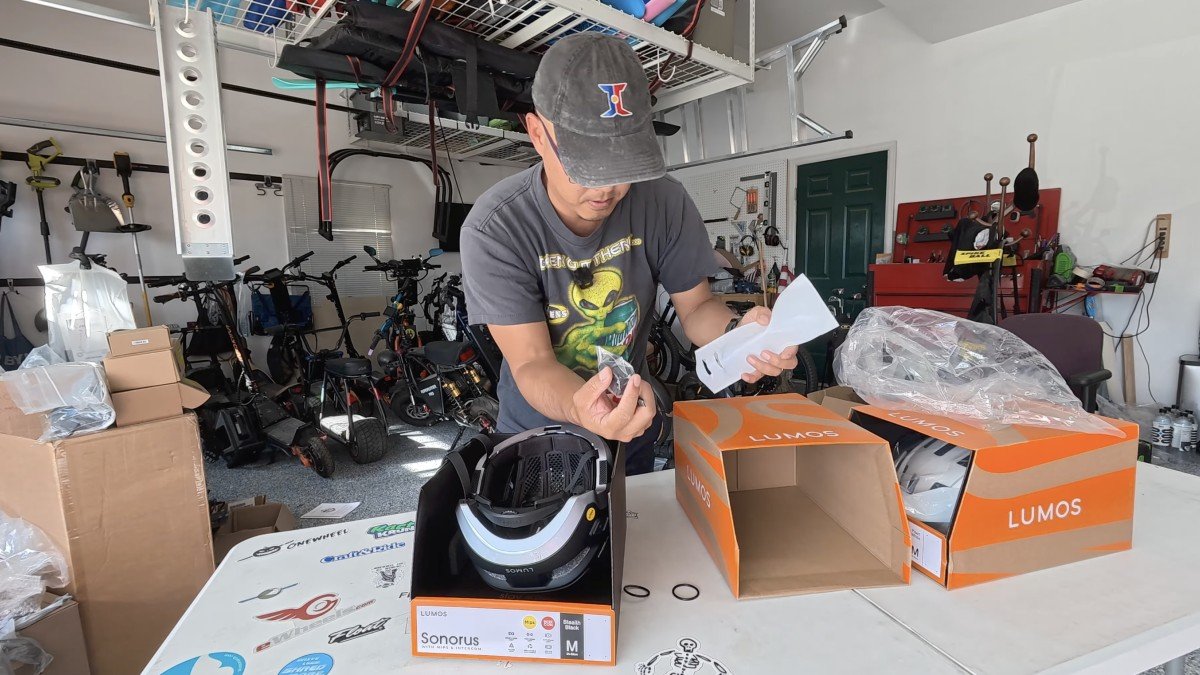
Packaging is minimal by design, and Jimmy compared it to unboxing a pair of shoes rather than a piece of tech. Inside: the helmet, a USB-C cable, the wireless turn signal remote, some mounting bands, and nothing else. While no printed instructions was initially a surprise, the product simplicity and intuitiveness of the controls don't really require a manual. Lumos offloads onboarding to a few online tutorials, which is really all that is needed.
The construction inside the helmet is thoughtful, warranting specific attention. MIPS is present, meaning the inner liner can rotate independently of the outer shell on impact. That relative movement absorbs rotational energy and limits the forces responsible for concussions and diffuse axonal injuries — the kind of trauma a straight-line impact rating alone does not address. NTA 8776 certification confirms engineering for e-bike use speeds, not just traditional cycling.
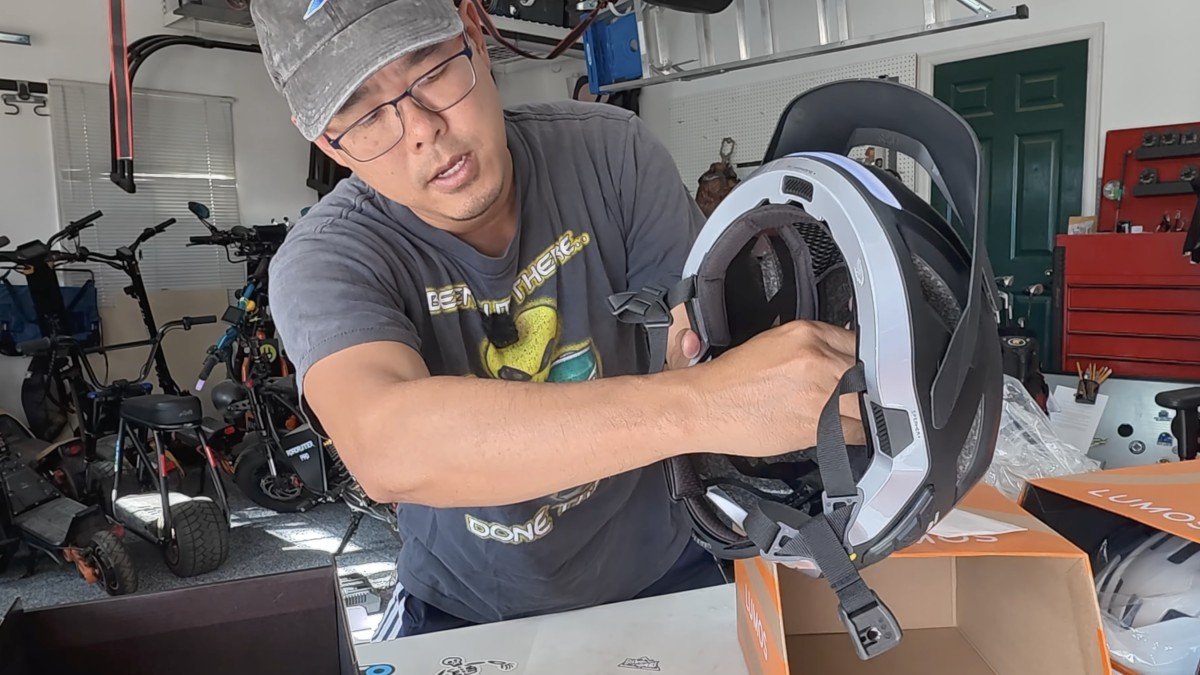
The Fidlock magnetic buckle makes on and off genuinely fast and one-handed, which is a nice detail when moving between riding and stopping frequently. Ventilation held up well during a summer evening session, with the team noting consistent airflow across multiple hours of riding.
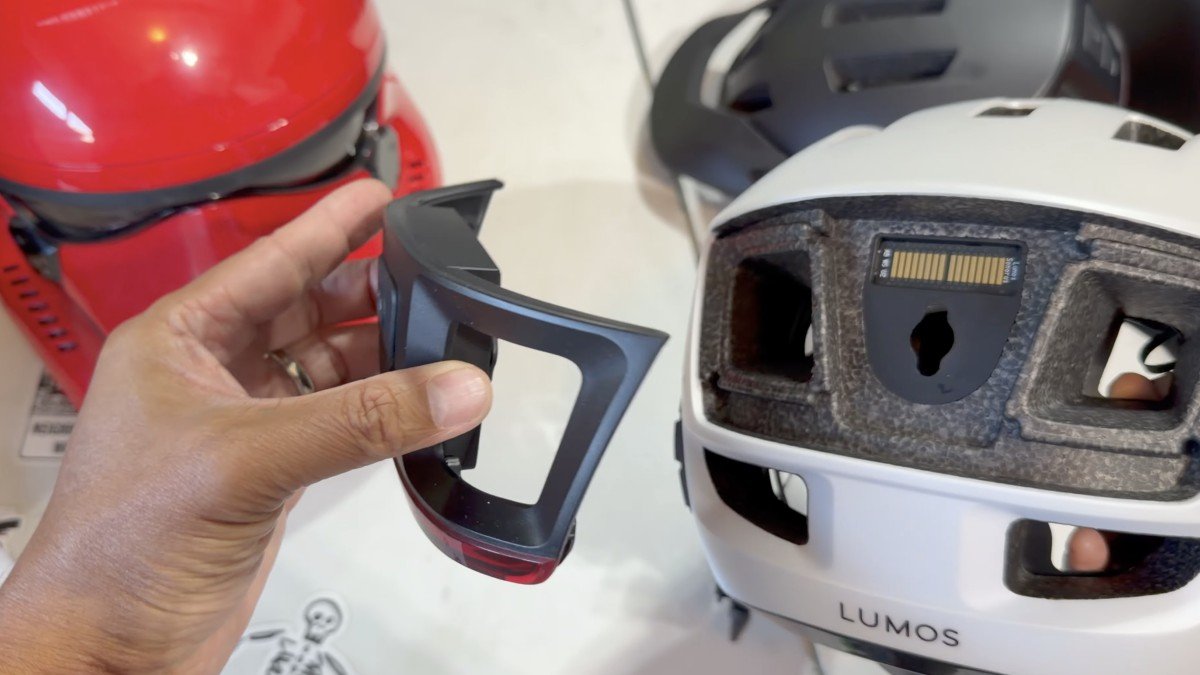
The most underrated structural decision is the replaceable electronics module, which clips into the rear and can be swapped out when the tech ages or a component fails. Since this makes up the "brain" of the helmet, you can rest easy knowing you won't have to buy an entirely new helmet when something goes wrong. In addition, that modularity separates the safety asset from the technology asset, which is a more defensible long-term purchase argument than most competitors offer.
The Intercom: Strong in the Right Conditions
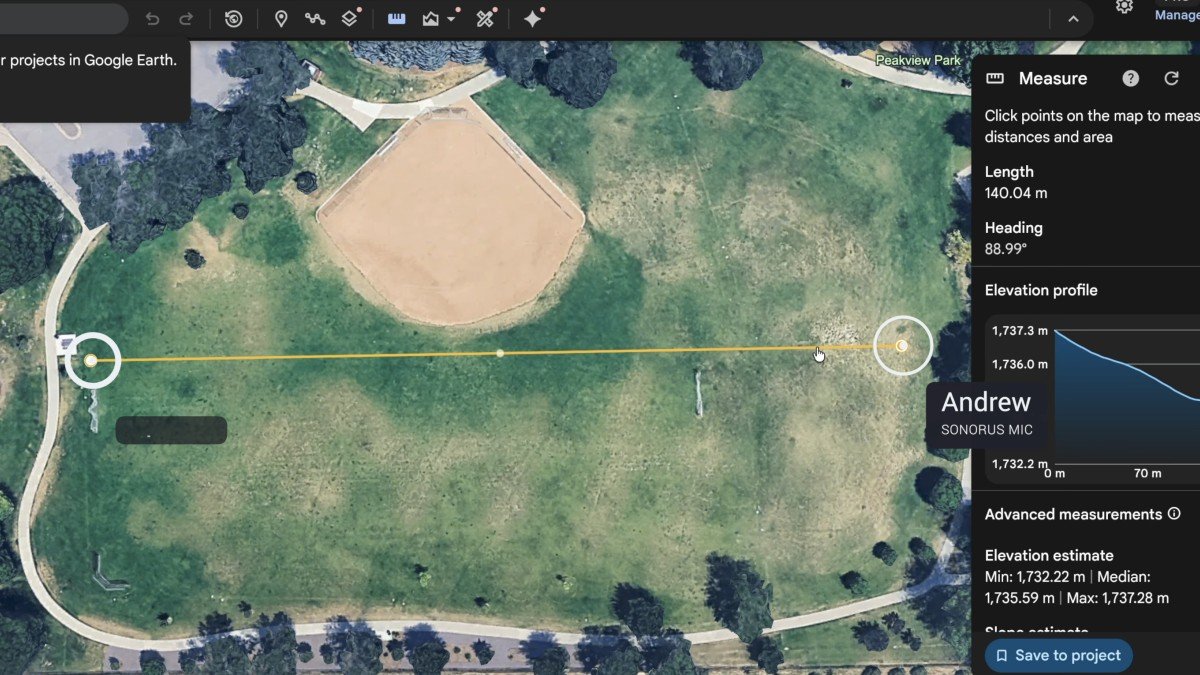
The mesh intercom is the headline feature for group riding, and it works enough to impress Andrew and Jimmy, but not quite well enough to avoid serious criticisms. The advertised range is one mile between two riders, with total mesh range scaling up to five miles when multiple riders are distributed across distances, allowing for "piggybacking" relay nodes. In controlled line-of-sight testing, Andrew and Jimmy maintained clear communication well beyond what either expected, including when one had descended a hill and was no longer visually visible from the other.
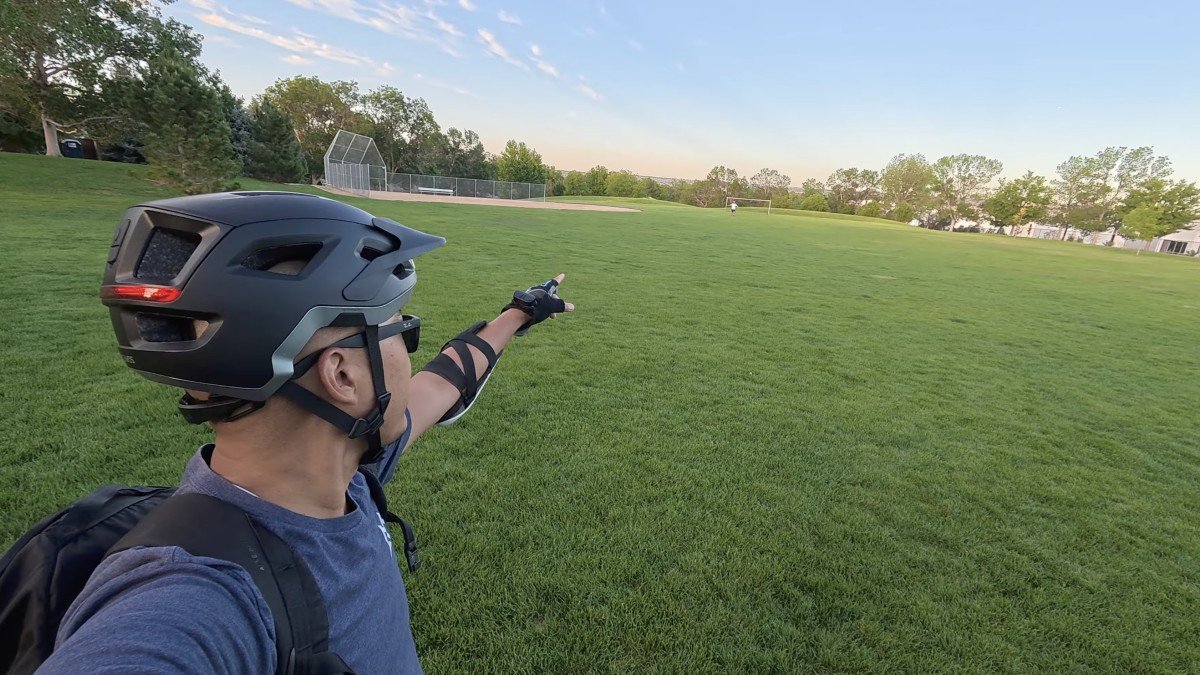
The caveat is that range degrades meaningfully when obstacles enter the picture. Earlier in the same session, when the two were separated by a neighborhood block with buildings between them, the signal dropped, meaning the line-of-sight dependency is real. For most group scenarios — a pack on a trail, open road cruising, or urban riding — that is a limitation to understand and weigh against terrain variation on your average rides, especially if the intercom system is your main reason for purchase.
Audio quality was described as slightly muffled on first listen, an impression that faded over the course of the session as the team adjusted to the open-ear format. The open-ear design is deliberate: no earbuds, no over-ear cups, nothing blocking ambient awareness. Music streams via Bluetooth from a connected phone, and the system automatically ducks volume when intercom audio comes through. For safety-conscious riders who have avoided in-ear audio precisely because of the awareness tradeoff, this architecture solves the problem cleanly.
One note: the helmets used in filming were pre-production samples. The team observed connectivity behavior they suspected may improve on final production hardware, and both scored with that in mind.
What It Gets Wrong
The range claim is the most substantive criticism, despite outperforming expectations in absolute terms. Lumos advertises one mile of direct range between two riders, which was not met before audio began to break up, even with no obstacles in the way. At this price point for a tech helmet, over-claiming on the flagship spec is a self-inflicted wound.
Speaker quality is the secondary critique. Clear enough at conversational range, but not a replacement for a dedicated audio system. For ambient-awareness riding, that is an acceptable trade. For anyone expecting high-fidelity music playback, calibrate expectations accordingly.
The Freshly Charged Verdict
Andrew's score of the Sonorus: 8.5 out of 10. Jimmy landed at 8.4, with the fraction docked explicitly for the overpromised range spec. Both ended up in the same rating territory for the same reasons: excellent lighting that leads the category, modular construction that justifies the investment across multiple years, and an intercom that solves a real problem for group riders. The gap between marketing and real-world range performance is the only thing keeping it from a cleaner score.
For Class 3 e-bike riders, mountain bikers riding in groups, or anyone wanting open-ear audio and group communication without sacrificing helmet quality, the Sonorus makes a strong case. Lumos knows lights and safety, but more importantly, the meaningful details show they know what bikers want. The intercom is a credible first execution at this feature level, and may yet improve when production units start rolling out. The hardware is there, but the range spec needs to catch up to the claim.
- Learn more about the Lumos Sonorus: https://www.kickstarter.com/projects/lumoshelmet/lumos-sonorus-mesh-intercom-helmet-with-360-visibility
No comments yet…