-large.jpg "This Mobility Scooter Took My Mom From Disneyland to Zion National Park")
The Dashmoto Dash 3 is a full carbon fiber mobility scooter capable of 18 mph with an FAA compliant removable battery, and it genuinely opened up experiences for Andrew's 72-year-old mom that were not possible before — Disneyland, Zion National Park, and trails near her house she had never been able to access due to her knees. However, at nearly $4.4k, the product arrives with a criticism list that is hard to ignore: a jerky throttle in sport mode, no brake light, no mirror, no horn, a rear bag sold separately for over $100, and a QC issue on the delivered unit where a loose battery was disconnecting on bumps. The Dash 3 is a capable lightweight mobility scooter, but Dashmoto needs to close the gap between the price and the execution.
Video Review

Written Review
Andrew's mom is 72, has knees that her doctor has been flagging for replacement surgery for years, and has never been comfortable on an e-bike. Getting her onto trails, into Disneyland, and eventually into Zion National Park for a family ride was not a realistic possibility before the Dashmoto Dash 3 showed up. That is the strongest endorsement in this review, and it comes before a criticism section that is much too dense for a product in this price range.
- Current price of the Dash 3: https://dashmoto.co/dash3
What the Dash 3 Is
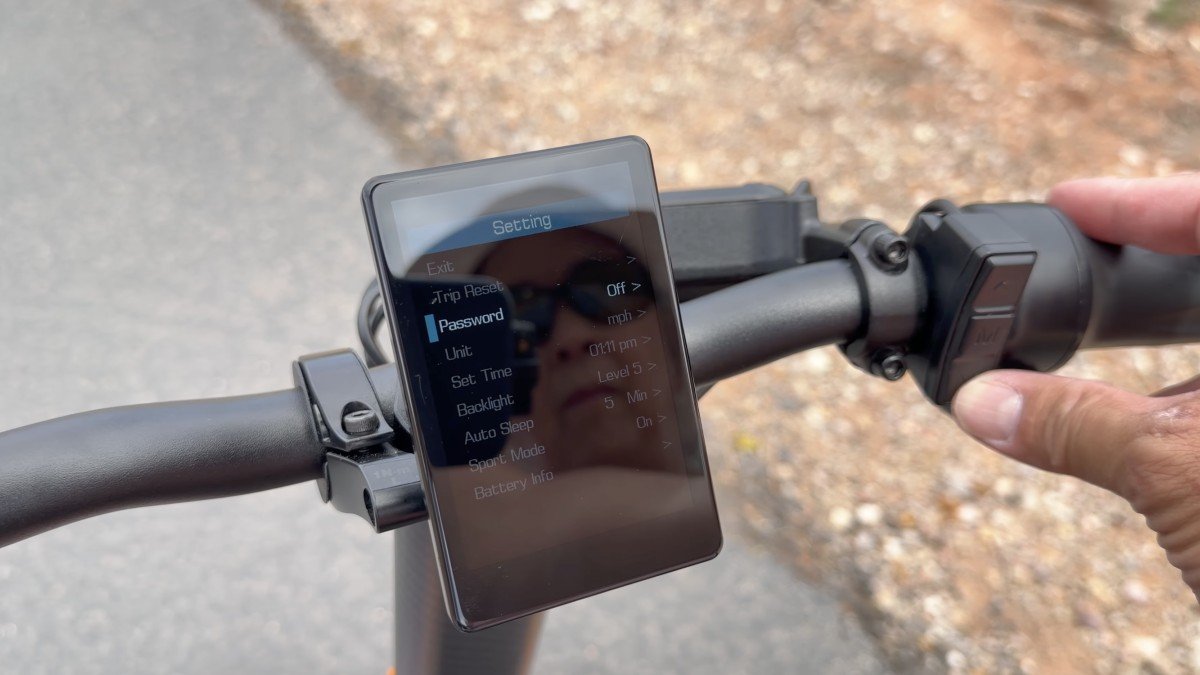
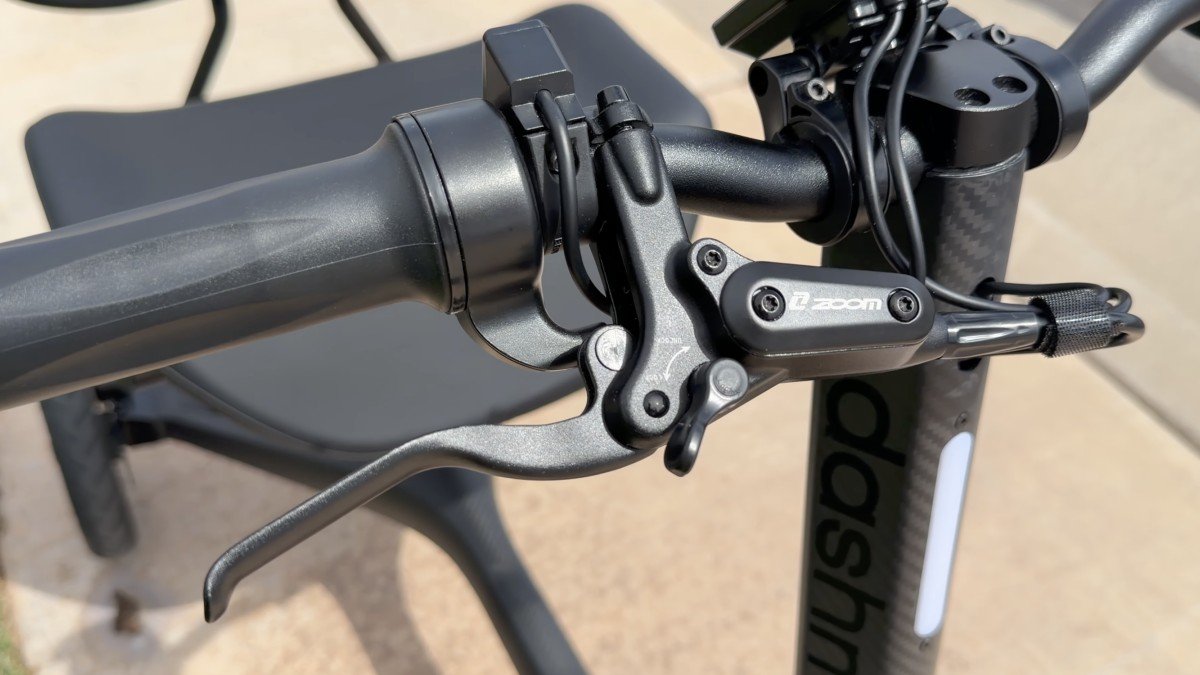
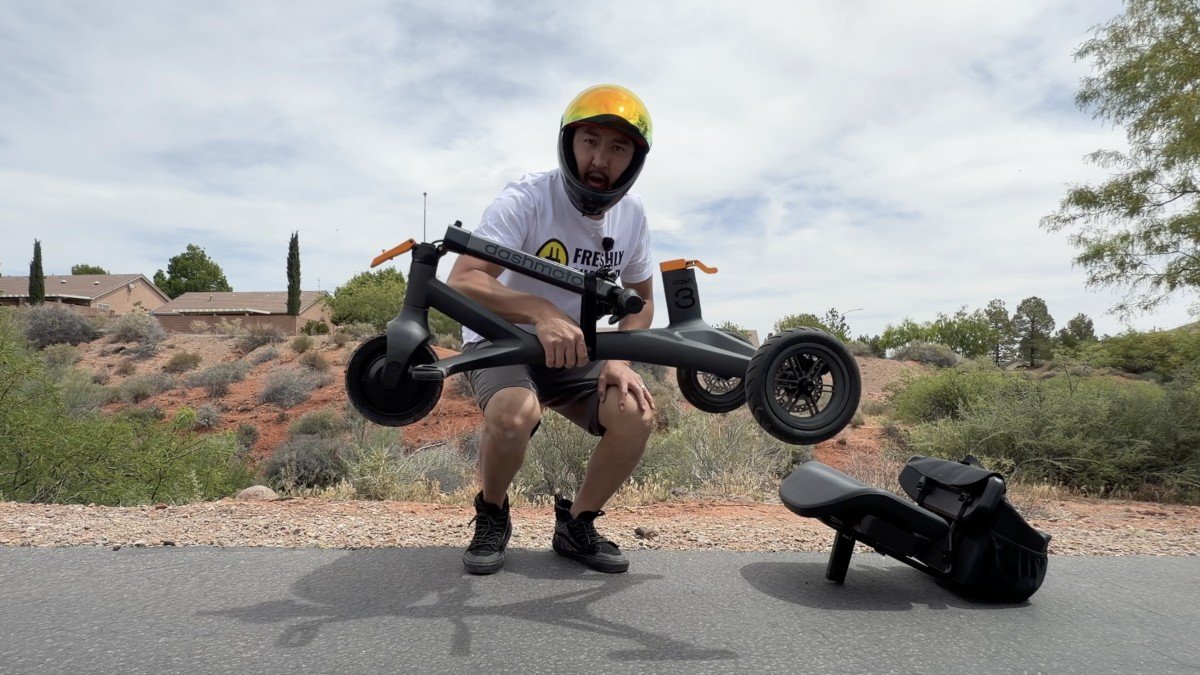
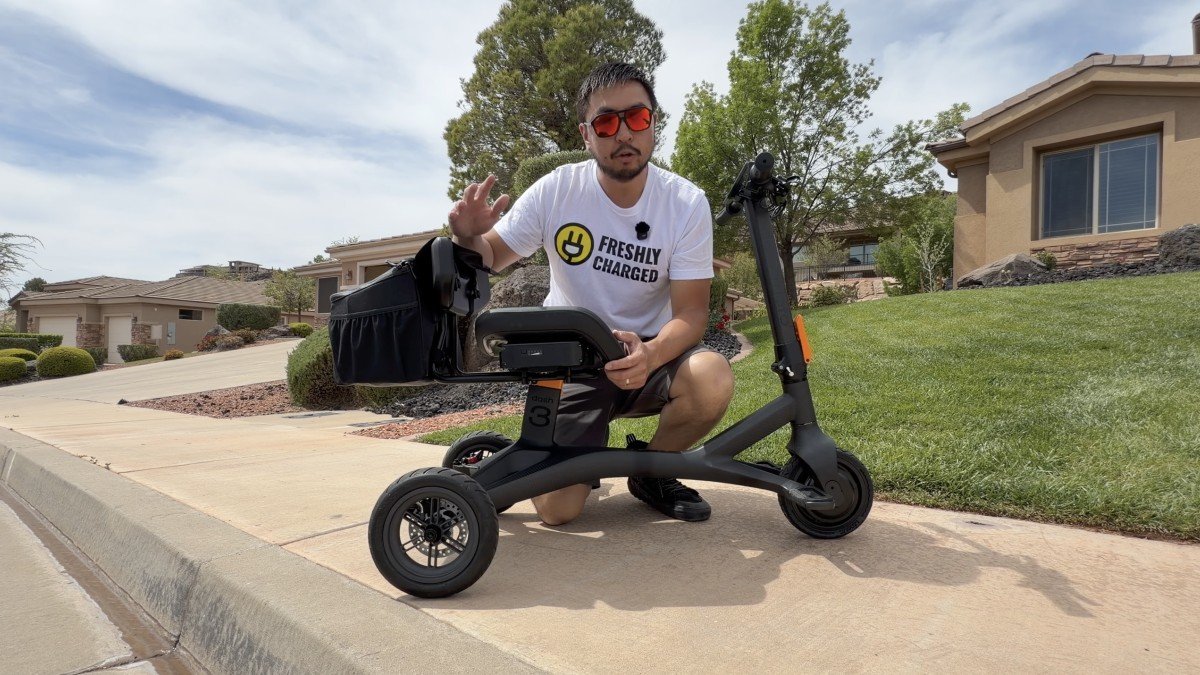
The Dashmoto Dash 3 is a three-wheeled mobility scooter built around a full carbon fiber frame. Top speed is 18 mph across four riding modes: reverse, walk, cruise, and sport. The cockpit runs a full twist throttle on the right, a TFT LCD display in the center showing speed mode and battery info, and a single Zoom hydraulic brake lever with parking brake. The steering pole is carbon fiber with a single button quick release for folding, paired with a handy Velcro strap to keep it tidy in transit. The fold itself is simple: one button at the front drops it flat, a silver button at the base of the pole raises it back up and snaps into place.
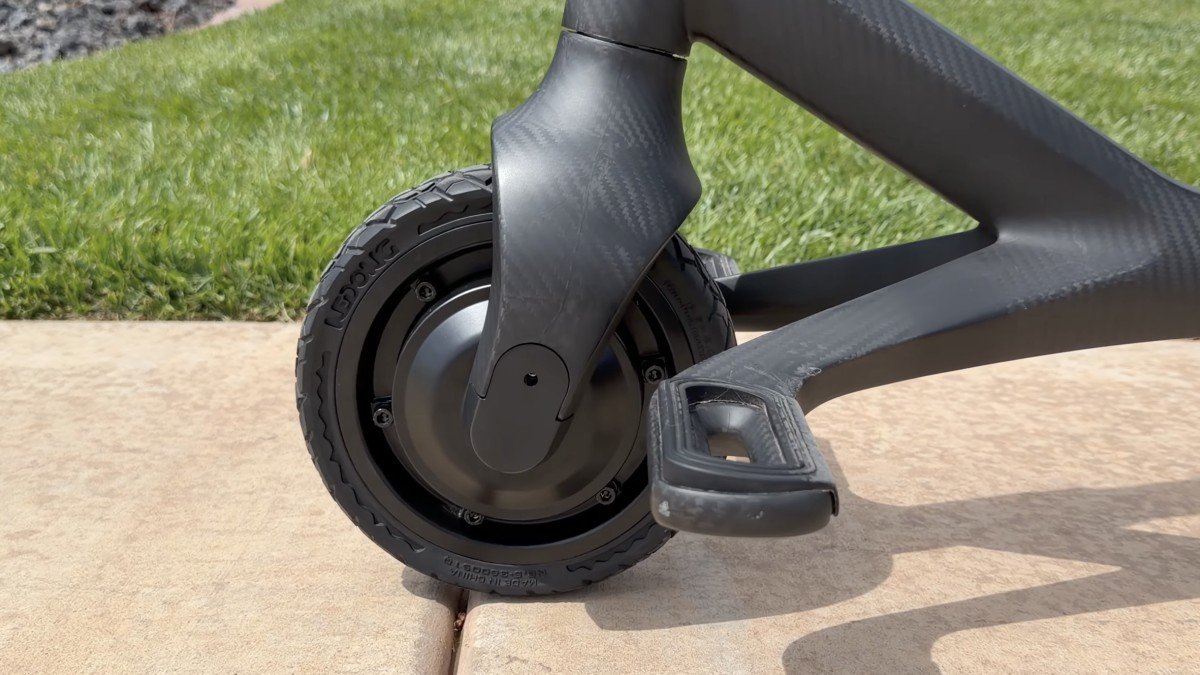
The front tire is a solid airless unit housing the 500W motor. The rear runs two 8.5x2 inch air-filled tires with 110mm brake discs and two-piston Zoom hydraulic brakes. The battery sits under the seat: a removable Samsung cell pack rated at 46.8V, 5.8Ah for 271.4Wh total, UL certified and FAA compliant for the standard size. An upgraded larger battery is available for extended range but loses FAA compliance, so Andrew purchased a second standard battery to keep both units travel-legal. Charging from empty to full on the included 3-amp charger takes two to two and a half hours.
Weight is 42 lbs with seat and battery, but drops to 26 lbs when both are removed. An optional rear bag accessory attaches to the seat back and fits a spare battery, charger, and supplies for longer rides.
-large.jpg "Dashmoto Dash 3 Untitled design (43).png")
What Works
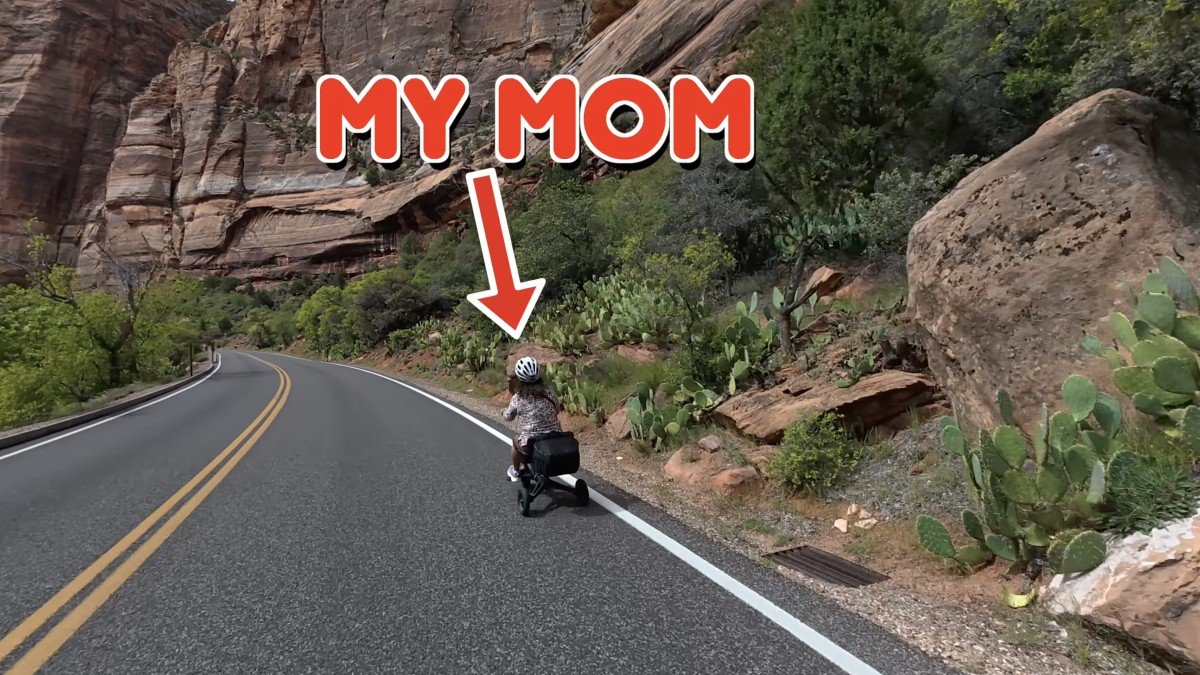
The speed alone is a differentiator. Most mobility scooters top out at 4 to 8 mph. At 18 mph, and occasionally nudging 20 mph depending on rider weight, the Dash 3 can actually keep pace on trails rather than creating a two-tier situation where the mobility user falls behind. Andrew's mom rode Zion National Park's paved trails alongside Andrew on an e-bike towing a kid trailer with his wife riding alongside, which is an outing that would not have happened on a 6 mph scooter.
The FAA compliant battery makes it genuinely travel-ready. Andrew took it to Disneyland, where his mom had previously refused to go because of the walking involved. With the Dash 3, she rode through the park, had the grandkids climb onto her lap, and did not have to deal with the knee swelling and tightening that walking distances triggers. The weight capacity handles a 72-year-old with children on her lap without complaint.

The fold and compact configuration is genuinely practical. At 26 lbs without the seat and battery, it fits in a car without requiring lift assistance. The display is crisp, readable, and navigable through a simple hold-the-M-button menu. The electric braking system is a smart touch: even without the parking brake engaged, the scooter detects a slope and locks itself from rolling. The machine is intuitive enough that Andrew's nieces and nephews, ranging from 3 to 15 years old, operated it without instruction.
What Needs to Be Better
The criticism list here is substantial for a $4.4k product, and Andrew does not soften any of it.
The throttle is the most operationally significant problem. In sport mode it is jerky and abrupt, which Andrew attributes to a square wave controller rather than a sine wave controller. This is manageable for an experienced rider, but for the target customer — an elderly person with limited hand strength and reaction time — it is a real issue. Walk mode is smooth and fully predictable, but sport mode, where the range-extending speed lives, requires throttle modulation skills the target demographic may not have. Andrew would like the option of a thumb throttle as an alternative.
There is no mirror and no horn, which is notable since his mom asked for both during the video. The handlebar grip design does not accept standard stick-on mirrors, so adding one after purchase is not straightforward. In Zion, the absence of a mirror created a dangerous moment: shuttles require trail users to clear the path, and Andrew's mom has some hearing loss. When Andrew yelled from behind that a shuttle was coming, she could not hear him. A mirror would have solved this immediately, and both should be standard at this significant cost.
The scooter has no brake light. The tail light functions as a running light only, and when the rear bag is attached it covers the tail light entirely. Andrew flags this as a meaningful safety gap on a machine capable of 18 mph.
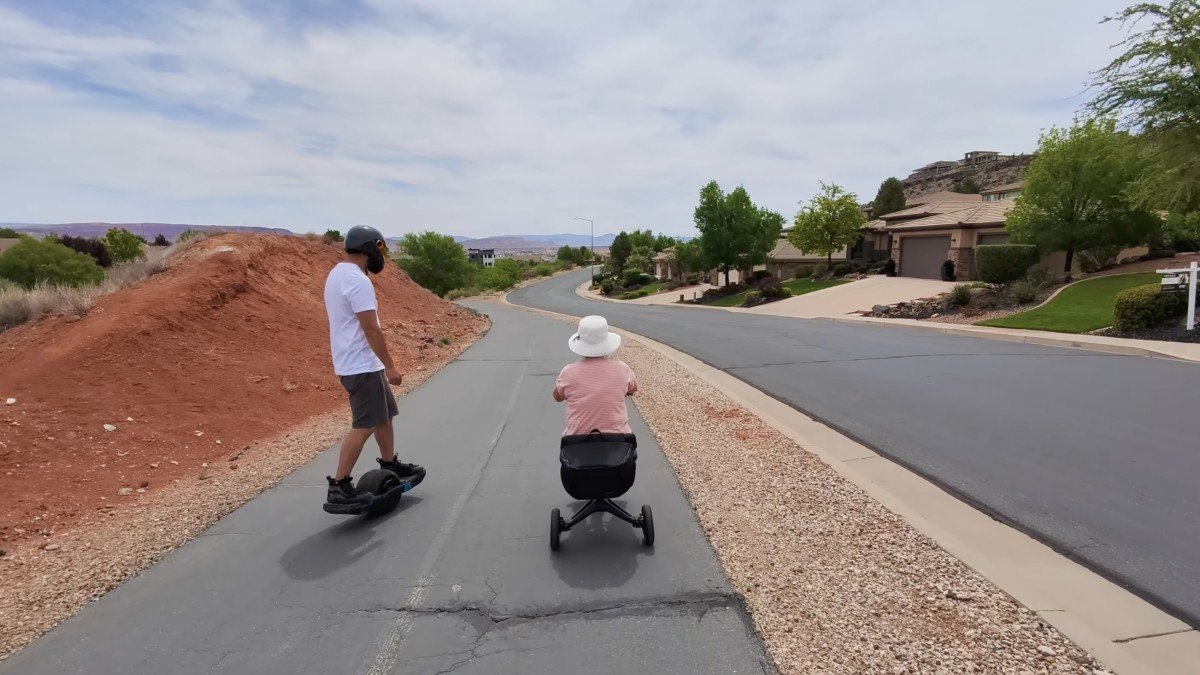
Stability at speed is a genuine concern. The three-wheel configuration becomes noticeably unsettled in high-speed turns. The 18 mph top speed is real, but taking corners at anywhere near that figure is not comfortable. Wider handlebars would improve stability but compromise the compactness that makes the scooter useful indoors and in tight spaces. There is no clean solution, but it is a tradeoff buyers need to understand.
The solid front tire prevents flats, which is the right call given the motor sits inside it, but without suspension, the ride on uneven surfaces is jarring. Andrew's mom had to slow significantly on anything other than smooth pavement. She described feeling insecure on rough roads, and the effect is visible in the video.
Seat height is not adjustable despite Dashmoto's website suggesting the scooter fits a range of heights. The seat connector attaches at the base of the electrical system and cannot be raised or lowered. The seat is also difficult to remove in practice, which is why Andrew's mom tends to load the full 42 lb unit into her car rather than splitting it into lighter pieces.
The battery box on the unit delivered to Andrew's mom had a QC failure: mounting bolts were under-tightened from the factory, causing the battery to disconnect on bumps until Andrew diagnosed the issue remotely and had it corrected. Simple fix, but a $4.4k product arriving with a loose battery is a quality control miss that is very disappointing.
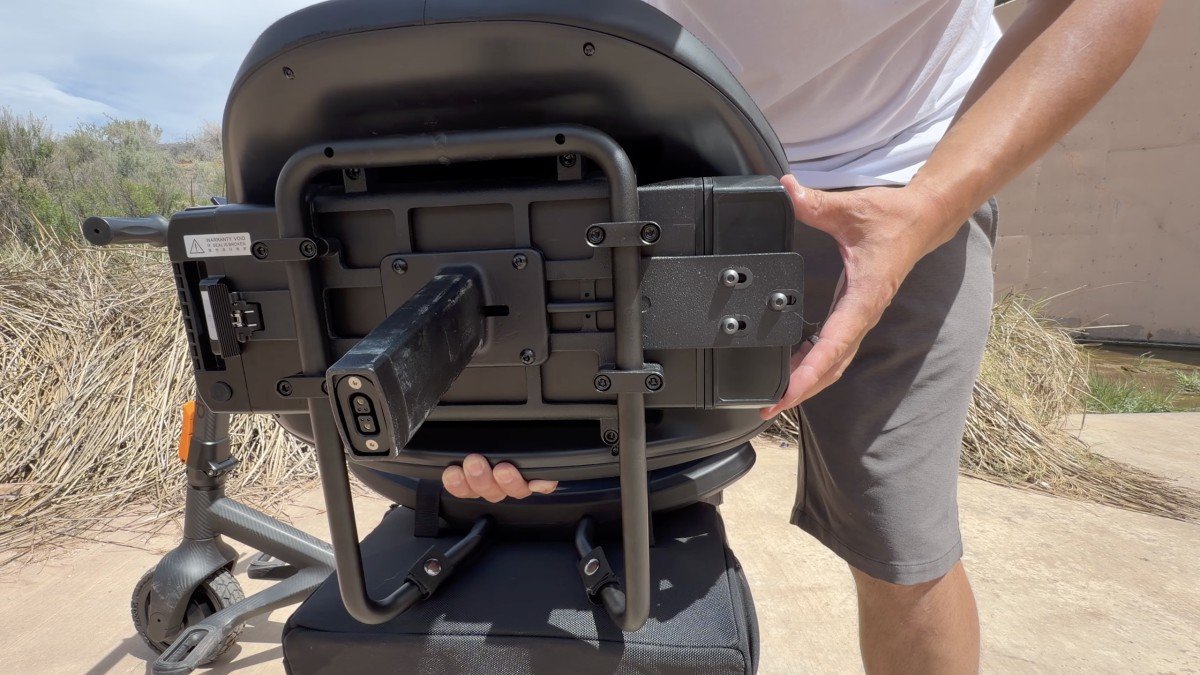
The fold latch has no double-redundancy mechanism, which is a miss in our books. If the latch releases unintentionally the scooter will fall without resistance. Standard practice on most scooters requires actively pressing a release to disengage; the Dash 3 does not have that second step.
The rear bag is sold separately for over $100. Andrew considers this unreasonable at the price point. The bag is essential for any meaningful distance trip. Charging $4,395 for the scooter and then separately charging for a bag that likely costs the manufacturer next to nothing to produce is a value equation that does not hold up.
Finally, the Dash 3 cannot be run through insurance. Andrew asked Dashmoto about certification for insurance reimbursement and was told that market is not their target. For buyers who might expect a mobility device at this price to qualify for assistance, that is worth knowing before purchase.
The Freshly Charged Verdict
Considering the full carbon fiber construction, FAA compliant battery, 18 mph top speed, and overall portability, the Dashmoto Dash 3 is well ahead of what most people picture when they hear "mobility scooter". The real-world results — Disneyland, Zion National Park, neighborhood trails a 72-year-old had never been able to access before — indicate the genuine innovation here. However, the criticism list is long and legitimate. At $4,395, the throttle should not be jerky, there should be a brake light and possibly suspension, the bag should be included, and the battery box should arrive properly secured. These are not minor quibbles. If Dashmoto addresses them, the case for the Dash 3 becomes significantly cleaner. As it stands, it is the most capable lightweight mobility scooter in its class, but it comes with enough unresolved rough edges to make the premium price a harder sell than it needs to be.
- Current price of the Dash 3: https://dashmoto.co/dash3
Electric Scooter Comparison Tool
Use our Freshly Charged Electric Scooter Comparison Tool to evaluate this product alongside other options. Compare and organize scooters by factors such as price, top speed, battery capacity, and more.
Related Reviews
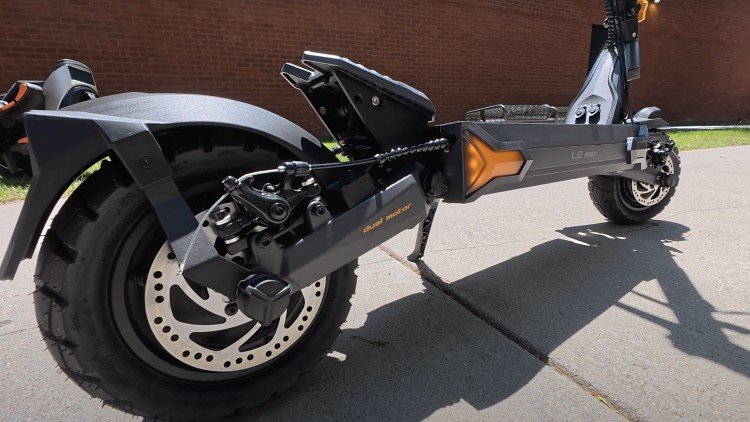
The Ausom L2 Max Dual Motor is a standout budget electric scooter, offering premium features like dual 1000W motors, tubeless tires, NFC card reader, and eye-catching design for just $899. With a 40mph top speed, long range, and practical details like USB phone charging, it delivers impressive value for both new and experienced riders.
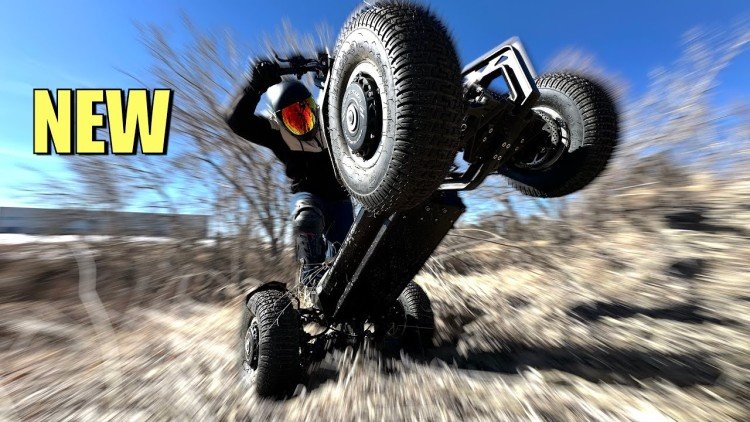
The Teverun Tetra blurs the line between electric scooter and ATV, boasting four massive off-road tires, instant suspension adjustment, and impressive all-terrain capability. With standout features like a huge deck, hidden cables, and app integration, it also comes with drawbacks like tricky tight turns, maintenance needs, and limited light visibility. Ideal for adventurous, hands-on riders.
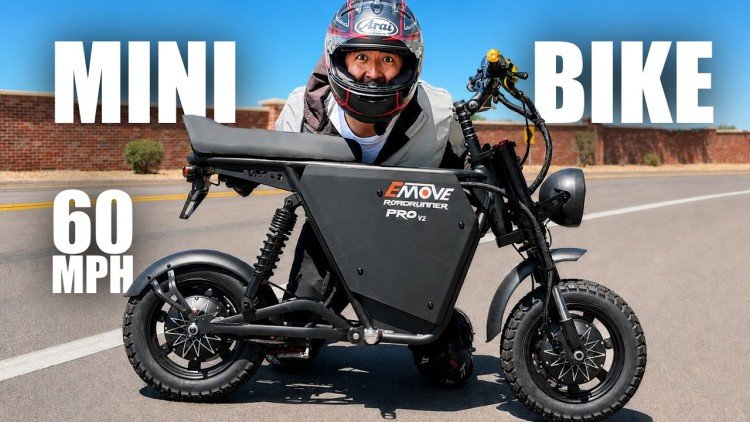
The EMOVE RoadRunner Pro V2 is a sit-down electric scooter capable of high speeds, and it fixes nearly every problem the original had: stronger frame, a 72V system upgrade, DOT motorcycle-grade brakes with 203mm rotors, stiffer suspension, and dramatically better high-speed stability. Andrew and Jimmy put it through the usual paces of Freshly Charged testing, including a brake test, side-by-side comparison with the V1, and a top speed run, coming away with a few criticisms. The V2 is heavier, pricier, and not without rough edges, but as a compact high-performance machine that can fly under the radar due to its small size, it made an impression in every way that counts.
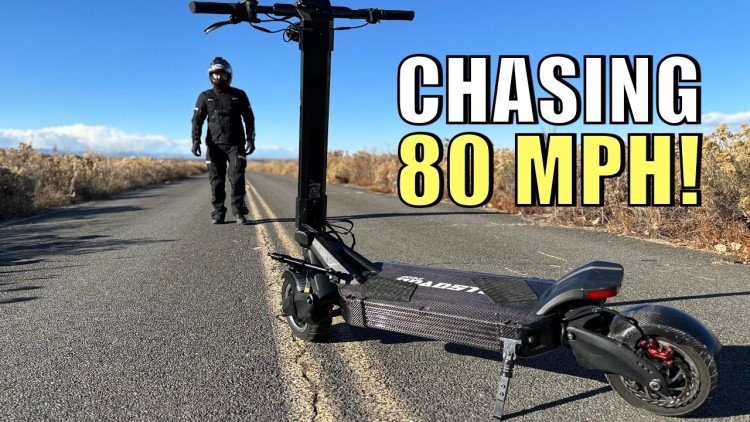
Andrew took the EMOVE Roadster — VoroMotors' fastest production electric scooter on the market — out for a GPS verified speed record attempt, targeting the 80 mph barrier. He did not break it, but he did tie his personal best of 74 mph on a modified unit that was not running its full production brake spec and on a runway that was not quite long enough to fully unwind the throttle. The machine itself was rock solid at speed, but the conditions were not ideal.
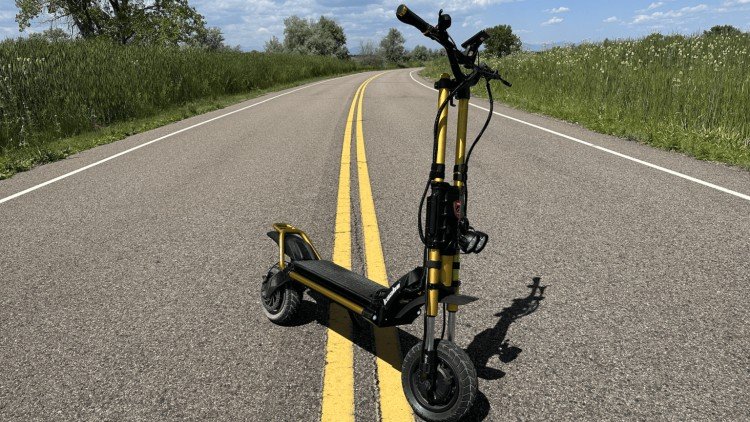
The Kaabo Wolf King GTR redefines urban commuting, boasting upgrades like 12-inch hybrid offroad tires, a single 100-amp controller, removable battery, adjustable suspension, and improved controls. While a few minor flaws exist—such as visibility issues and weight—the GTR shines with power, speed, and versatility, making it a leading choice for adventurous city riders.
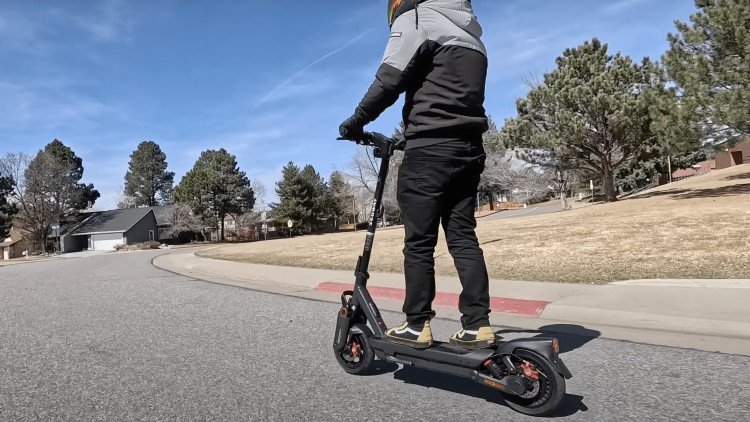
The Segway Max G3 is Segway-Ninebot’s latest electric scooter, offering notable upgrades over previous G2 and G30 models. With a top speed of 28 mph, up to 75 miles of range with an external battery, dual disc brakes, hydraulic suspension, and a vibrant TFT display, it’s one of 2025’s premier high-performance commuter scooters.

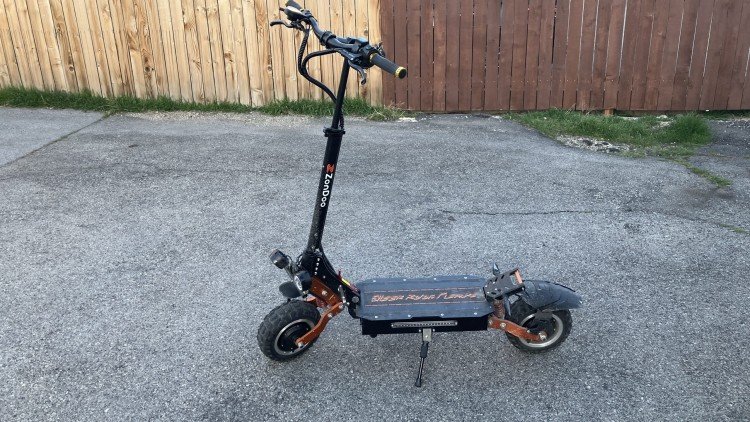
The Zondoo ZO01 Plus impresses with its powerful specs—2100Wh battery, 58 mph+ speed, sine wave controller, and hydraulic brakes—at just $1300 and rapid shipping. Highlights include visible turning signals, a user-friendly folding mechanism, spacious deck, improved adjustable lighting, and comfortable suspension, making it appealing for scooter enthusiasts seeking both value and features.
No comments yet…