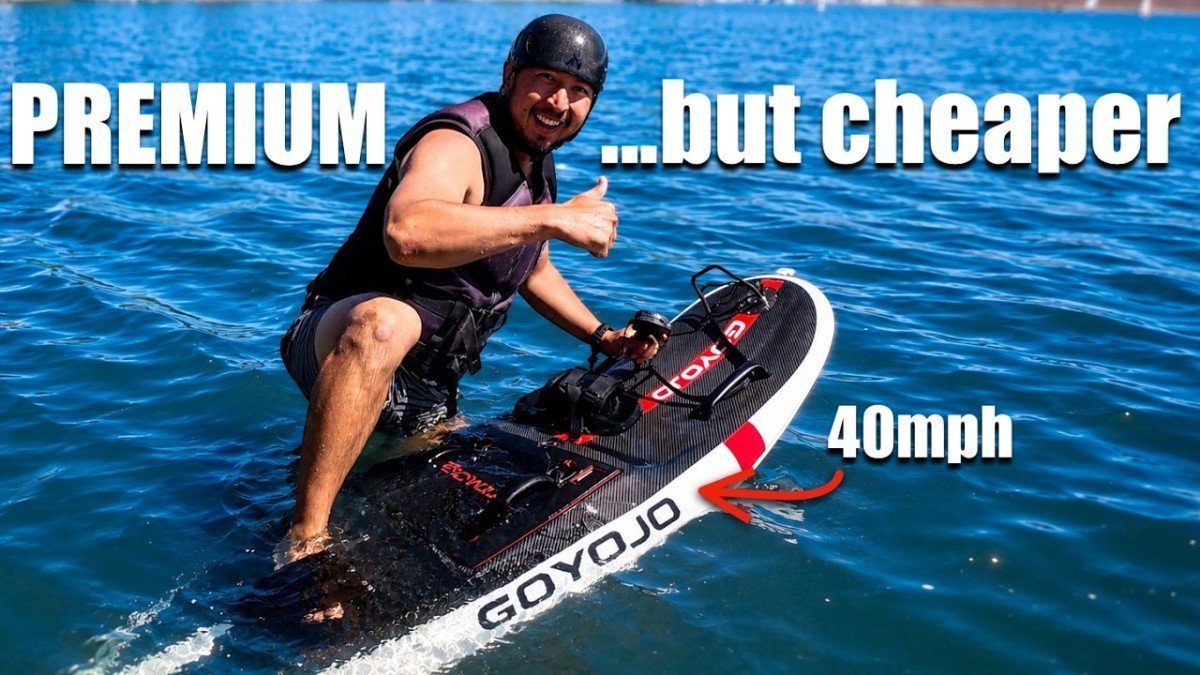
The Goyojo V-RS Ultimate is an electric surfboard with carbon fiber construction, titanium motor housing, 22kW peak power, and a claimed 40 mph top speed, all at a price point well below what comparable boards typically cost. Post unboxing, Andrew and Jimmy took it to the lake for a full session, covering the learning curve, on-water performance, and a comparison with their previous eFoil experience. The board delivered on the riding side of the equation; but the packaging, battery latch system, and charging process left some room for improvement.
Buy with our link to save $300!
Enter code FreshlyCharged at checkout

Written Review
You might think that an electric surfboard is something that requires waves, expertise, and a fat wallet. However, the Goyojo V-RS Ultimate challenges all three assumptions at once. After getting it unboxed and setup, Jimmy and his son met Andrew at the lake for a full session to find out what this category of electric machine is actually like to ride, and where it has room to grow.
- Current price of the Goyojo V-RS Ultimate Electric Surfboard: https://bit.ly/4fzWTuo
- Use coupon code: FreshlyCharged to save $300

What the V-RS Ultimate Is
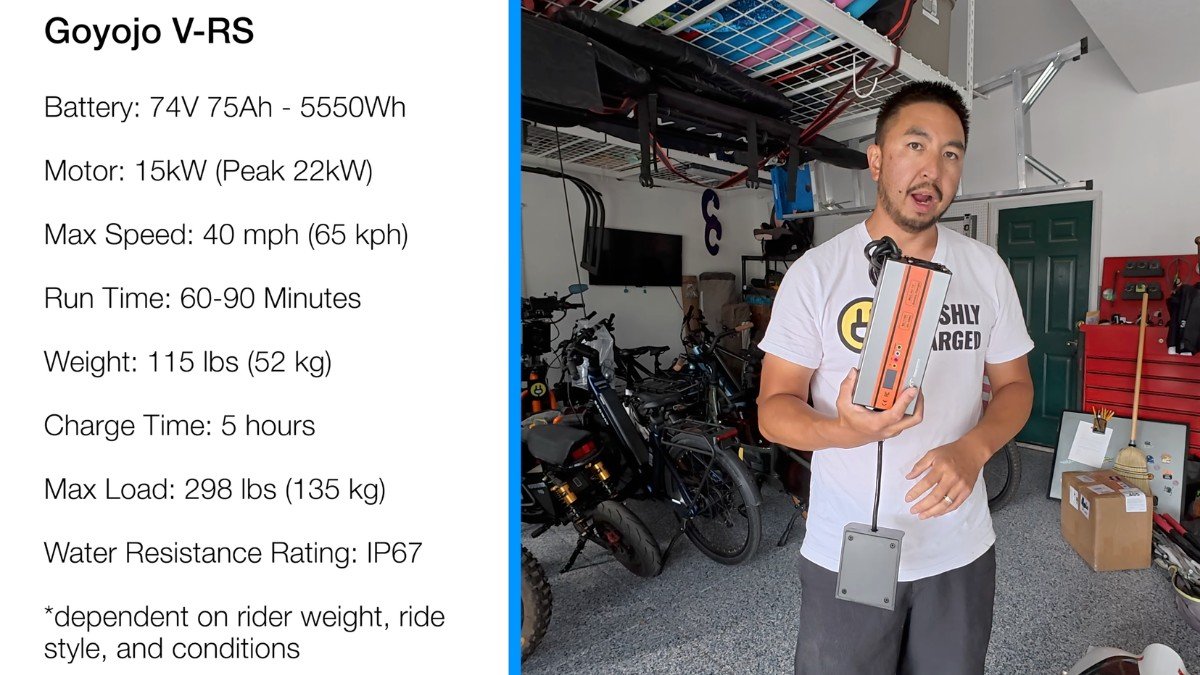
The Goyojo V-RS Ultimate is the brand's flagship electric surfboard, featuring a full carbon fiber deck and fins, titanium alloy motor housing, a 15kW continuous motor that peaks at 22kW, and a massive 5550Wh battery system. Charge time runs about 5 hours from empty using the included 15-amp charger, leaving runtime between 1-1.5 hours — dependent on whether you are aggressively pinning the throttle or gently cruising. While running, the board is controlled by a handheld remote trigger rather than a throttle body on the board itself.
A list price of approximately $9,000 may sound high to people unfamiliar with electric surfboards, but when taken into context with the current market prices, it's definitely the budget option. Thus far, the premium electric surfboard market runs well above $15,000 for comparable performance. That gap is what positions the V-RS Ultimate as an approachable entry point into a water sport that has historically required a serious financial commitment to access at all.
Unboxing and Assembly
Andrew opens the review calling the shipping box a coffin, which is not far off in terms of scale. The board itself is heavy, the battery is heavy, and the assembly process requires more attention than most electric rideable purchases.
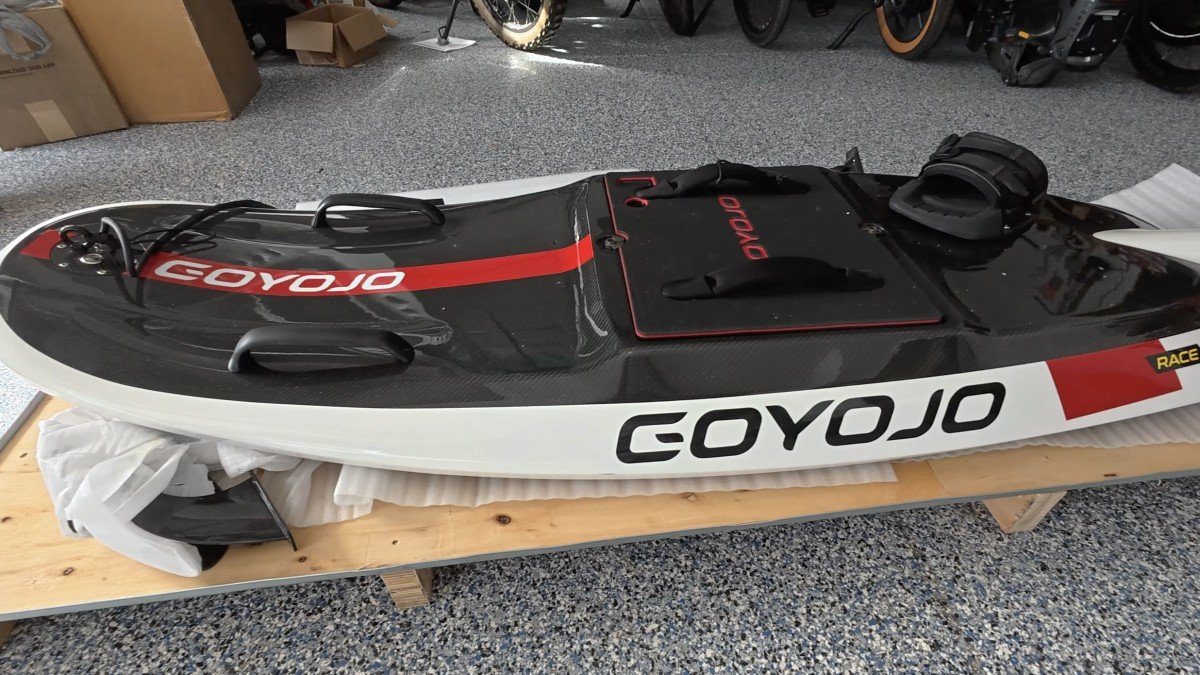
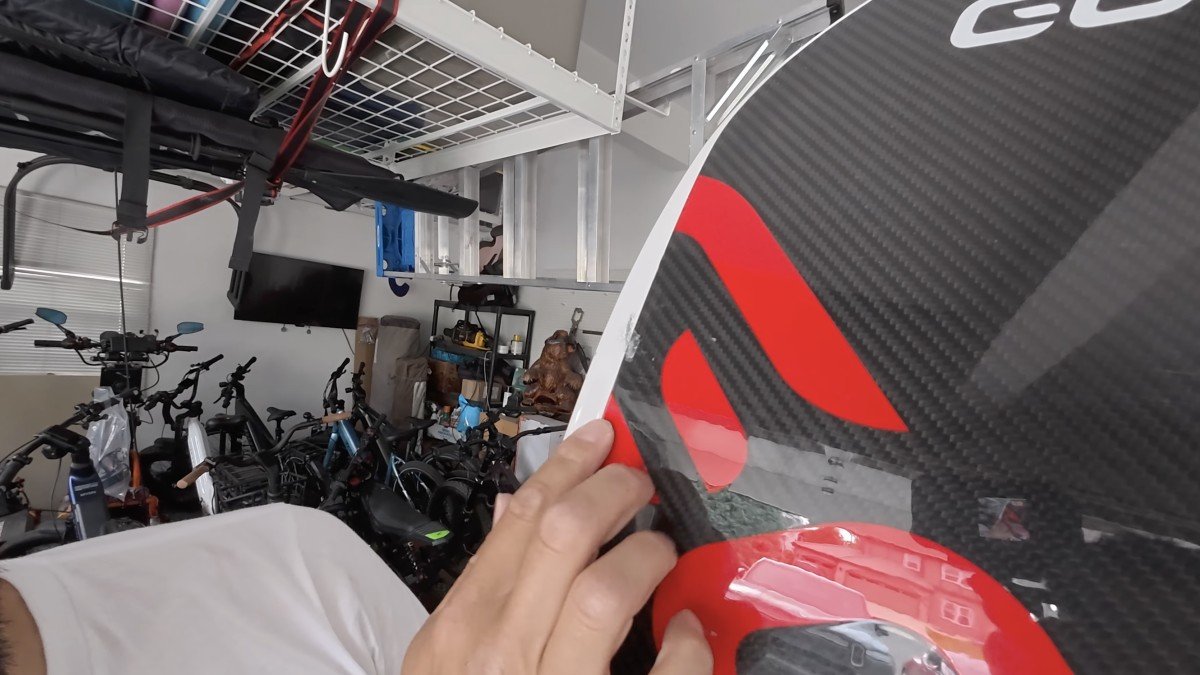
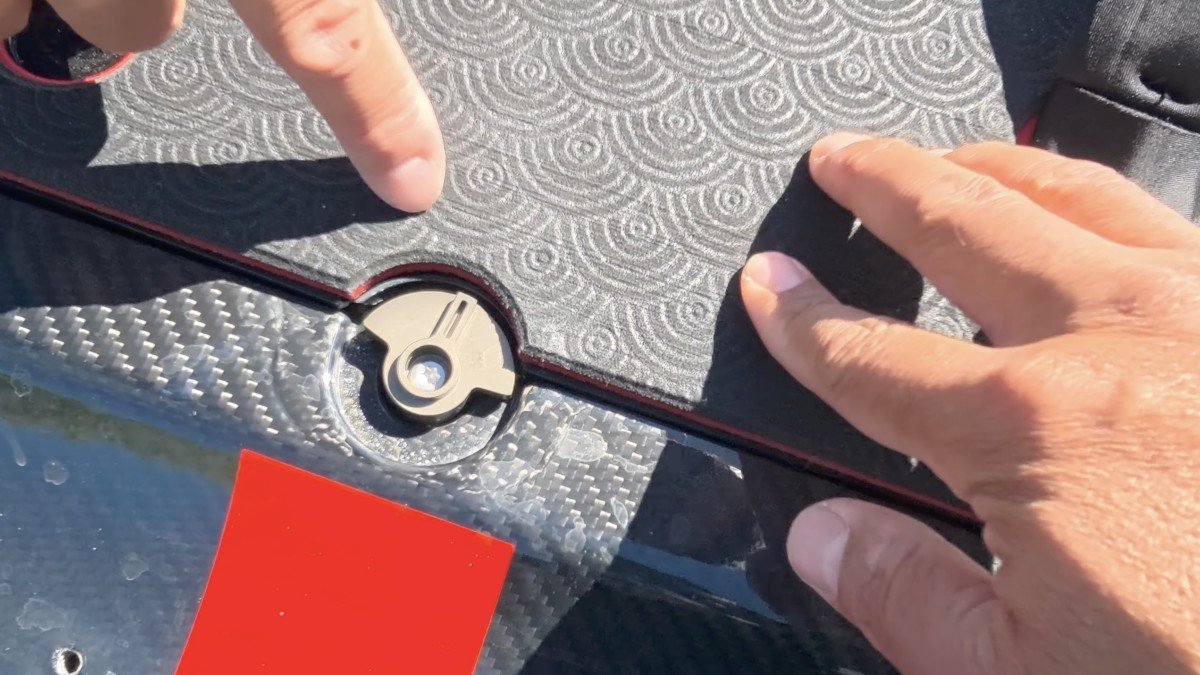
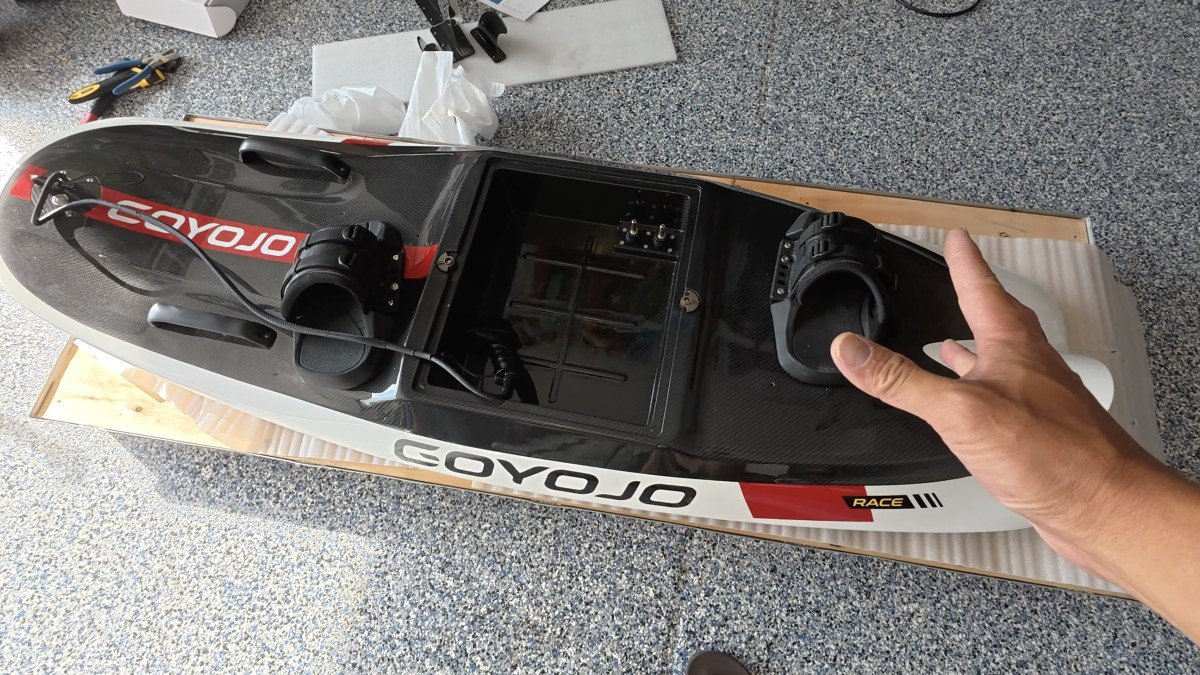
The unboxing surfaced two issues worth documenting. First, there was cosmetic damage to the board on arrival: clear coat and paint scraped from the surface in a few spots. Andrew assessed it as superficial with no structural damage, but it is not the first impression a $9,000 product should make. Second, and more consequentially, the plastic battery latch clip that holds the battery into the board arrived broken. This clip is the primary retention mechanism keeping the battery secured during riding. Andrew attempted a JB Weld repair that held through assembly but failed on the first ride session. Goyojo confirmed that the single remaining locking mechanism would be sufficient, and it proved them right — the battery stayed put even after a full-speed wipeout at 0% charge — but a battery security system on a watercraft should not arrive damaged and should not require the rider to take the company's word for its reliability.
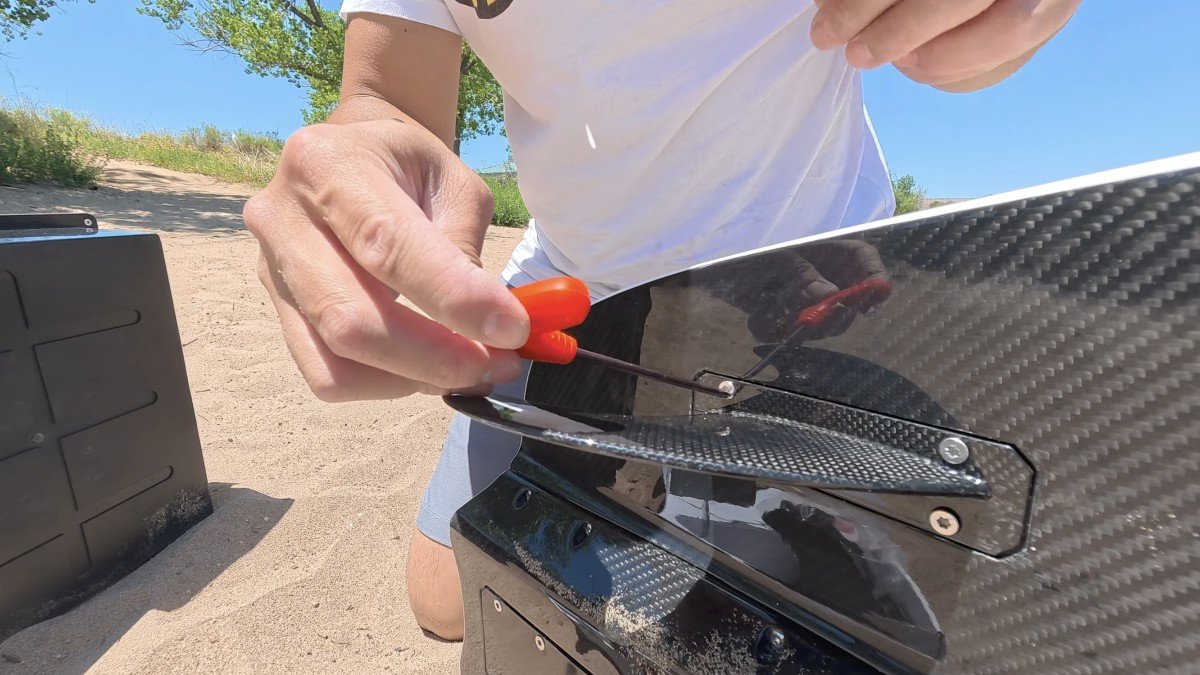
The included fin bolt tool is also undersized for the job. Reaching the bolts requires either a longer Torx tool or one with an elbow, neither of which comes in the box. The bolts themselves are short enough that both Andrew and Jimmy flagged them as a potential strip and loss risk, and they recommend checking bolt tightness before every single session.
One last specific operational note: the battery requires a preconditioning and balancing process before first use that is not clearly labeled on the packaging. Andrew and Jimmy skipped it, as most people would when treating a new device like every other piece of electric gear they own (take it out, charge it, ride it). The preconditioning process is described in the manual, but the absence of any prominent warning on the box or battery is an oversight from a battery health and longevity standpoint.
On the Water
Andrew's son was the first one on the board. He had watched a few tutorial videos during the drive out, got on the board, and rode it on the first attempt. Despite being young and athletic, that data point matters when you're talking about learning curve claims. A rider with no prior experience and brief video preparation was a first try success, and so was his father (Jimmy). Andrew himself was up consistently on his third try.
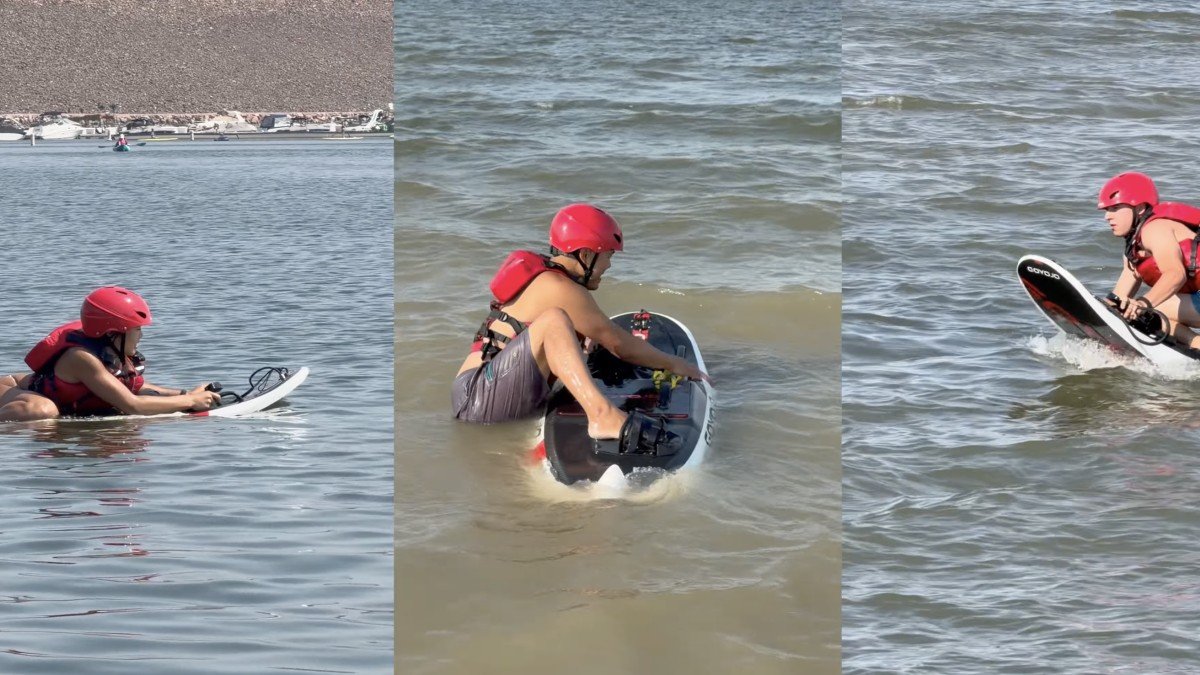
The consensus ranking from both reviewers places the V-RS Ultimate easier to learn than all of the following: electric hydrofoils, traditional surfing, and wake surfing. Andrew notes that heavier riders like himself (192 lbs) will need to generate meaningful speed before attempting to stand, since the board carries less buoyancy than a traditional surfboard. Once moving, the physics become more cooperative.
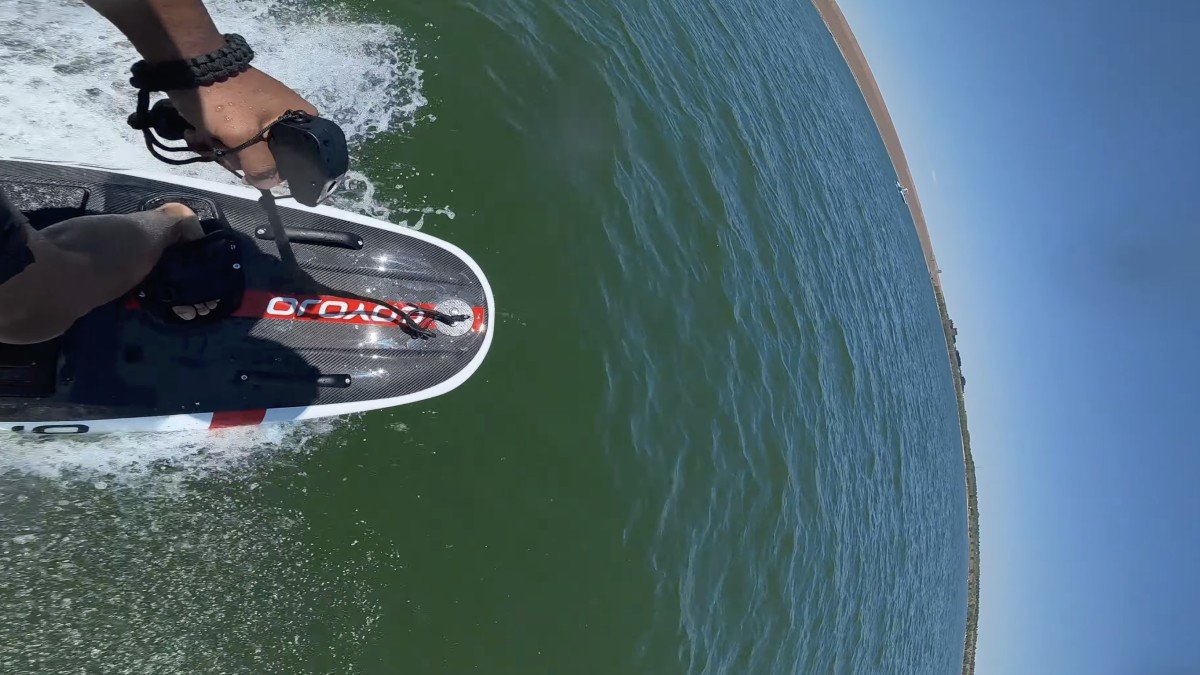
What the experience actually feels like once you are riding is described by both Andrew and Jimmy in relatively similar terms: aggressive, physical, and addictive. You are absorbing chop and wakes through your legs, carving hard into turns, dragging hands across the water, and throwing rooster tails. It is not the smooth, elevated zen of an eFoil; rather a workout that does not feel like one because of the adrenaline fueled fun. Both Andrew and Jimmy have eFoil experience, and noted that the electric surfboard is the more intense of the two experiences. For anyone that enjoys the calmer version, Goyojo also sells eFoils.
The dual purpose handle and remote on the board, which Andrew initially questioned as a design choice, became one of the features he most appreciated in practice. It provides leverage for pulling into aggressive turns and for getting up onto the board from the water, which is a detail you appreciate more once you understand the mounting technique.
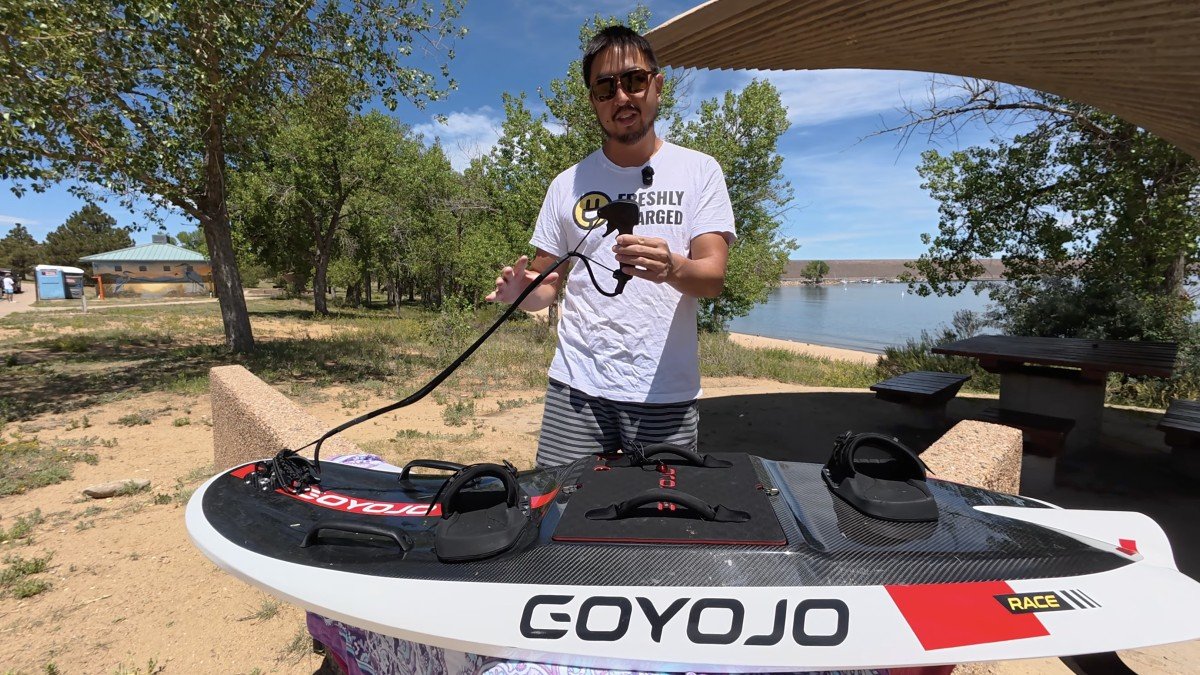
The session ended when the battery hit 0%, at which point the board slowed dramatically before stopping and ejecting its rider. This is expected behavior rather than a failure, and the board behaved safely throughout.
What Goyojo Should Improve
After a full session of use, the list of criticisms land as specific and actionable. The battery latch system needs more than one clip, and Andrew's position position is that four would be the appropriate minimum for a watercraft battery of this weight and consequence. After Jimmy was ejected and the board flipped, he was quite worried that if the latch came undone, the battery would likely be at the lake bottom before he could swim back. The foot bindings are fixed in width with no meaningful tightening adjustment, and while they appear sized for approximately US size 10 feet and above; riders with smaller feet or preferences for different stance angles have limited options. The packaging and shipping protection need to be reconsidered given the damage present on arrival. The battery preconditioning requirement needs to be prominently communicated on the physical product, not buried in the manual. In addition, the charger fan during recharges is so loud that Andrew noted you couldn't have a phone conversation in the same space. Lastly, the included fin bolt tool simply needs to be the right size for the bolts it is meant to drive for long term use.
The Freshly Charged Verdict
If electric surfboards are a category you have been curious about but the $15,000 price tags have been the barrier, the Goyojo V-RS Ultimate is likely your best bet. The carbon fiber construction, titanium motor housing, 22kW peak power, and 40 mph capability are not budget-board specifications by a long shot. The price-to-performance ratio is what sets this product apart, and there isn't any significant compromises on the core riding experience. The criticisms are real and worth knowing before you buy, but none of them touch the parts of the board that matters most. No waves, boat, or tow rope. Just a trigger and open water.
- Current price of the Goyojo V-RS Ultimate Electric Surfboard: https://bit.ly/4fzWTuo
- Use coupon code: FreshlyCharged to save $300

Check Out Our eFoil Content
No comments yet…