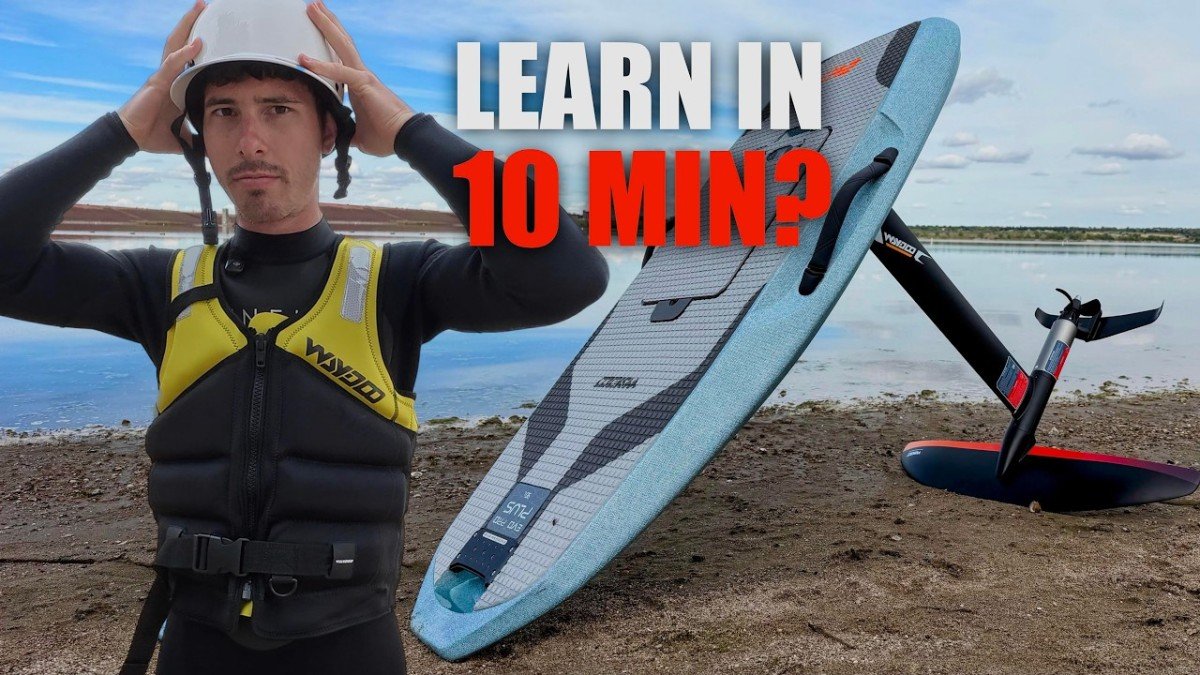
Waydoo’s Flyer EVO Pro Plus uses a unique Smart Flight Assistance System that holds the board at a set height and manages motor power. Andrew tested whether it teaches riders to fly or just does the work for them by bringing Zac Darnell to the lake, an expert electric unicycle rider that had never been on an eFoil prior to this experience. With assistance on, Zac stood up in three minutes and held a ten second flight at the ten minute mark. Once Andrew switched it off, Zac flew on his first try with zero crashes, after only about 40 minutes on the water in total. Some throttle flutter in turns, a two bolt mast mount and no included board bags or prop cone hold it back slightly, but at $6,500, it's a well-rounded board that beginners will appreciate and more seasoned riders will also love.
Written Review
Most eFoil stories start the same way: learning to fly is hard, and the first session is an extensive crash course in swallowing lake water. The Waydoo Flyer EVO Pro Plus wants to rewrite that first experience. Its Smart Flight Assistance System uses built in sensors to hold the board at a set height and manage motor power for the rider. To see whether those training wheels actually teach anything, Andrew brought out Zac Darnell, one of the fastest electric unicycle riders in the world and a complete eFoil rookie, then put a stopwatch on his milestones. The result was the fastest learning curve Andrew has ever seen on an electric hydrofoil.
- Current price of the Waydoo Flyer EVO Pro Plus: https://waydoo.sjv.io/X4eAKo
- Upgrade your ride to catch waves and ride wakes: https://waydoo.sjv.io/oN9DPW
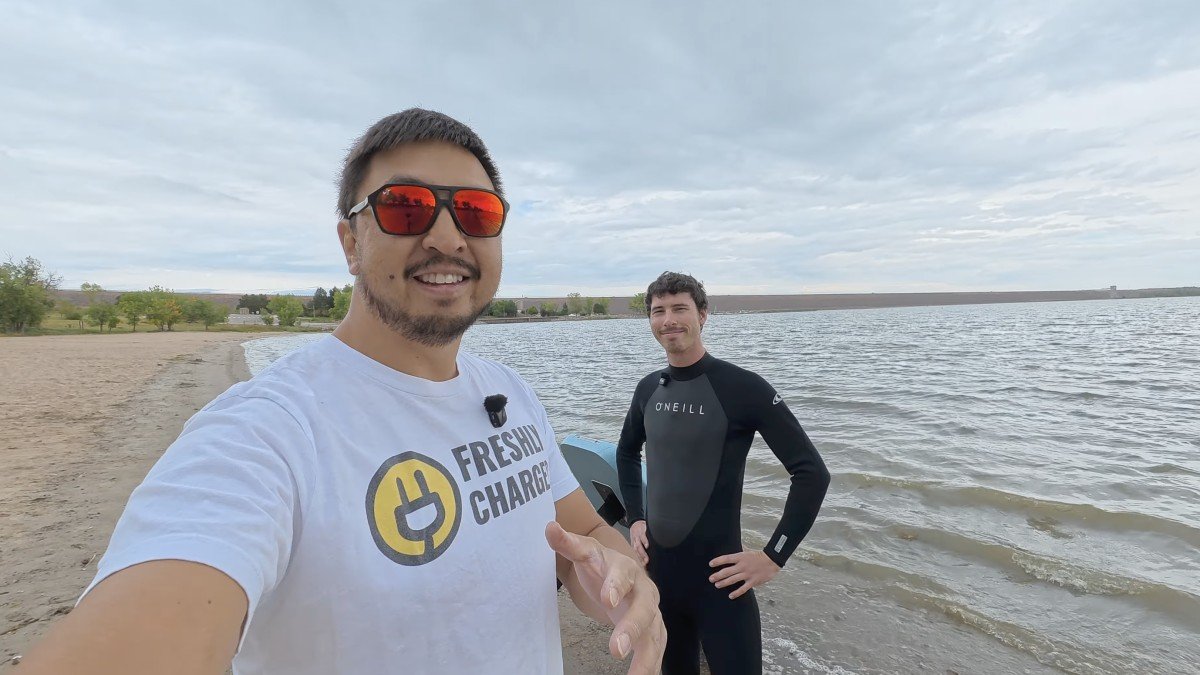
The Experiment
With assistance enabled, Andrew set out to time how long Zac took to stand, to fly, and to hold a flight for ten seconds. Then the system would be switched off to answer the real question: did the board teach Zac to fly, or did it simply fly for him?
Worth noting: before electric unicycles and OneWheels, Zac spent years downhill longboarding, snowboarding, wakeboarding, and surfing.
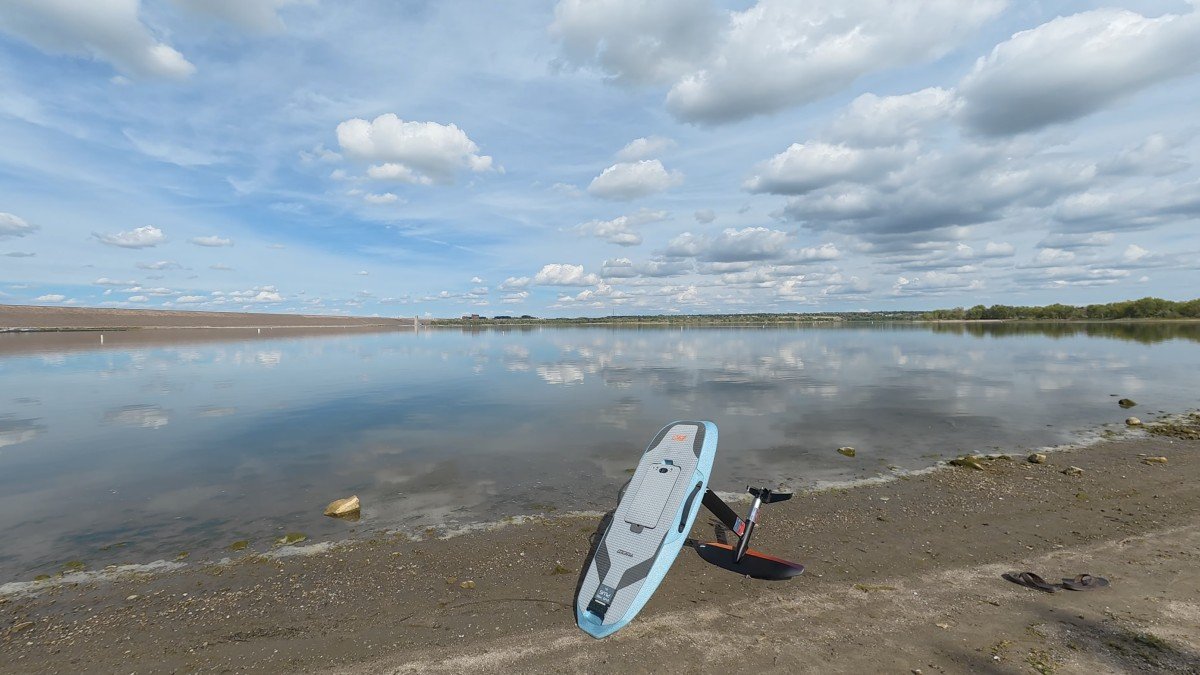
With Assistance: Standing in 3, Flying in 10
Assistance started on the low height setting, and Zac was on his feet in three minutes. Andrew notes most people need at least 15 minutes just to achieve standing. A bit more speed and some forward pressure on the nose had him lifting off shortly after, followed by a run of spills Andrew tallied at five. At the ten minute mark, Zac strung together his first ten second flight.
Andrew then bumped assistance from low to medium height, since the system seemed to be sinking Zac back toward the water just as he got up. Soon he was popping up almost instantly and saving rides that looked lost. Andrew's read is that Zac's form wasn't right at first, and the assistance helped him find good form fast.
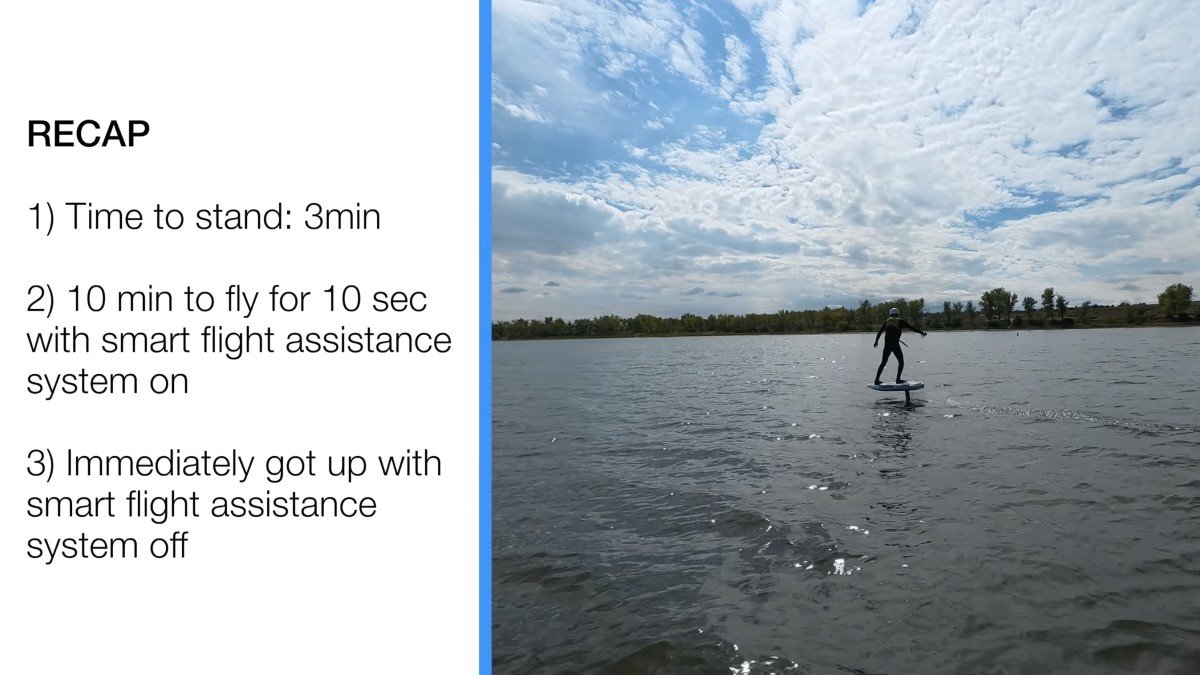
Pulling the Plug
Zac rated his confidence at about four out of ten when assistance went off, worried he was about to start from scratch. Instead, he was flying within roughly his first 15 seconds, so quickly that Andrew never got his timer started. Zero crashes, ten seconds of unassisted flight on the first attempt, and only about 40 minutes on the water in total. His confidence afterward jumped to a nine.
Zac credits the system with getting him comfortable accelerating and standing up at the same time, the coordination puzzle that stalls most beginners. That said, he also noticed what it takes away. With assistance on, the board reads the water level and adjusts throttle to hold height, so the rider gives up some throttle control, which made pumping and playing with small waves less fun. Andrew found a related quirk: a slight flutter heading into turns as the system tries to manage acceleration. It's an excellent flight instructor, but not much of a carving coach. Switch it off and, as Zac put it, you get the ultimate freedom.
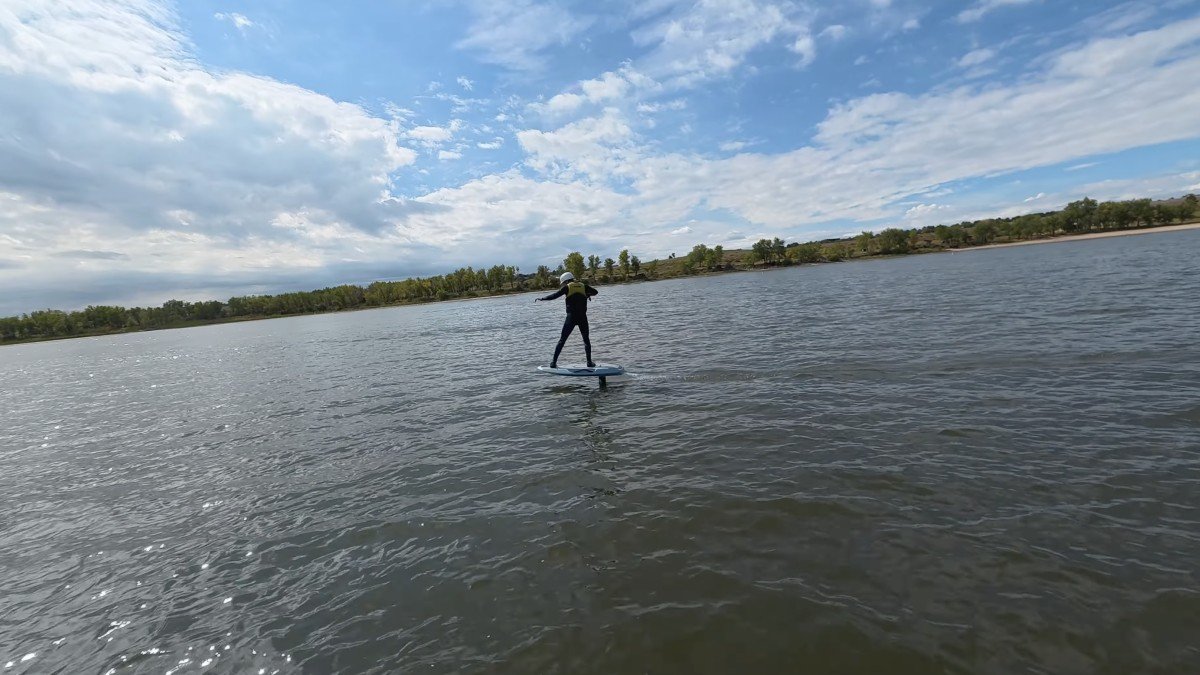
Room to Progress
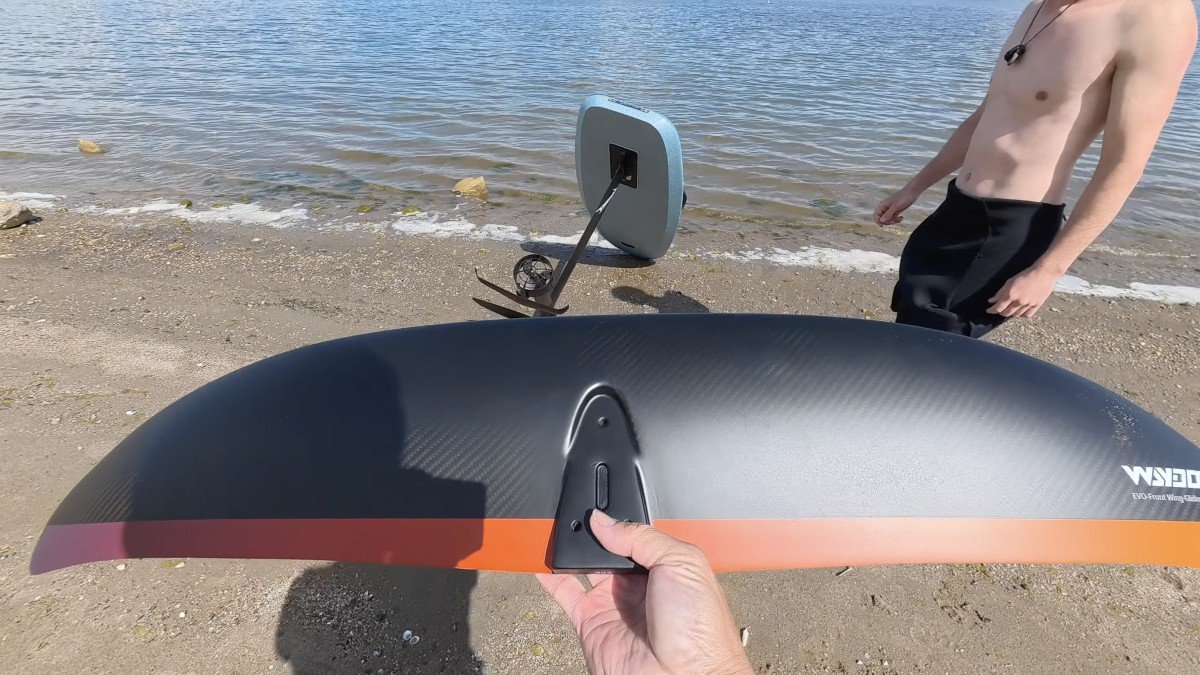
Andrew calls eFoiling the most surreal experience of all the toys he rides: near silent flight above the water, with birds taking off alongside you. Better still, the hardware grows with the rider. The stock C 1500 wing is large (Andrew believes the figure refers to roughly 1,500 square centimeters of surface area) and rides like a Cadillac, soaking up bumps without ever feeling agile. Andrew swapped in a wider, skinnier wing with the same surface area, a three bolt job done in under a minute using the Allen key stored inside the battery wedge.
Next, the prop guard came off to cut drag, since it made the board feel slightly sluggish (though perfectly fine for beginners). The tradeoff is an exposed propeller, so riders should keep their feet back on startup. Ideally a prop cone covers the hub afterward, but according to Waydoo specialist eFoil Lake Pal, Waydoo seems to include one only with its folding prop.
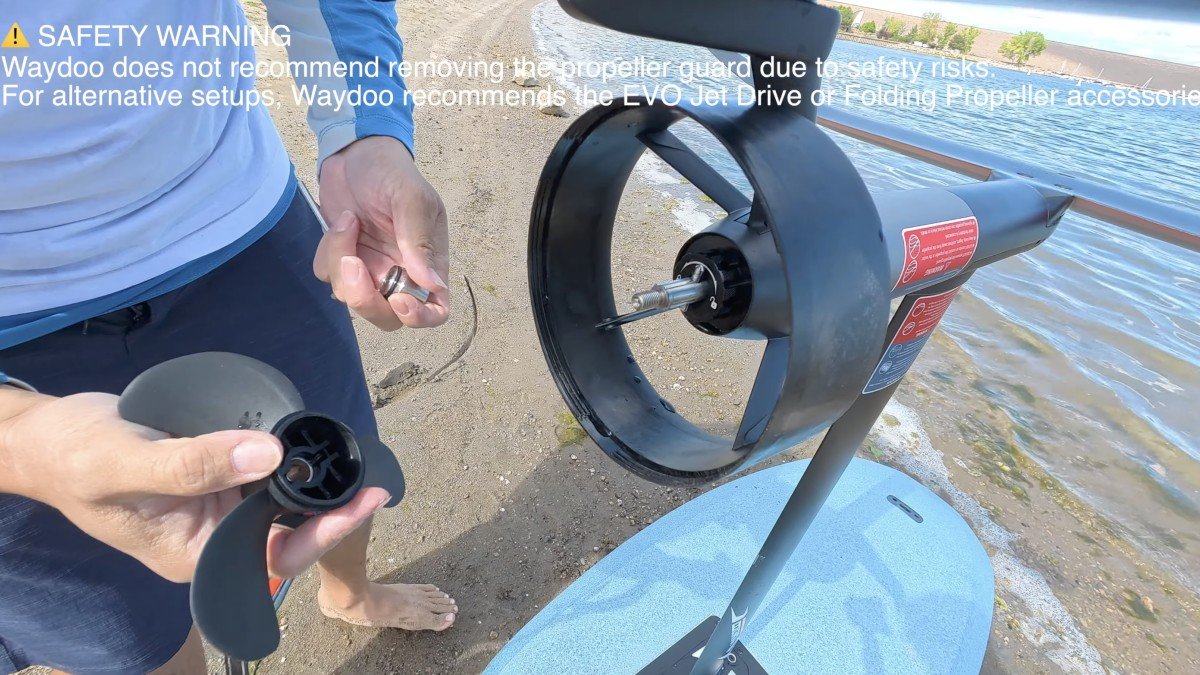
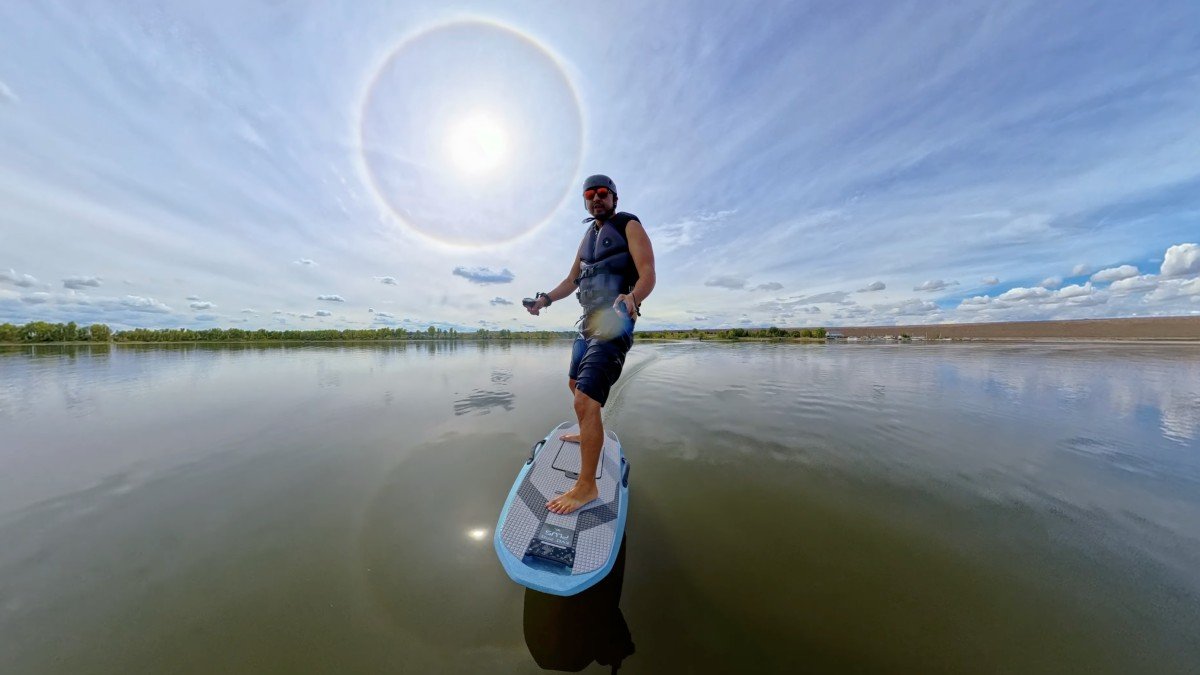
Even without the cone, the difference was dramatic. Zac described the board going from stable, sturdy, and easy to get up on to loose, fluid, and fun to turn. Andrew compares the feeling to riding powder, and Zac, a snowboarder himself, agreed, calling it unlimited powder.
The Ownership Details
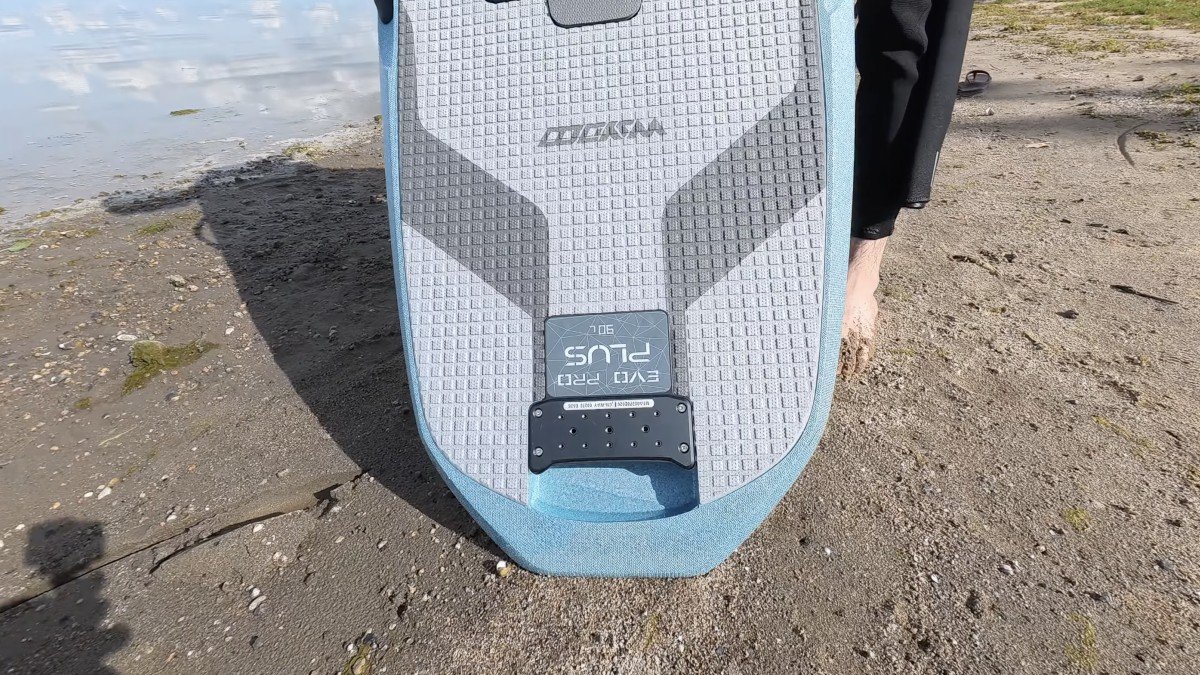
At $6,500 at the time of filming, the EVO Pro Plus is a premium entry point, though Andrew notes riders who don't need the flight assistance feature can get in for less.
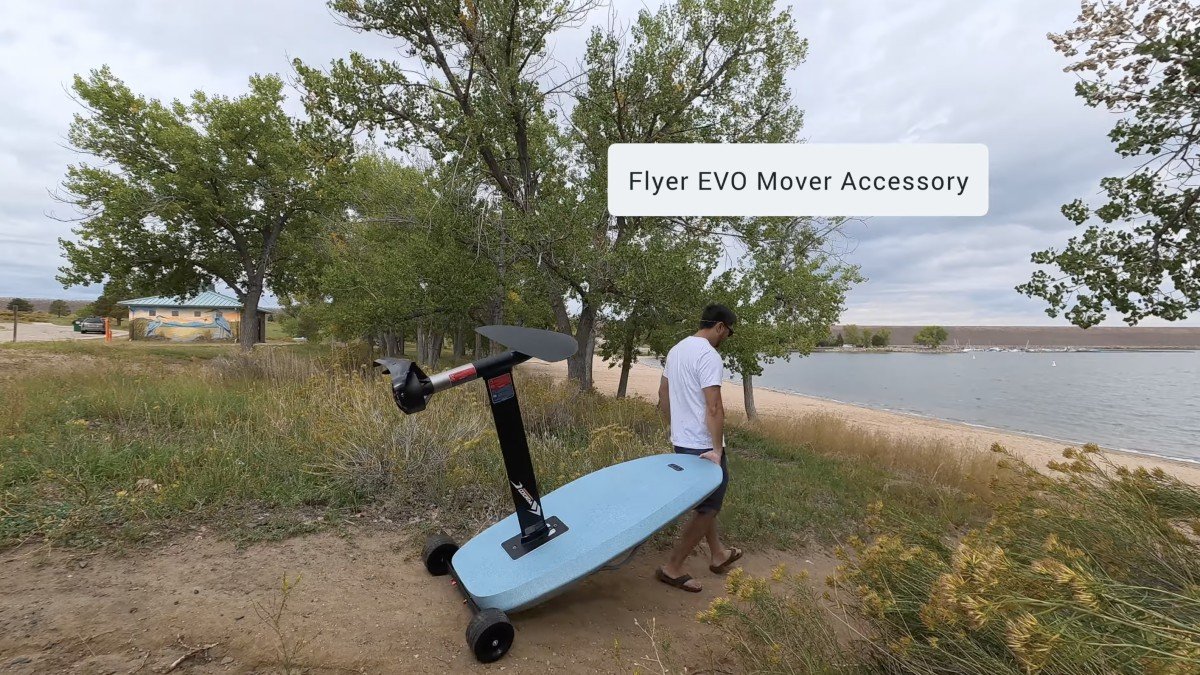
Shipping arrived on a pallet with zero damage, and assembly took Andrew under ten minutes. Attachable wheels make the trip to the shoreline easy, so there's no waiting at a crowded boat launch.
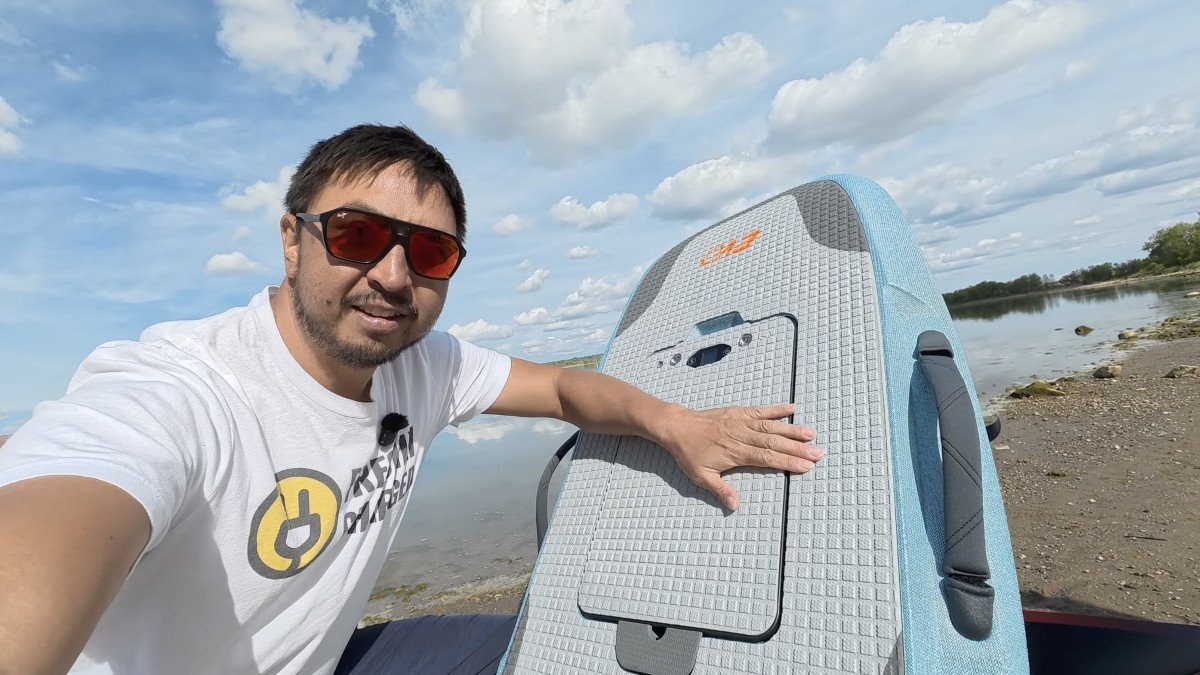
The foam board shrugs off the bumps and rock scrapes beginners inevitably inflict, the deck covering is soft and grippy underfoot, and Zac singled out the front handle for pulling yourself aboard.
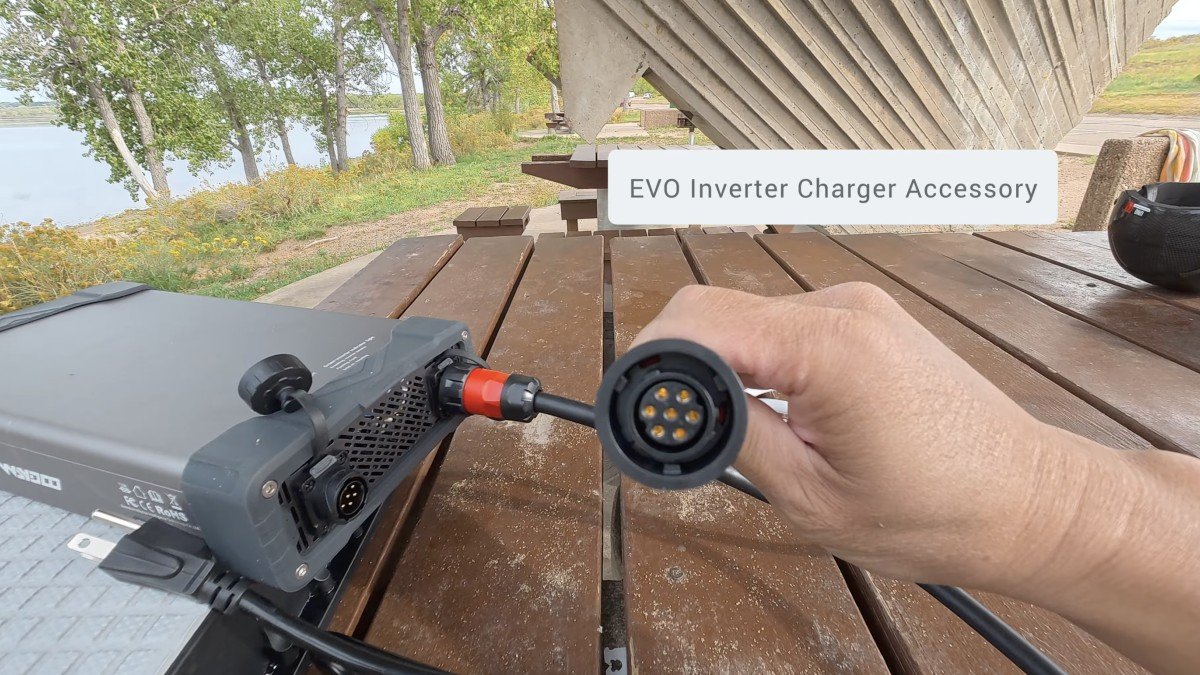
The battery doubles as a power station. With the inverter attached, it outputs 110 to 240 volts at up to 13.6 amps, and Andrew used it to charge DJI cameras and mics during the shoot. It's also a handy way to draw a full battery down to around 60% before storage, which is far kinder to lithium ion cells than sitting at 100%.
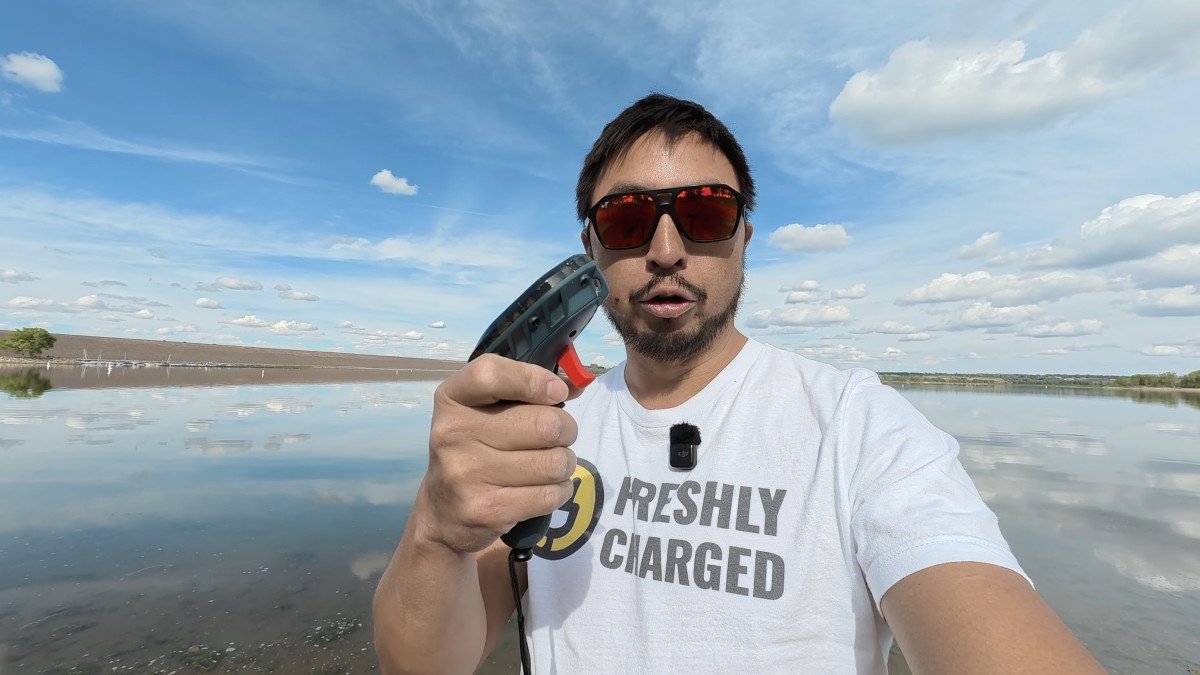
The remote has more girth than most, which pays off across a ride of an hour and a half. Releasing the throttle stops the board instantly, a wrist strap keeps it attached, and the battery key hides inside so it's always on you. In the app, GPS geofencing lets owners fence off hazards; Andrew mapped the shallow edges of his home lake, where he once hit bottom, so the board drops power if a new rider drifts in. A firmware update delivered through the app has also fixed the jumpy initial acceleration Andrew felt on earlier Waydoo boards, and underglow LEDs add visibility at night.
Where It Falls Short
The complaints are few, but worth knowing all the same. The mast attaches with only two bolts, compared with the four Andrew typically sees on other eFoils, so a single failed bolt leaves just one holding everything together. As the board wears in, seating the battery box gets harder. Zac would like slightly wider bolt hole tolerances for installing the fins. A prop cone should ship in the box given how common guard removal is, board bags aren't included, and Andrew suggests Waydoo go with shorter names, since "Flyer EVO Pro Plus" is a mouthful.
The Freshly Charged Verdict
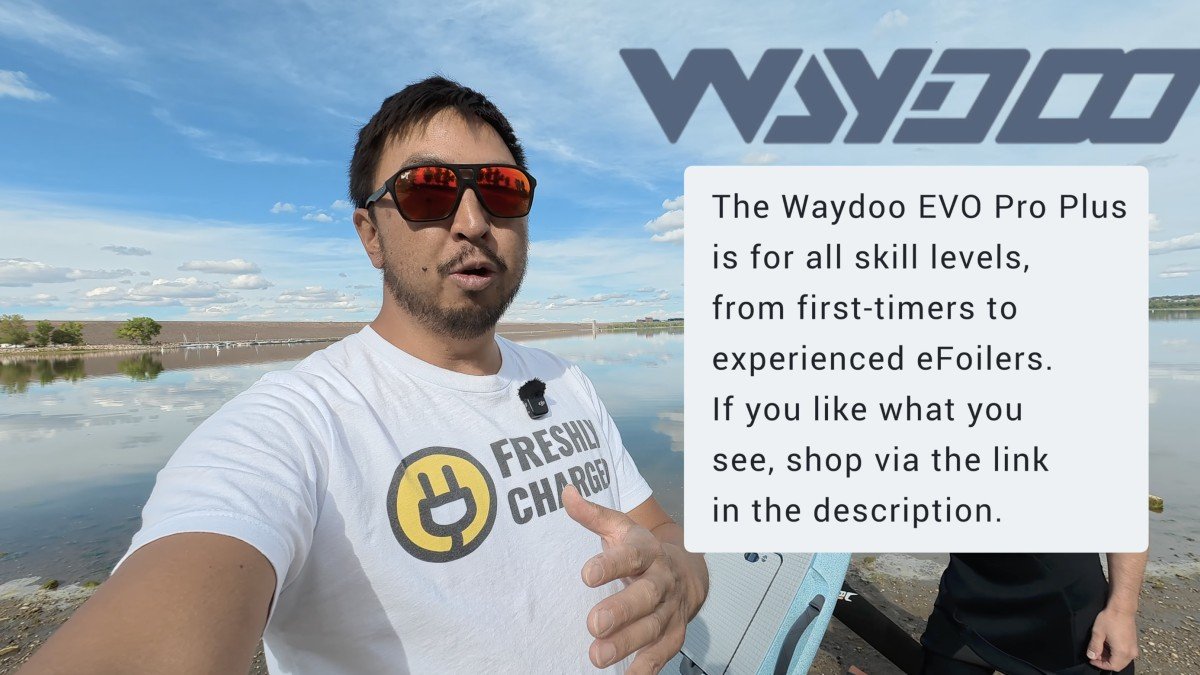
Andrew positions it squarely for beginners and riders approaching intermediate level, dubbing it the easiest eFoil to learn and progress on, and it's the device he personally rides most. Swappable wings and a removable prop guard mean it won't feel outgrown quickly, and anyone wary of assistance technology can add a scooter handle to push the board down by hand instead. Zac's verdict was simpler: if you snowboard, surf, or ski, try an eFoil and have the time of your life. For anyone on the shore wondering whether they could ever pull this off— his 40 minutes make a convincing answer — even without the wealth of athletic experience Zac has.
- Current price of the Waydoo Flyer EVO Pro Plus: https://waydoo.sjv.io/X4eAKo
- Upgrade your ride to catch waves and ride wakes: https://waydoo.sjv.io/oN9DPW
No comments yet…