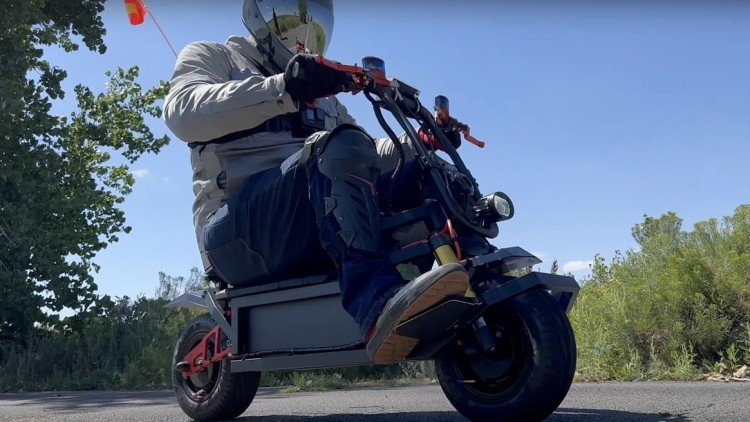
Plenty of scooters get called "off-road" because they're painted in aggressive colors and shipped with chunky-looking tires. Actual off-road capability comes down to two things working together: suspension and tires, and a scooter needs both to genuinely qualify, not just one or the other. Our Off-Road & All-Terrain category is built around that pairing.
Suspension is the clearer of the two. A single front shock is common on commuter scooters and helps take the edge off rough pavement, but it doesn't hold up once you're off pavement entirely. Real off-road performance calls for suspension at both the front and rear, distributing impact across the whole scooter instead of concentrating it wherever the front wheel happens to land. Every scooter in this category has suspension on both ends.
Tires matter just as much, and material matters. Pneumatic (air-filled) tires flex and absorb impact in a way solid tires simply can't, which translates directly into better traction on loose dirt, gravel, and grass, and a noticeably smoother ride over roots and ruts. Wheel size plays a role too: 10 inches or larger is generally considered the baseline for handling real terrain, since smaller wheels tend to get caught on obstacles that a bigger wheel just rolls over. It's worth noting that a well-built solid tire paired with strong dual suspension can still deliver a genuinely capable ride, so tire material alone isn't the whole story, but pneumatic tires remain the more common and more reliable choice across the scooters built specifically for this kind of riding.
What you actually need from this category depends on where you're riding. Grass and light gravel are forgiving enough that most pneumatic-tired scooters handle them fine. Dirt trails with roots and rocks are where dual suspension stops being a nice-to-have and starts being the difference between a comfortable ride and a jarring one. And if hills are part of the terrain too, pair anything in this category with enough motor power to keep momentum on loose or soft ground, since a scooter that's built to absorb impact still needs the torque to push through it.
-medium.jpg)
The Kaabo Mantis X Plus is a dual-motor electric scooter from Kaabo, a brand known for performance-oriented personal electric vehicles. Positioned in the mid-to-upper tier of Kaabo's lineup, it targets riders seeking a balance of power and everyday comfort for urban commuting and mixed-terrain use. Key differentiators include adjustable hydraulic front and rear suspension, wide all-terrain tires, dual disc brakes with ABS, and a lighting package with RGB side lights and turn signals. It sits above entry-level Kaabo models and is aimed at riders who want more capability without stepping into the brand's top-tier offerings.
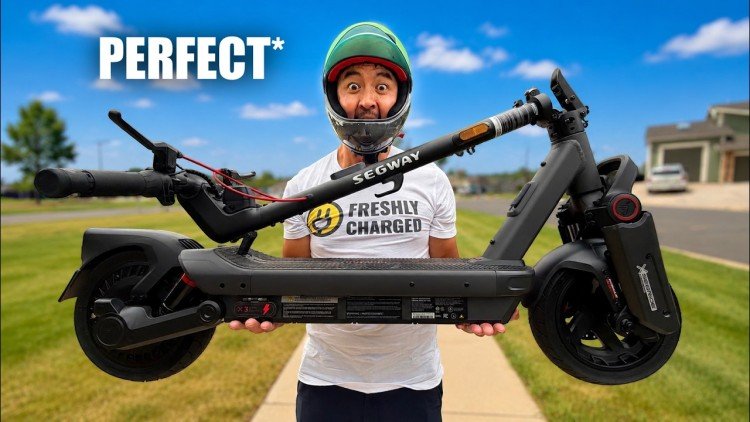
Segway's Max G3 Plus takes an already excellent commuter scooter and sharpens it further: a stronger motor, more usable range, and rear turn signals finally visible in traffic; all wrapped in a riding experience that feels expertly refined. It's a model upgrade rather than a reinvention, so a few rough edges remain, like mechanical rather than hydraulic brakes and a boost-mode activation that's actually gotten fussier than before. Even so, it remains the most complete, tech-loaded scooter in the commuter category, and most of what's left to criticize could be fixed with software updates.
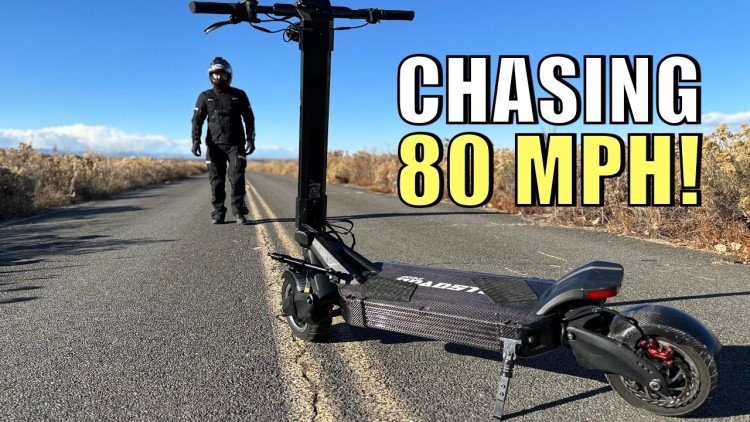
Andrew took the EMOVE Roadster — VoroMotors' fastest production electric scooter on the market — out for a GPS verified speed record attempt, targeting the 80 mph barrier. He did not break it, but he did tie his personal best of 74 mph on a modified unit that was not running its full production brake spec and on a runway that was not quite long enough to fully unwind the throttle. The machine itself was rock solid at speed, but the conditions were not ideal.
-medium.jpg)
The NAVEE XT5 Pro is what happens when a top-tier European e-mobility brand decides to stop making "toys" and starts making armor-plated tanks. It isn't chasing the ultra-light portability of a commuter scooter; it’s chasing durability and ride feel. With a carbon steel frame that puts aluminum rivals to shame and a "Mecha-style" design that looks like it belongs in a sci-fi film, this is the ultimate "playful" off-roader for the rider who wants to jump curbs and blast through puddles without worries.
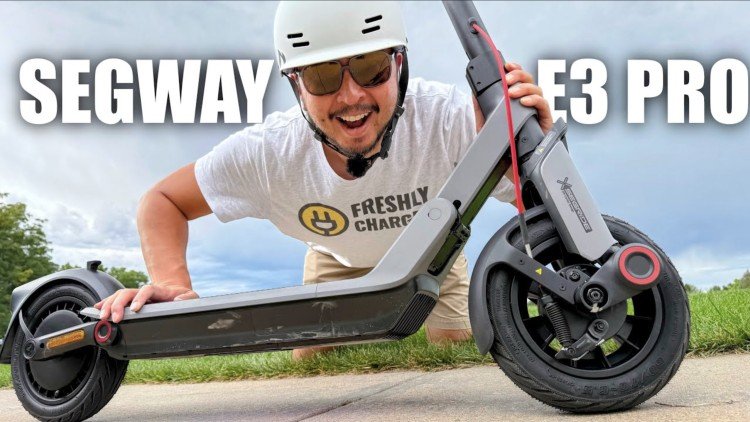
The Segway E3 Pro is a lightweight, affordable commuter scooter packed with modern features—elastomer suspension, Apple Find My, customizable lighting, and turn signals—all at just 40 pounds. With a sleek design, refined ride comfort, and robust tech, it’s a standout choice under $700, ideal for new riders and daily commuters. For Segway's next scooter, definite improvements would be range and water resistance.
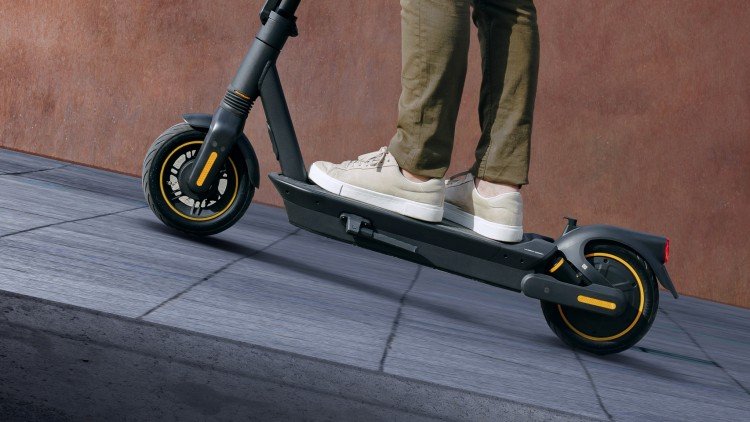
The Segway Max G2 builds on its predecessor with an extended range of up to 43 miles, front and rear suspension, a powerful rear motor, and 10-inch self-healing tires. Featuring a 551 Wh battery and robust 265 lb weight capacity, it's a dependable, durable commuter scooter—though its weight and price prioritize longevity and performance over absolute portability or affordability.
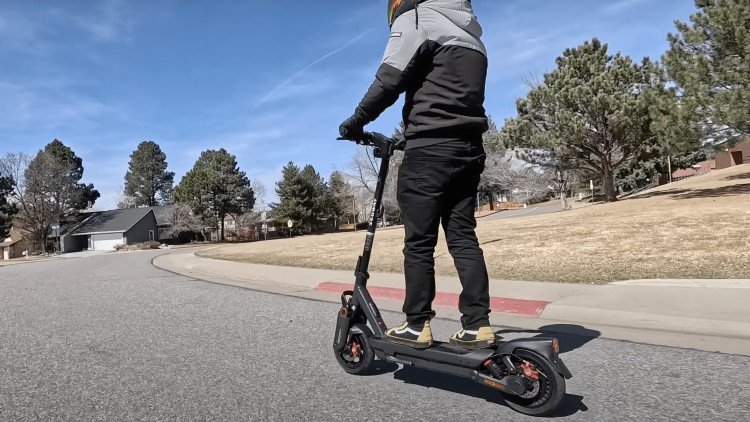
The Segway Max G3 is Segway-Ninebot’s latest electric scooter, offering notable upgrades over previous G2 and G30 models. With a top speed of 28 mph, up to 75 miles of range with an external battery, dual disc brakes, hydraulic suspension, and a vibrant TFT display, it’s one of 2025’s premier high-performance commuter scooters.
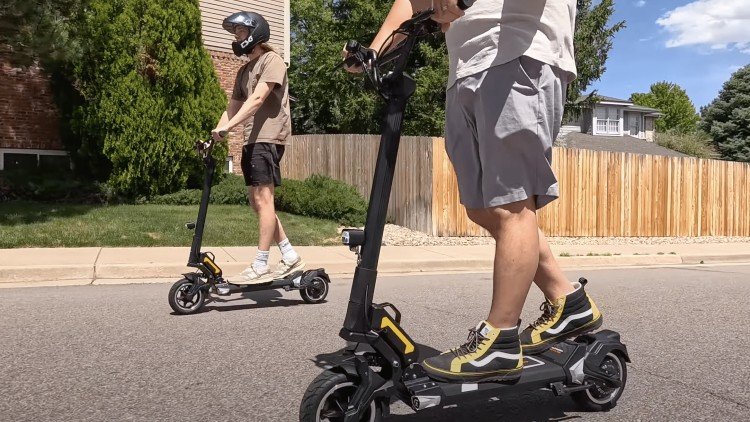
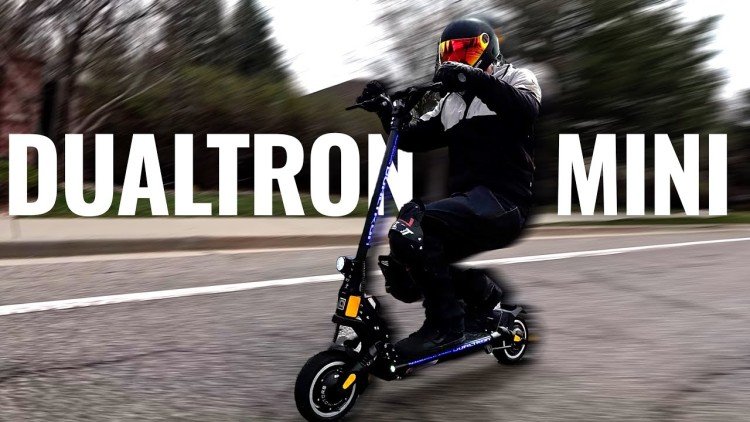
The Dualtron Mini Special Long Body stands out for blending commuter scooter convenience with impressive speed and power. It features solid suspension, customizable lighting, and upgraded display. Drawbacks include small buttons, stem flex, and awkward folding. Ideal for Dualtron fans seeking portability and punchy performance—just be mindful of the tire size and charge port placement.
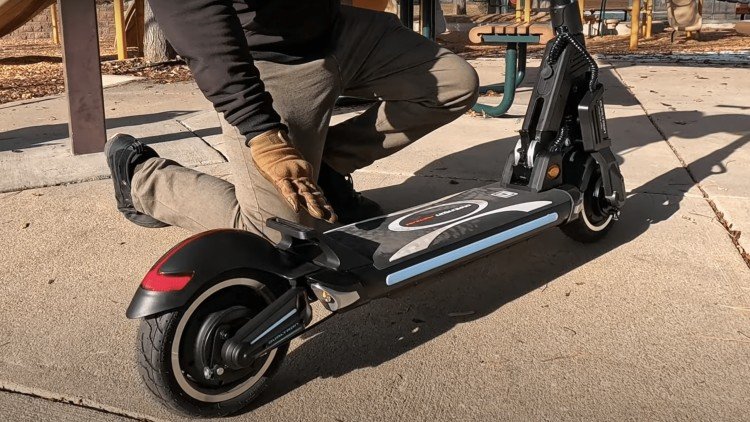
The Dualtron Popular stands out as Dualtron’s most affordable dual motor scooter, boasting a bold design, impressive power from its 450W dual motors, and an eye-catching I2 display. Despite trade-offs like smaller tires and modest water resistance, it delivers notable value and robust features, making it a top pick for budget-conscious commuters seeking performance.
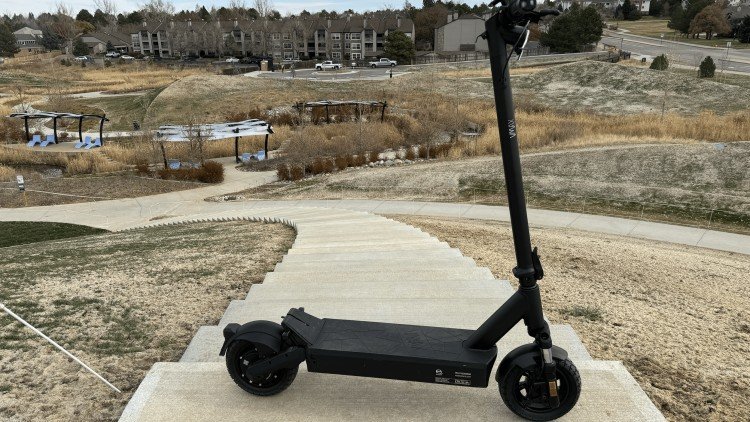
The VMAX VX4, blending Swiss engineering with modern commuter needs, now features a higher top speed (25 mph), a lower price, and strong hill-climbing abilities. Praised for its premium suspension, large deck, bright turn signals, and versatile hybrid tires, it shines as an all-terrain option. Downsides include no app, only two speed modes, and a finicky folding lock.