Most robotic mowers handle a slightly-too-big yard the same way: they dock, recharge, and pick back up later, no human required. A removable battery changes the math on that. Because the pack pulls out without tools, you can keep a second one charged and ready, swap it in the moment the first runs low, and finish the job in one sitting instead of waiting out a multi-hour recharge cycle.
That's a real advantage, but it's worth being clear about what it does and doesn't solve. Swapping in a spare battery doesn't turn a mower rated for a quarter acre into one that can handle a full acre, the cutting deck, motor, and navigation system are still built around that smaller footprint. What it does well is stretch a mower a bit past its rated area, or compress a long mowing session into less total time, without stepping up to a pricier, larger-capacity machine.
There's an upkeep side to a swappable design too. A tool-free removable battery is also easy to pull for winter storage, keeping the pack somewhere temperature-controlled rather than sitting in a cold garage or an outdoor dock all season, which tends to be easier on long-term battery health regardless of yard size.
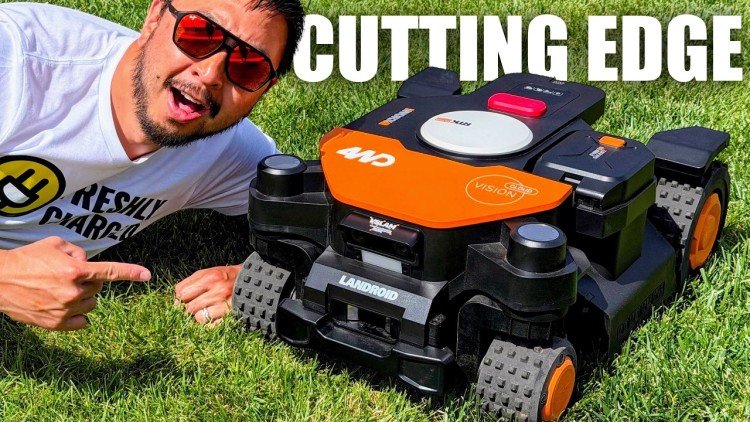
The WORX Landroid Vision Cloud 4WD is the first robot mower Andrew has tested that makes good on all three of its headline promises: no external RTK station, a base station that actually sits against your house, and edge trimming that actually reduces the need for a string trimmer. After a full week of real-world testing across a complex multi-zone yard, the results held up. If you have a demanding yard and a low tolerance for robot mower compromises, this new to the market product is worth a serious look.

At $1,199, the WORX Landroid Vision Cloud two-wheel drive version makes a strong case for being the most capable budget robot mower the Freshly Charged team has tested. Andrew and Jimmy put it through two weeks of real-world use and came away impressed by two things that have historically let this category down at this price point: auto mapping that actually works and edge trimming that reliably cuts down the manual follow-up work. It is not perfect, but for a flat or moderately complex yard where all-wheel drive is not a requirement, the value for your money is hard to argue with.
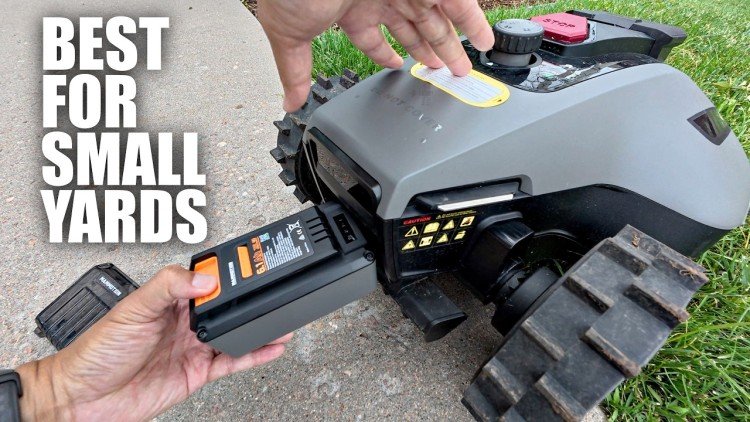
Mammotion's YUKA Mini is a wire-free robot mower built specifically for small urban and suburban yards, and it delivers a feature set that is a pleasant surprise at this price point. Jimmy put it through real-world testing including overgrown grass, surface roots, and an 18-degree hill climb, and the machine held up where it counts. It has limitations, as any robot mower does, but none that change the bottom line: if you have a small yard and you're done pushing a mower, this might be the one for you.
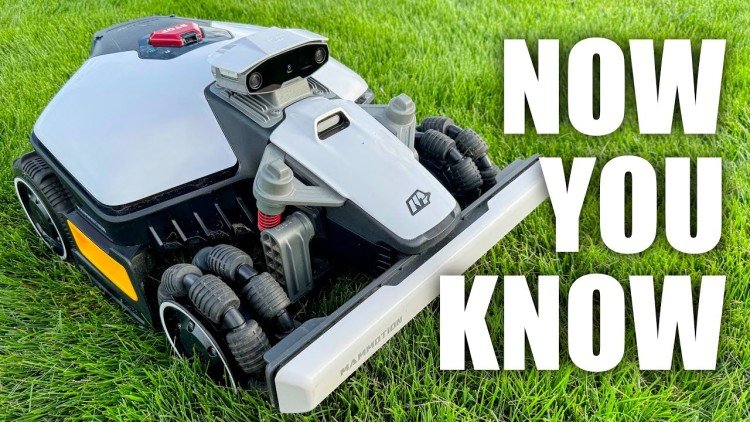
The Mammotion Luba Mini AWD is a compact robot mower built for smaller yards with real terrain challenges. A motor in every wheel, functional suspension, and an open cutting deck make it one of the more capable designs in the category. After six weeks of testing, the Freshly Charged team found it delivers on its core promise, but only for owners willing to put in the setup work. Auto-mapping needs improvement and the $29 dock cover should come in the box. For the right yard, it earns a recommendation from us.
-medium.jpg)
The Yarbo is a modular autonomous yard robot that swaps between mower, snowblower, trimmer, and leaf blower attachments on a single base unit. Build quality is premium, the app is solid, and the snowblower attachment is a standout. The mowing performs well on large open lawns but struggles with cut quality in tight, obstacle-heavy areas. The bigger issue is the early-adopter tax: setup is complex, connectivity drops happen, and troubleshooting typically means forums rather than fast support. For large-yard owners who value their time and are comfortable with capable-but-still-maturing technology, it delivers. Everyone else may want to consider other options or wait for the rough edges to smooth out.
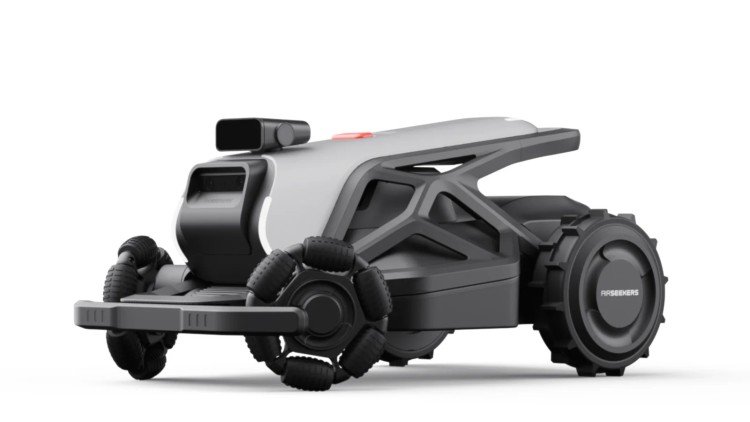
The Airseekers Tron is an autonomous robotic mower designed for residential and professional turf maintenance, specifically engineered to handle complex terrain and provide mulching capabilities. It utilizes the Omni-Navi system, which integrates a 300° AirVision 5-camera array with NetRTK (Network Real-Time Kinematic) positioning to navigate without physical boundary wires, even in environments with unstable satellite signals. The unit features a rear-wheel dual hub motor drive that enables it to climb slopes up to 65% (33°) and a 30° tilted front-wheel design intended for maneuverability on uneven ground. For cutting, the Tron employs a 400W motor powering a dual-layer disk with six pivoting razor blades, offering an adjustable cutting height of 30–90 mm and a cutting width of 220 mm. Technical specifications include an IPX6 waterproof rating, a swappable 15Ah battery providing approximately 180 minutes of runtime per charge, and AI-based obstacle detection for identifying pets and small objects. The model referenced here is the standard Tron, which is rated for a 24-hour mowing area of 0.6 acres (approx. 2400 m²) and a maximum capacity of 1.2 acres.