-medium.jpg)
Most of what gets a scooter and its rider wet isn't rain falling from above, it's the front wheel kicking up spray from a puddle, a wet road, or just morning dew on the pavement, straight up toward the deck, the electronics, and whoever's standing there. That's a different problem than an IP rating solves. An IP rating tells you how well-sealed a scooter's internals are against water that reaches them; fenders are what keep a meaningful amount of that water from reaching the scooter and rider in the first place. A well-rated scooter with no fenders can still soak you and everything it's trying to protect.
The two fenders do different jobs. The front fender is doing the real protective work, deflecting spray up and away from the battery compartment, wiring, and controls before it becomes a problem. The rear fender is more about you: keeping water and road grime off your back and legs, and off the deck itself, so you're not standing in a puddle for the rest of your ride. Scooters with both are meaningfully better behaved the moment the pavement's wet, whether that's actual rain or just the residue from an earlier shower.
This isn't a glamorous spec, nobody buys a scooter specifically for the fenders, but it's one of the more practical, low-drama upgrades you can look for if you ride regularly rather than only on dry days. Pair it with a solid IP rating for the fullest wet-weather protection, the two genuinely complement each other rather than one covering for the other's gaps.

What makes an electric bike "affordable"? The answer this question will differ from person to person, and where you live is a big determining factor. Dropping a couple thousand bucks on an e-bike makes a lot more financial sense in a city with good cycling infrastructure, where it can become your primary transportation and quickly pay for itself. If you live somewhere with poor cycling infrastructure or "way out in the boonies", then your e-bike may be more of a hobby purchase and the price tag suddenly seems a lot heftier.
For our purposes, we've set our "affordable" threshold at $2,000 USD; if it costs less than that, it's in!
E-bikes in this category provide a good price-to-value ratio, offering good performance while skipping some of the fancy bells and whistles that more premium (and expensive) alternatives offer. While it can be tempting to look for the cheapest e-bike possible, we actually advise against this! A good rule of thumb to follow, at least in the US, is that an e-bike will cost at least $1,200 if it's a product of worthwhile quality.
Yes, there are exceptions, and even in this day and age you can still find electric bikes for less than $1,000 USD, but these brands tend to compromise too much on quality and offer little or no post-purchase support. The lower the price, the more caution you should exercise as a buyer! Research online, read consumer reviews, and (of course) read our expert opinions here to get the Freshly Charged take.
-medium.jpg)
The "Full Suspension" category represents the gold standard in ride quality, designed to decouple the rider from the harsh realities of uneven pavement, gravel, and urban decay. While rigid or front-suspension models are suitable for smooth, short commutes, a full-suspension scooter utilizes dual shock-absorption systems—one at each wheel—to provide a "floating" sensation. This setup is essential for those who navigate pothole-ridden city streets or transition between asphalt and light trails. By absorbing the kinetic energy of impacts before it reaches the deck, these scooters drastically reduce rider fatigue and joint strain, making long-distance journeys not just possible, but genuinely enjoyable.
Technically, this category spans several sophisticated mechanical designs, ranging from classic dual-spring coils to motorcycle-grade hydraulic shocks and adjustable air-suspension systems. High-performance models in 2026 often feature inverted hydraulic front forks and articulated rear swingarms, allowing for significant "travel" (the distance the suspension moves to absorb a bump). Beyond mere comfort, these systems serve a vital safety function: they ensure the tires maintain constant contact with the ground. This "mechanical grip" is crucial for maintaining traction during high-speed cornering and reducing stopping distances during emergency braking on imperfect surfaces.
Choosing a full-suspension scooter also protects your investment over the long term. Constant vibration is the primary enemy of electric scooter longevity, often leading to loose bolts, fractured solder joints, and battery deck rattling. By dampening these micro-vibrations, a full-suspension chassis preserves the integrity of the internal electronics and structural components. Whether you are an urban professional looking for a "cloud-like" commute or an weekend adventurer tackling forest paths, this category offers the most refined and durable riding experience available in modern micro-mobility.
-medium.jpg)
Signaling a turn on a scooter has always meant taking one hand off the handlebars right when you need control the most, which is a bad trade on a vehicle that's already less stable than a bike or a car. Built-in turn signals solve that problem directly: a thumb press instead of a hand off the bars, so you're steering and braking with both hands through the exact moment a turn actually happens.
The visibility case is just as real. Scooters are quiet and compact, easy to lose in a driver's peripheral vision, especially at dawn, dusk, or night when a meaningful share of accidents happen. A blinking signal cuts through that in a way hand gestures never reliably do, and giving drivers 50 to 100 feet of advance notice before a turn gives them real time to react instead of reacting to a rider who's already mid-turn. Intersections are where this matters most, since that's where scooters and vehicles cross paths most often.
Turn signals aren't currently required by any major US jurisdiction, though regulations are trending that direction as scooters get treated more like legitimate vehicles and less like recreational toys. For now, think of this category less as a compliance checkbox and more as a confidence and safety upgrade, one less thing to juggle while you're navigating traffic, and one more way for other road users to actually see your next move before you make it.
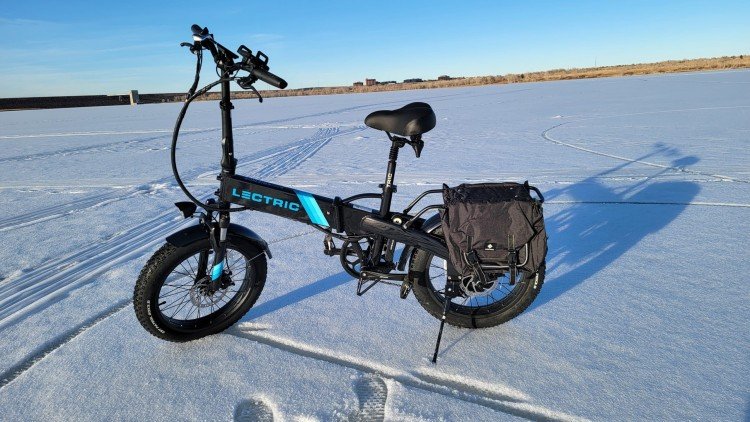
Most e-bikes aren't built with a bigger rider in mind. Spec sheets across the mainstream market tend to cap out around 250 to 275 lbs of total payload, rider included, and that number isn't just conservative marketing. Frames, spokes, and motors are genuinely engineered around it. Push past it and the effects show up gradually: more flex in the frame, faster brake pad wear, spokes and rims under more stress than they were designed for.
This category is for the e-bikes built with real headroom above that. 300 lbs of rated capacity is where the market itself tends to draw the line between "standard" and "heavy-duty," and the bikes that clear it usually get there through actual engineering changes, not just an optimistic number on a spec sheet: reinforced frames, thicker spokes, stronger rims, and often a beefier motor to keep performance from sagging under the extra weight.
Worth being honest about what that 300 lb figure actually means, too. It's total payload capacity, not just rider weight. A 260 lb rider with a backpack, a lock, and a rack full of groceries can eat through the margin faster than expected, so if you're riding right at the edge, it's worth looking for a bike with more cushion above your actual weight rather than one that's rated exactly for it.
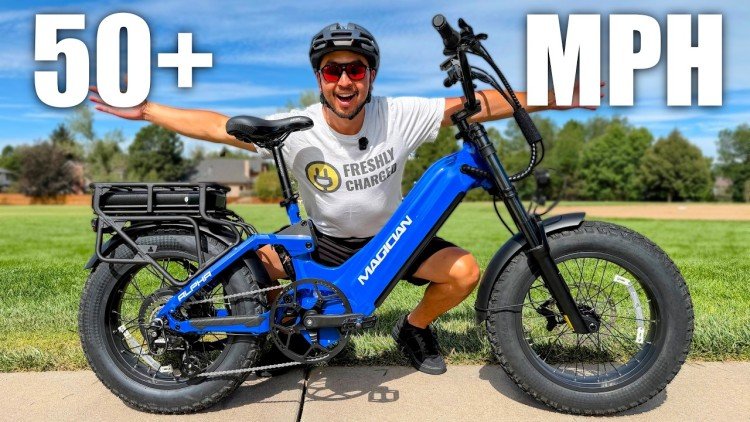
Watts get most of the attention on a spec sheet, but torque is the number that actually decides how a hill feels. It's the twisting force the motor delivers to the wheel, and it's what determines whether a climb feels effortless or like the bike is straining against its own limits. A flat-terrain city bike gets by fine on 35 to 50 Nm. Add a real hill to the commute and that same bike starts to labor, which is exactly the gap this category is built to close.
60 Nm is where hill-capable torque starts, and it's a threshold that shows up again and again across the market once you're comparing bikes built for grades rather than flat pavement. Below it, climbs tend to sap speed and drain the battery faster as the motor strains to compensate. Above it, a bike can hold pace up an incline without leaning on max assist the entire way, which matters for anyone riding the same hilly route twice a day.
Before the chase the highest number available, know that more torque isn't free. Past roughly 100 Nm, returns start to diminish. Batteries drain faster, wheels are more prone to spinning on loose or wet pavement, and a motor built for aggressive mountain-bike climbing is often more power than a daily commute actually calls for. For someone riding hills on the way to work rather than tackling technical singletrack, a bike in the 60 to 90 Nm range typically hits the mark without the excess.
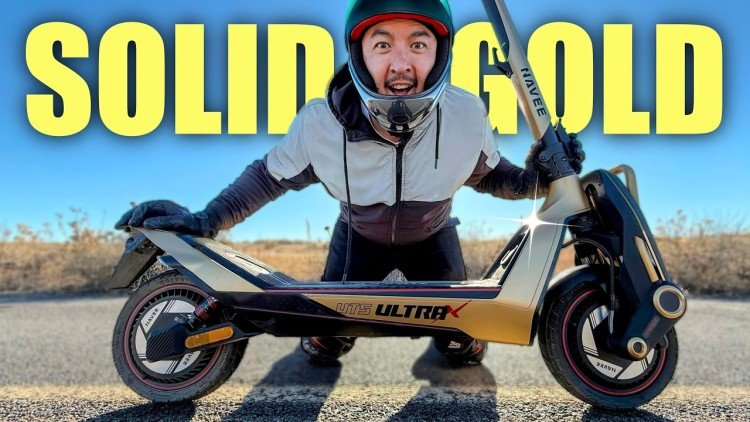
The high-speed category represents the bridge between casual micro-mobility and serious urban transportation. While entry-level scooters are designed for short, low-speed hops, these performance-grade machines are engineered to keep pace with city traffic and conquer challenging terrain. To qualify for this category, a scooter must maintain a stable top speed of at least 30 mph, a threshold where the physics of the ride shift from a "toy" feel to a true vehicle experience. These scooters are the preferred choice for enthusiasts and long-distance commuters who prioritize efficiency, power, and the ability to climb steep inclines without losing momentum.
To support these higher velocities, this tier of scooters utilizes advanced hardware typically not found in budget models. You can expect high-voltage electrical systems (60V to 72V) and dual-motor configurations that provide the necessary torque for rapid acceleration and sustained speed. Safety is the primary engineering focus at 30+ mph, necessitating the inclusion of hydraulic disc brakes for superior stopping power, reinforced chassis geometry, and sophisticated suspension systems—often featuring adjustable hydraulic or air shocks—to handle road imperfections that would be dangerous on smaller wheels.
Riding in the high-speed category also brings a shift in responsibility and gear requirements. Because these machines can travel at the same speeds as mopeds and light motorcycles, we strongly recommend that riders move beyond standard bicycle helmets in favor of DOT-approved full-face protection. Furthermore, as many jurisdictions in 2026 begin to implement tiered regulations for high-performance micro-mobility, these scooters are often equipped with advanced "Smart-Tech" integration, including IoT diagnostics, turn signals, and high-lumen lighting systems to ensure maximum visibility and compliance with modern road safety standards.
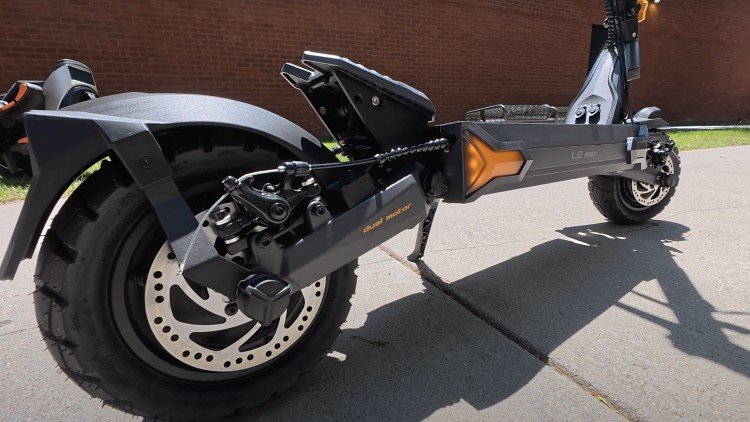
A single top speed number on a spec sheet doesn't tell you much about how a scooter actually rides day to day, and that's what multiple speed modes solve. Rather than one fixed power curve, scooters in this category let you switch between settings, usually Eco, Standard, and Sport, that change acceleration, motor output, and battery draw, not just how fast you can go.
Eco mode is the one most riders underuse. It softens acceleration into a smoother, more predictable launch from a stop, trims top speed by roughly 20 to 30%, and can stretch your range by as much as 15 to 40% in the process, genuinely useful for crowded sidewalks, wet pavement, or the last few miles on a low battery. Sport mode is the opposite trade: full power and the quickest acceleration the motor has, at the cost of faster battery drain and more wear on your brakes, best saved for open stretches where you actually want that performance rather than city traffic. Standard mode splits the difference and tends to be where most riders spend most of their time.
The real value here isn't picking a favorite mode and sticking with it, it's having the flexibility to match the ride to the moment: easing into traffic in Eco, opening up on a clear bike lane in Sport, and not having to choose one riding character for every situation a scooter actually gets used in.
-medium.jpg)
A full-suspension e-bike pairs a front suspension fork with a rear shock and pivot linkage, so both wheels can move independently to absorb impacts instead of just the front. That's the key difference from a hardtail, which handles the front bump but sends everything from the rear wheel straight into the frame and the rider.
Presence of full suspension shows up most on rough terrain. With the rear wheel able to track the ground over roots, rocks, and loose surfaces instead of skipping over them, you get real traction gains on technical climbs and descents, plus a noticeably smoother, less fatiguing ride on anything that isn't pavement. It's not just a trail-riding perk, either: the same rear shock that soaks up a rock garden also takes the edge off potholes and cracked pavement on a daily commute, which is why full suspension has found its way onto plenty of bikes that never see a mountain.
The concessions are that full-suspension bikes typically run a few pounds heavier than a comparable hardtail, cost more upfront, and need periodic servicing on the shock and pivot bearings that a hardtail simply doesn't have. On smooth pavement or a long climb, some of that rear suspension energy gets absorbed into the shock instead of pushing you forward, an effect riders call pedal bob, so a hardtail (or no suspension at all) stays the more efficient choice for flat, paved commuting. If your riding regularly leaves pavement, though, that efficiency loss is a small price for the extra control.
Most e-bikes advertise somewhere between 20 and 60 miles of range, which covers the average commute with room to spare but not much beyond it. This category is for the bikes built to go further: a 60-mile advertised range is where the market itself starts drawing the line between "standard" and "long range," and everything here clears that bar, some by a wide margin, with the biggest dual-battery setups pushing well past 100.
Getting there almost always comes down to one thing: a bigger battery. More watt-hours means more range, but it also means more weight on the frame and a higher price tag, so long-range bikes tend to run heavier and cost more than a standard commuter with a smaller pack. For a lot of riders that tradeoff is worth it: fewer mid-week charges, more room for an unplanned detour, and enough buffer that hills, cold weather, or a heavier rider don't turn a comfortable range into an anxious one.
That said, be aware that advertised range is almost always tested under close-to-ideal conditions, flat roads, the lowest assist setting, a lighter rider. Real-world range typically comes in 20 to 50 percent below the advertised figure once you factor in hills, wind, cargo, and a normal mix of assist levels. A bike advertised at 80 miles might realistically deliver 45 to 65 in everyday riding. That doesn't make the number meaningless, it's still the best way to compare bikes against each other, just treat it as a ceiling rather than a guarantee.
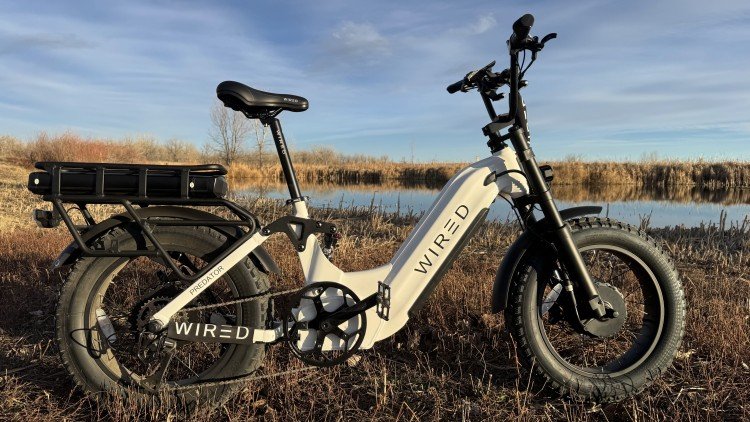
A fat tire electric bike is an e-bike equipped with oversized tires—typically 3.8 inches or wider—designed to provide extra stability, traction, and comfort across a wide range of terrain. The combination of powerful electric assist and wide tires allows riders to easily navigate sand, snow, gravel, or rough trails where standard bikes might struggle. These bikes are known for their confidence-inspiring ride, plush feel, and go-anywhere versatility, making them a favorite among adventure seekers, commuters in all-weather conditions, and riders who simply want a smooth, stable ride.

A seatpost can only do so much. Plenty of e-bikes ship in a single frame and lean on seat height adjustment to call themselves "one-size-fits-most," which works fine if you're within a few inches of average height and falls apart fast if you're not. The bikes in this category take a different approach: multiple frame sizes, not just an adjustable seat on one fixed geometry.
What actually changes between sizes is more than seat height. Top tube length, reach to the handlebars, and standover height all scale with the frame, which is what determines whether you're stretched out too far or cramped up too close, and whether you can plant your feet flat and confidently at a stop. That last part matters more on an e-bike than a regular bicycle, since the added weight of the motor and battery makes an unstable dismount a bigger deal than it would be on an analog bike.
There's a cost to offering this, and it usually shows up somewhere in the price or the lineup. Building and stocking two or three frame sizes is more expensive than building one, which is part of why so many budget and folding e-bikes skip it entirely. It also shifts some responsibility onto the buyer: sizing charts aren't standardized across brands, so a "medium" from one manufacturer won't necessarily match a "medium" from another, meaning it's worth actually checking your height and inseam against the specific bike's chart rather than assuming the label translates directly.